

Recovery doesn’t end when treatment does. Many people discover that returning to everyday life brings new challenges—from rebuilding routines to managing stress, social situations, and unexpected triggers. That’s where a sober coach can provide valuable support.
While a sober coach isn’t a replacement for therapy or mutual support groups, they can help bridge the gap between treatment and independent living by offering practical, personalized guidance. For many people, combining coaching with a structured sober living program creates a stronger foundation for long-term recovery, especially during the transition back to work, family, and community life.
What a Sober Coach Is
A sober coach is a recovery support professional who helps people apply the skills they’ve learned in treatment to everyday situations. Rather than providing clinical therapy or directing someone through a specific recovery program, a sober coach focuses on practical, real-world accountability.
A sober coach typically works one-on-one with clients to identify challenges, establish routines, and create strategies for navigating life without returning to substance use. The relationship is individualized, allowing support to focus on the person’s goals, schedule, and recovery needs.
The role can vary depending on the client’s circumstances. Some people work with a sober coach for a few weeks after completing treatment, while others continue coaching during major life transitions, such as returning to work, moving, or rebuilding relationships.
What a Sober Coach Does
A sober coach helps translate recovery principles into daily action. Their support often includes:
- Providing accountability for recovery goals and healthy habits
- Helping develop consistent daily routines
- Identifying personal triggers and creating strategies to respond to them
- Practicing relapse prevention skills in real-life situations
- Offering support during stressful events, travel, or major life changes
- Encouraging healthy decision-making and problem-solving
- Helping clients build confidence as they regain independence
For example, someone returning to work after residential treatment may need help planning how to manage workplace stress, business dinners, or changes in routine. Another person may benefit from coaching while rebuilding relationships or creating healthier social habits.
The focus is less on treating addiction itself and more on supporting recovery in everyday life.
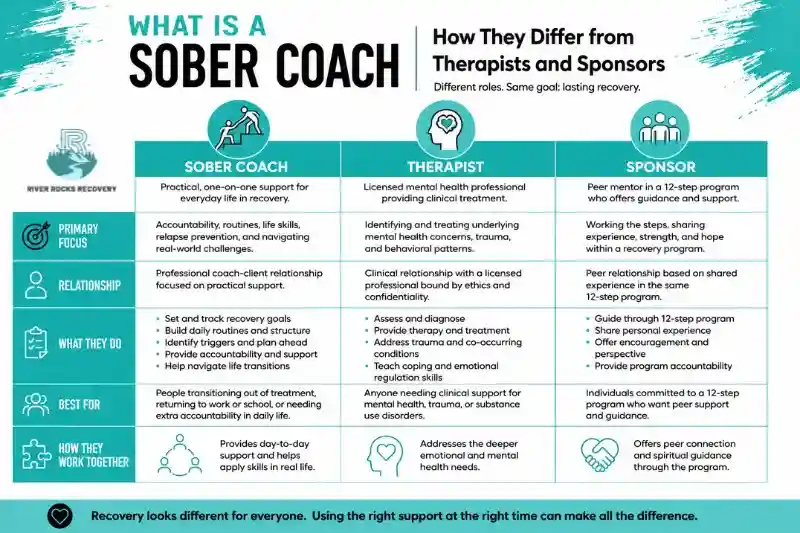
Sober Coach vs. Therapist vs. Sponsor — What Makes Each Different
Although these roles often complement one another, they serve different purposes.
| Role | Primary Focus | Professional Relationship |
|---|---|---|
| Sober coach | Practical recovery support, accountability, and daily-life guidance | Typically provides individualized, non-clinical coaching |
| Therapist | Mental health assessment, diagnosis, and evidence-based treatment | Licensed mental health professional providing clinical care |
| Sponsor | Sharing experience and guidance within a 12-step recovery program | Volunteer mentor who participates in the same recovery fellowship |
A therapist helps address underlying mental health conditions, trauma, emotional regulation, and other clinical concerns using established therapeutic approaches.
A sponsor offers personal guidance based on lived experience within a 12-step fellowship and helps members work through the program’s steps.
A sober coach is different because they are not providing licensed mental health treatment or serving as a sponsor within a recovery fellowship. Instead, they focus on helping clients navigate everyday recovery challenges with practical support and accountability.
Many people benefit from using more than one of these resources at the same time because each fills a different role.
Who Benefits Most from a Sober Coach
A sober coach may be especially helpful for people who are:
- Transitioning home after residential or outpatient treatment
- Building confidence during early recovery
- Returning to work or school
- Facing high-risk environments or social situations
- Looking for additional accountability outside therapy or support meetings
- Developing healthier routines after years of substance use
- Working to maintain long-term recovery during significant life changes
Not everyone needs a sober coach. Some individuals find that therapy, family support, and recovery meetings provide enough structure. Others appreciate having personalized guidance that’s focused specifically on day-to-day recovery decisions.
The right level of support depends on each person’s goals, recovery history, and current circumstances.
How a Sober Coach Fits Into Life After Treatment
Recovery is often strongest when support continues after formal treatment ends. A sober coach can become one part of a broader recovery plan that may also include therapy, peer support groups, medical care, alumni programming, and structured living environments.
For people who aren’t yet ready to live completely independently, a sober living environment can provide additional stability while they continue practicing recovery skills. Combining structured housing with personalized coaching and ongoing clinical care creates multiple layers of accountability and support during one of recovery’s most important stages.
Rather than replacing treatment, a sober coach helps reinforce what has already been learned, making it easier to apply healthy habits consistently as daily responsibilities return.
Frequently Asked Questions
What does a sober coach do?
A sober coach provides practical, individualized support to help people maintain recovery in everyday life. This often includes accountability, relapse prevention planning, developing routines, navigating triggers, and building confidence during the transition after treatment.
How is a sober coach different from a sponsor?
A sponsor is a volunteer mentor within a 12-step recovery program who shares personal experience and helps guide members through the program. A sober coach is not affiliated with a specific recovery fellowship and focuses on personalized, day-to-day recovery support outside of a formal treatment role.
Is a sober coach worth it?
For many people, the added accountability and practical guidance can make the transition from treatment to independent living feel more manageable. Whether coaching is worthwhile depends on a person’s recovery goals, support system, and the challenges they expect to face after treatment.
Building a Stronger Recovery Support System
Long-term recovery often involves more than one source of support. Therapy, peer communities, structured living, family involvement, and individualized coaching can each serve a different purpose. Finding the right combination helps create a recovery plan that continues to support growth long after treatment ends.
If you or someone you care about is preparing for life after treatment, River Rocks Recovery offers aftercare planning and structured recovery options that help individuals continue building healthy routines, accountability, and lasting stability.