

A lot of parents expect to feel relief once detox is over.
Instead, many feel something else.
Fear.
Your son or daughter is sleeping in their own bed again. They’re home. The crisis that got them into detox may have passed. But now you’re lying awake wondering what happens next.
If you’re asking yourself whether there’s a level of treatment that provides real support while allowing your child to live at home, you’re not alone. Many families reach this exact crossroads.
At River Rocks Recovery, we often meet parents during this uncertain stage. That’s why understanding what comes after detox matters just as much as getting through detox itself. For many young adults, the next step involves structured daytime care that provides support without requiring an overnight stay. You can learn more about these levels of care through our partial hospitalization program.
Detox Is a Beginning, Not the Finish Line
Detox helps the body stabilize.
It does not automatically address the reasons someone returns to using.
This can be one of the hardest truths for parents to hear. Your child may look physically better after a few days or weeks. They may even sound motivated. But addiction often has deeper roots involving mental health, stress, trauma, relationships, or patterns that don’t disappear when substances leave the body.
Think of detox like putting out a house fire. The flames may be gone, but you still need to inspect the structure, repair the damage, and figure out what caused the fire in the first place.
That’s where continued treatment becomes important.
Why Some Young Adults Need More Than Weekly Counseling
Many parents assume the next step is simply finding a therapist.
Sometimes that works.
Often, it isn’t enough.
A 20-year-old who recently completed detox may need several hours of support each day while still practicing recovery in real life. They need space to learn coping skills, address underlying issues, build accountability, and navigate triggers without being completely on their own.
Weekly therapy can feel a bit like taking one driving lesson and then being handed the keys to a race car.
Recovery usually benefits from more structure during the early stages.
The Middle Ground Many Families Don’t Know Exists
Parents often think treatment comes in only two forms:
- Live-in treatment
- Occasional outpatient appointments
There is actually a middle option.
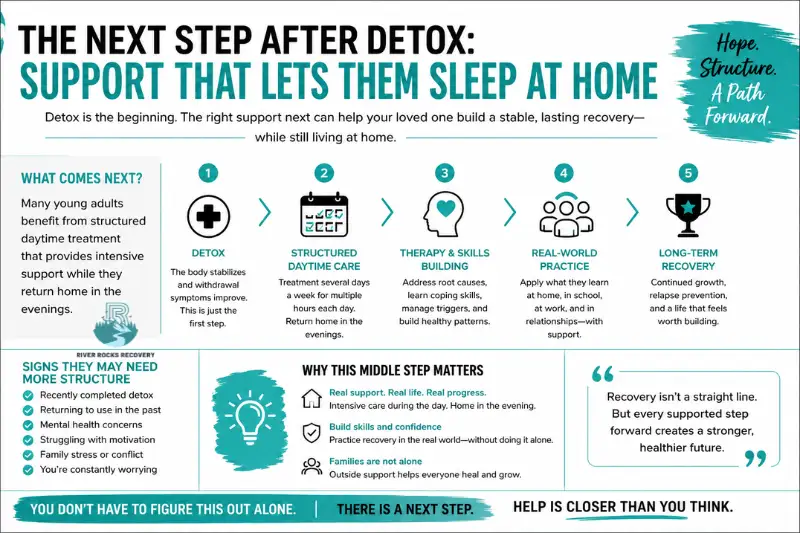
Structured daytime care allows individuals to attend treatment several days a week for extended hours while returning home in the evenings. This creates a balance between intensive support and real-world practice.
For some young adults, this level of care offers an important bridge between detox and full independence.
They’re not navigating recovery completely alone.
They’re also not separated from family, work, school, or everyday responsibilities.
Home Can Be Healing—and Challenging
Having your child home can be comforting.
It can also be stressful.
Parents often find themselves watching for signs, analyzing every mood change, and wondering whether they’re helping or enabling.
That’s normal.
Recovery doesn’t happen in a vacuum. It happens in kitchens, living rooms, parking lots, classrooms, and family conversations.
A structured treatment schedule can provide outside support so recovery isn’t resting entirely on your shoulders.
You don’t have to become their therapist.
You get to be their parent.
Signs Your Family May Benefit From More Structured Support
Every situation is different, but additional treatment may be worth exploring if:
- Your child recently completed detox
- They’ve returned to use after treatment before
- Mental health concerns seem connected to substance use
- They’re struggling with motivation or accountability
- Family conflict has increased around recovery
- You’re constantly worried about what happens when they’re alone
None of these signs mean anyone has failed.
They simply suggest that more support could be helpful.
For families looking for specialized substance use treatment, resources such as support in Methamphetamine Rehab may also provide additional guidance depending on the substance involved.
Recovery Often Looks Different Than Parents Expect
Many parents picture recovery as a straight line.
The reality is usually messier.
Some days feel hopeful. Others feel discouraging.
Progress can look like showing up to treatment, learning to manage cravings, rebuilding trust, or making it through a difficult week without returning to old habits.
One of the most important things parents can remember is this:
Your child’s need for continued support is not evidence that detox failed.
It’s evidence that recovery is still unfolding.
Families throughout communities seeking help in Monroe and surrounding areas often discover that the period immediately after detox is where ongoing structure makes the biggest difference.
The Question Isn’t “Are They Better?”
After detox, many parents ask:
“Are they better now?”
A more useful question may be:
“What support will help them stay on this path?”
The answer is different for every person. Some need live-in treatment. Some benefit from multi-day weekly treatment. Others do well with structured daytime care while living at home.
Exploring after detox treatment options is often less about finding a permanent answer and more about finding the right next step.
Recovery rarely asks someone to figure out the rest of their life today.
It asks them to keep moving forward tomorrow.
Call (888) 905-6281 or visit our partial hospitalization program to learn more about our program, php services in Ohio.