

There’s a moment a lot of people don’t talk about in recovery.
Not the decision to get help. Not detox. Not even the first sober week.
It’s the moment you wonder: “What happens when the cravings hit again?”
That fear is real. And if you’ve been told therapy is just “talking about your feelings,” it makes sense to wonder whether it could actually help with something as physical and intense as opioid cravings.
The short answer is yes — therapy can help. Not by making cravings magically disappear overnight, but by helping your brain, body, and emotions respond differently to them over time. Many people exploring opiate rehab treatment are surprised to learn how practical and structured therapy can actually be.
Cravings Aren’t Just About Willpower
One of the hardest parts of opioid addiction is how deeply cravings can take over your nervous system.
A craving can feel like urgency. Panic. Static in your chest. Sometimes it shows up after stress. Sometimes after boredom. Sometimes for no obvious reason at all.
That doesn’t mean you’re weak.
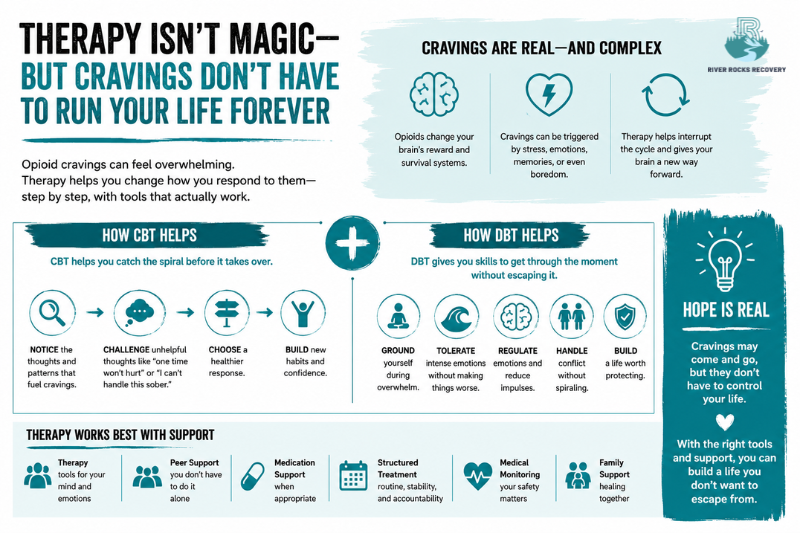
Opioids change the brain’s reward and survival systems. Over time, your brain can start treating opioids like something necessary for emotional or physical safety. That’s why people often relapse even when they genuinely want recovery.
Therapy helps interrupt that cycle. Slowly. Repeatedly. In ways that become more automatic with practice.
CBT Helps You Catch the Spiral Earlier
One approach often used in recovery is CBT for addiction. The goal isn’t to convince you to “think positive.” It’s to help you notice the patterns that pull cravings into full momentum.
For example:
- “I already messed up today, so nothing matters.”
- “I can’t handle this feeling sober.”
- “One time won’t hurt.”
- “I’ll never feel normal again.”
Those thoughts can hit fast — almost like reflexes. CBT teaches people how to slow them down long enough to make a different choice.
That matters because cravings often grow stronger in isolation and urgency. Naming what’s happening can reduce some of the emotional pressure around it.
A lot of people describe it like finally seeing the trapdoor before stepping on it.
DBT Focuses on Surviving the Moment Without Escaping It
DBT works a little differently.
Where CBT often focuses on thoughts and patterns, DBT helps people tolerate overwhelming emotions without immediately reacting to them. That can be especially important for opioid addiction because cravings are often tied to emotional pain, shame, trauma, anxiety, or numbness. Understanding what comes after a diagnosis can help individuals feel more grounded in the early stages of treatment, offering clarity on next steps and available support options.
DBT teaches skills like:
- Grounding during emotional overwhelm
- Managing impulsive reactions
- Regulating intense emotions
- Handling conflict without spiraling
- Sitting with discomfort safely
That last one matters more than people realize.
Many people using opioids aren’t trying to “get high” anymore. They’re trying to get relief. Relief from panic. Relief from emptiness. Relief from feeling trapped inside themselves.
DBT helps create space between the feeling and the action.
Not perfectly. But enough for recovery to become possible.
Therapy Usually Works Best Alongside Other Support
Some people hear about therapy and imagine sitting in a room talking once a week while white-knuckling cravings alone.
That’s usually not how effective treatment works.
Recovery often includes multiple layers of support:
- Therapy
- Peer support
- Medication support when appropriate
- Structured daytime care or multi-day weekly treatment
- Medical monitoring
- Family support
- Relapse prevention planning
The goal is not perfection. The goal is helping your nervous system stabilize enough that cravings stop controlling every decision.
For some people, that may also include specialized care for other substances. If stimulant use has become part of the picture too, seeking help in Methamphetamine Rehab may be part of a broader recovery plan.
It’s Okay if You’re Skeptical
A lot of first-time treatment seekers quietly wonder:
“What if therapy works for everyone except me?”
That thought is more common than you think.
Sometimes people tried counseling years ago and didn’t connect with it. Sometimes they picture uncomfortable group sessions or being forced to share things before they’re ready.
Good therapy shouldn’t feel like punishment.
It should feel like learning how to stay alive inside your own mind again.
And honestly, many people don’t fully believe it can help until they experience a moment they haven’t had in a long time — a craving passes without becoming a disaster. That moment can feel small from the outside. But internally, it can feel enormous.
Like realizing the storm still exists… but you’re finally starting to find shelter.
Recovery Skills Can Become Automatic Over Time
If you want to quit drinking but don’t want to blow up your life, flexible outpatient care exists.
Early recovery can feel exhausting because every decision feels conscious.
Every urge feels loud. Every emotion feels immediate.
But with repetition, many therapeutic skills become more natural. People often begin noticing cravings earlier, regulating emotions faster, and recovering from difficult moments without completely unraveling.
It’s also common to experience emotional challenges after recovery, as individuals adjust to life without substances and learn to navigate feelings that were previously numbed or avoided.
That doesn’t mean recovery becomes effortless. It means your brain slowly relearns safety, flexibility, and pause.
And sometimes that pause is enough to save a life.
You Don’t Have to Be Completely Sure to Reach Out
A lot of people wait to seek help because they think they need complete confidence first.
You don’t.
You can be scared and still take a first step. You can be skeptical and still deserve support. You can want recovery while also fearing it.
Understanding what to expect in your first therapy session can help reduce anxiety about starting treatment and make it easier to take that initial step toward support.
Those things can exist together.
Call (888) 905-6281 or visit our addiction therapy and opiate rehab treatment services to learn more about our addiction therapy, opiate rehab treatment services.