


I didn’t miss work. I didn’t forget birthdays. I showed up, handled things, kept everything moving.
But somewhere in the middle of all that… I disappeared.
It didn’t happen all at once. It was quieter than that. More like a slow fade you don’t notice until you look back and realize you’re not really in your own life anymore.
At some point, I started searching things like inpatient vs outpatient alcohol treatment—not because I thought I needed something serious, but because I couldn’t ignore the feeling that something wasn’t right. For many people, IOP as a starting point in recovery can be a practical first step when they begin noticing subtle signs that things are slipping internally, even if life still looks stable on the outside.
You Look Fine on the Outside—That’s What Makes It Harder
If you’re high-functioning, you already know this part.
No one checks on you because you’re the one people count on. You handle deadlines. You return calls. You show up to events. You keep your commitments.
You don’t look like someone who’s struggling.
And that becomes its own kind of trap.
Because when there’s no visible collapse, there’s no interruption. No reason—externally—to stop and ask what’s really going on.
So you keep going. Even as things feel more fragile inside.
The Exhaustion Isn’t Just Physical
At first, I thought I was just overworked.
Too many responsibilities. Not enough downtime. Normal adult life.
But this kind of exhaustion is different. It follows you even when nothing is happening. It shows up first thing in the morning, before the day even starts.
You wake up already tired. Not just sleepy—heavy.
And throughout the day, you push through it. Because that’s what you do.
Then night comes, and instead of real rest, you reach for the one thing that reliably shuts your brain off.
Alcohol becomes less about fun and more about relief.
You Start Negotiating With Yourself More Than You Realize
“I’ll just have one tonight.”
“I’ll skip tomorrow.”
“I’ll only drink on weekends.”
These deals start small. Harmless, even.
But over time, they become constant.
You’re not just living your life—you’re managing your relationship with alcohol in the background of everything.
And the truth is, if it wasn’t taking up that much space in your mind… you wouldn’t need to manage it so carefully.
You’re Still Performing—But It Feels Hollow
From the outside, nothing looks broken.
But inside, things start to feel off.
You go through the motions at work. You laugh at the right moments. You show up for people. But there’s a disconnect.
Like you’re watching your own life instead of living it.
That hollow feeling is hard to explain. It’s not dramatic. It’s not a crisis.
It’s just… absence.
You Keep Telling Yourself It’s Not “Bad Enough”
This one kept me stuck for a long time.
Because I had a picture in my head of what “real” addiction looked like. And I didn’t match it.
No DUIs. No job loss. No major consequences.
So I told myself I was fine.
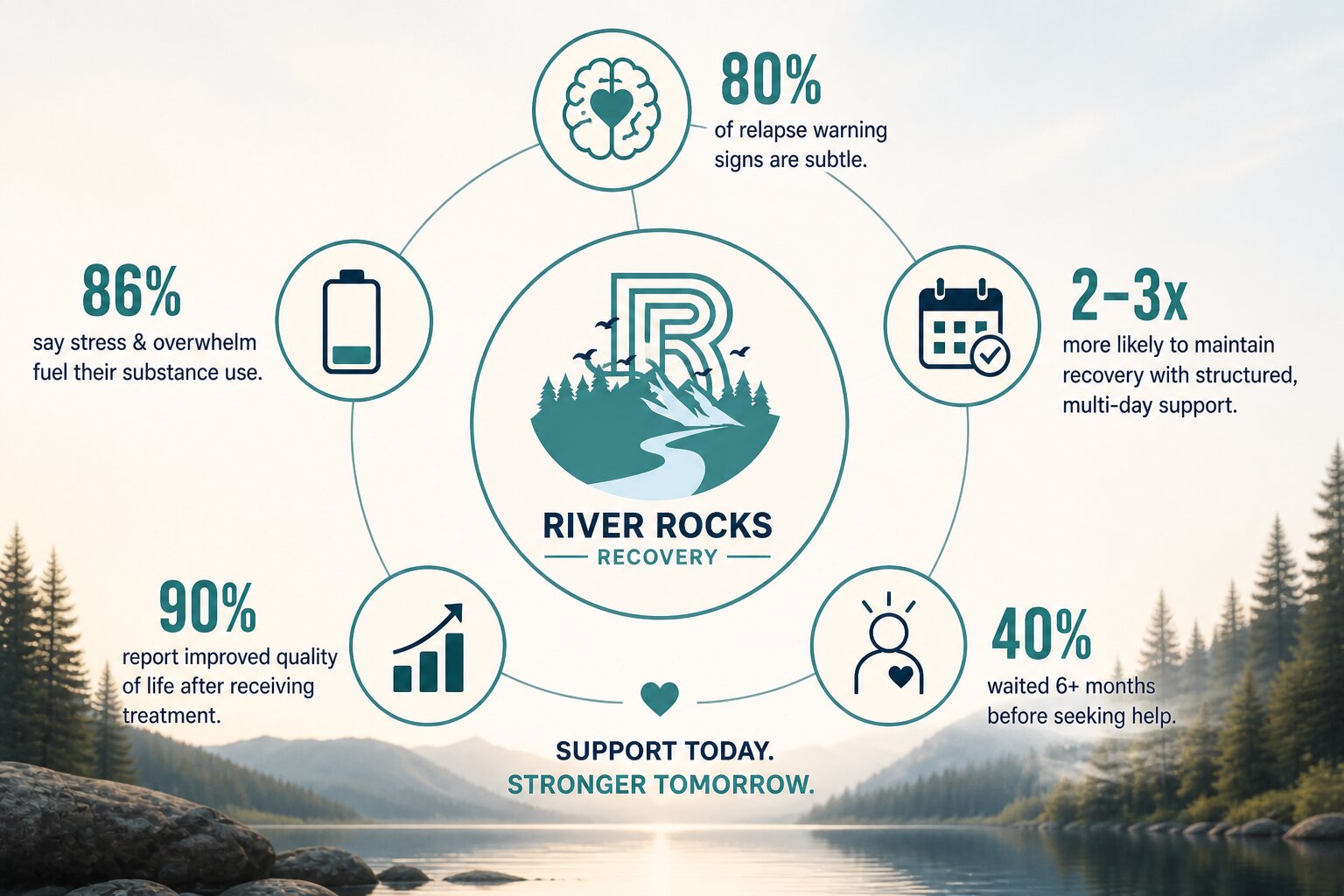
But here’s the part that’s easy to miss: understanding signs you may benefit from IOP can help you recognize when internal struggles are becoming significant enough to deserve structured support, even if life still looks stable on the outside.
You don’t need external consequences for something to be costing you internally.
If your mental energy, your peace, your sense of self is being chipped away… that matters.
The Idea of Change Feels Disruptive
Even if you start to question things, another thought shows up right behind it:
“I can’t just stop everything.”
You have responsibilities. A job. People depending on you.
The idea of stepping away completely—of entering full-time, live-in treatment—can feel overwhelming or unrealistic.
So you do nothing.
And doing nothing slowly becomes its own kind of decision.
Finding Something That Actually Fit My Life
What I didn’t realize at first is that there are options that don’t require you to disappear from your life.
Structured, multi-day weekly care gave me a way to get help without burning everything down.
It wasn’t about labeling myself or committing to something extreme.
It was about finally being honest in a space that could handle it.
Programs like this gave me:
- Consistent support without isolation from my real life
- Space to unpack what was actually going on beneath the surface
- Tools I could use immediately—not someday
And maybe most importantly, it gave me perspective.
I could finally see how much I’d been carrying—and how unnecessary some of that weight really was.
You Don’t Have to Wait Until You Break
There’s this quiet belief a lot of us carry:
“I’ll deal with it if it gets worse.”
But what if you didn’t have to wait for that?
What if the point wasn’t to hit a breaking point—but to avoid one?
Getting support earlier doesn’t mean you’re overreacting.
It means you’re paying attention.
And that’s something worth listening to.
There’s More Going On Beneath the Surface
For a lot of people, alcohol isn’t the only thing in the picture.
Stress, anxiety, burnout, or other patterns often sit underneath it.
That’s why having access to broader support—like treatment in support in Methamphetamine Rehab or similar programs—can matter. Not because it defines you, but because it helps you understand the full picture.
You’re not just a habit. You’re a whole person dealing with a lot.
What Actually Changed for Me
It wasn’t overnight. And it wasn’t perfect.
But things started to shift.
The constant mental noise quieted down.
I stopped negotiating with myself every day.
I felt more present—like I was actually in my life again.
And the biggest surprise?
I didn’t lose control by getting help.
I stopped needing to control everything so tightly in the first place.
FAQ: What High-Functioning People Usually Wonder
Do I really need help if I’m still managing my responsibilities?
That’s the exact question most of us ask. Functioning doesn’t always mean thriving. If it’s costing you peace, energy, or clarity, it’s worth paying attention to.
What if I don’t relate to traditional treatment settings?
You’re not alone in that. A lot of people hesitate because they don’t see themselves in those environments. That’s why flexible, structured care options exist—to meet you where you are.
Will I have to stop working or leave my daily life behind?
Not necessarily. Some programs are designed specifically so you can continue working while getting support. That balance is often what makes it possible to start.
What’s the difference between more intensive care and flexible programs?
It usually comes down to time and structure. Some people need full-time, immersive support. Others benefit from consistent, part-time care that fits into their schedule. The right fit depends on your life and your needs.
What if I try and it doesn’t work?
That fear is real. A lot of people carry it. But not every approach works the same for everyone—and trying something different doesn’t mean you’ve failed before. It just means you’re still looking for what fits.
How do I even start the conversation?
You don’t need a perfect explanation. You can start with something simple: “I don’t feel like myself lately.” That’s enough.
You’re Allowed to Want Something Better
If you’re reading this and something feels familiar, you don’t have to minimize it.
You don’t have to wait for it to get worse.
You don’t have to keep managing everything alone.
Call (888) 905-6281 or explore your options through our iop services in Middletown, Ohio to learn more about what support could look like for you.