

There’s a specific kind of heartbreak that happens when your child says no to help.
Not angry. Not dramatic. Just… “I’m not going.”
For many parents, that moment feels like the floor dropping out beneath them. You start wondering if you missed something. Said the wrong thing. Loved too hard. Not hard enough.
At River Rocks Recovery, we’ve worked with many families standing in that exact space. And sometimes, the thing that changes the conversation isn’t pushing harder. It’s offering a version of treatment that feels less terrifying in the first place — like structured daytime care that lets someone return home at night.
Sometimes “Rehab” Feels Bigger Than They Can Emotionally Handle
A lot of young adults hear the word rehab and immediately picture disappearing for 30 days.
No phone. No freedom. No normal life.
Even if they’re struggling badly, that image can feel overwhelming enough to shut the entire conversation down.
Especially at 20.
At that age, many people still want independence while also quietly falling apart. They may know something is wrong, but the idea of fully stepping away from life can feel humiliating, scary, or impossible.
That doesn’t mean they don’t need help.
It often means they’re scared of what help looks like.
The Fear Isn’t Always About Stopping
Parents sometimes assume the resistance is only about substances.
But underneath the arguing, avoidance, or shutdown, there’s often another fear:
- “What if everyone thinks I’m broken?”
- “What if treatment changes who I am?”
- “What if I fail again?”
- “What if I can’t handle being away from home?”
Young adults rarely say those parts out loud.
Instead, it comes out as anger, sarcasm, silence, or “I’m fine.”
That’s why lower-barrier treatment options can matter so much. They create a softer entry point into recovery instead of making someone feel cornered.
A Daytime Program Can Feel More Human
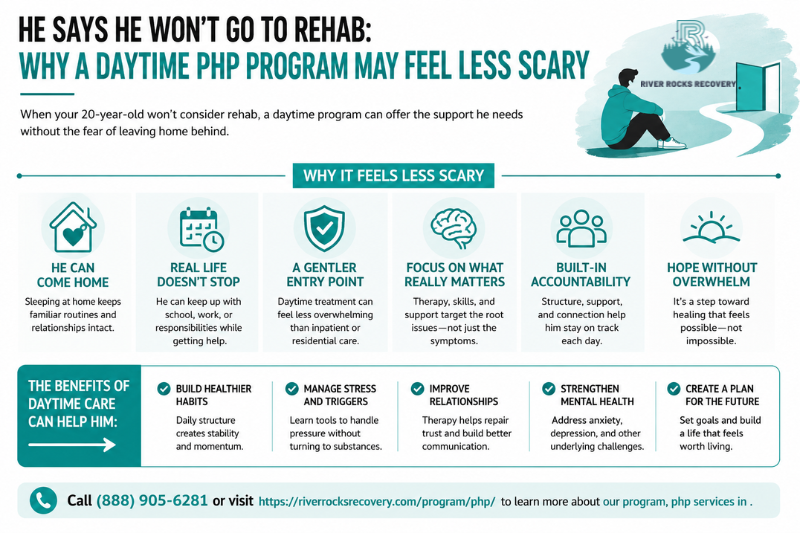
For some people, daytime treatment feels emotionally safer because it doesn’t require disappearing from life overnight.
They attend treatment during the day, receive intensive support, therapy, structure, and accountability — then return home in the evening.
That matters more than people realize.
Especially for someone who:
- Is terrified of inpatient treatment
- Has already refused residential care
- Feels ashamed about needing help
- Wants support but fears losing control
- Needs a slower emotional on-ramp
In many cases, parents searching for day rehab Middletown Ohio aren’t looking for the “easy way out.” They’re looking for something their child might actually say yes to.
And honestly? That matters.
Because treatment can’t help someone who never walks through the door.
Saying Yes to Help Doesn’t Have to Start With Total Surrender
There’s a damaging myth that people have to completely “hit bottom” before treatment works.
But many families have watched that mindset cost years.
Jobs disappear. Trust erodes. Mental health worsens. Relationships become built around crisis management instead of connection. The house starts feeling emotionally tense all the time — like everyone is holding their breath.
That’s the hidden damage of waiting.
Sometimes the first meaningful step is simply getting someone into a structured environment consistently enough for the fog to begin lifting.
Not every recovery story starts with dramatic willingness.
Some start with: “Fine. I’ll try it.”
You’re Allowed to Want Help Before Things Get Worse
Parents often carry quiet guilt here.
You may wonder:
- “Am I overreacting?”
- “Is it bad enough yet?”
- “Should I wait longer?”
- “What if pushing treatment pushes him away?”
Those questions are incredibly common.
But needing support doesn’t require catastrophe first.
If your child is emotionally unraveling, using again, isolating, lying, spiraling, or becoming someone you barely recognize, your concern is valid. You do not have to earn the right to seek help through more suffering.
And if substance use is tied to stimulant use, mood changes, paranoia, or emotional crashes, exploring specialized treatment options in Methamphetamine Rehab may help you better understand what your family is facing.
Sometimes Parents Need Permission to Stop Waiting
One of the hardest parts of loving someone in active addiction is how quickly your world shrinks around their decisions.
You start measuring every day by their mood. Their honesty. Their willingness. Their safety.
It’s exhausting.
And while you cannot force readiness, you can keep offering pathways that feel possible instead of impossible.
Sometimes a daytime treatment model is the first thing that doesn’t immediately trigger panic or resistance. Sometimes it becomes the bridge between denial and real recovery.
Not because it’s smaller.
Because it feels survivable.
If you’d like to learn more about our approach to structured daytime care, call (888) 905-6281 or explore our php services.