


You can look completely fine and still know something’s wrong.
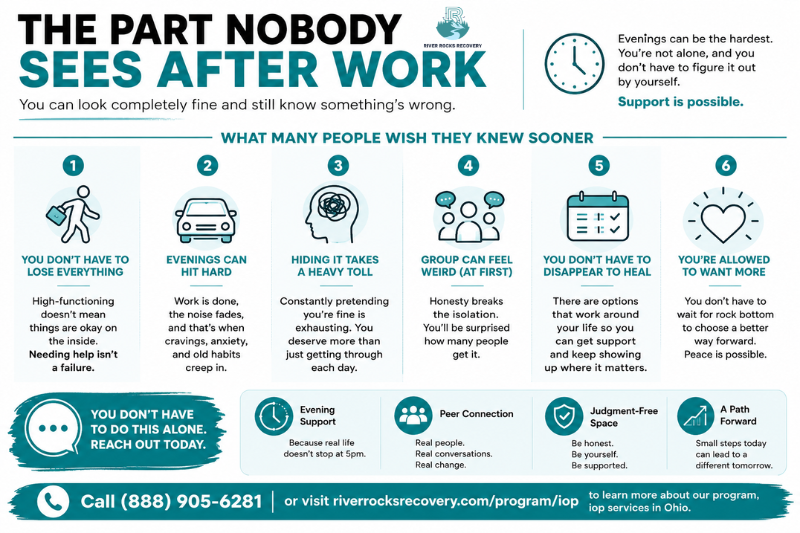
That’s the part people in Butler County don’t always say out loud. You go to work. You answer texts. You show up for your family. Maybe you even make jokes about drinking too much or needing something “to take the edge off.” Then nighttime hits, and the silence gets louder.
For a lot of people, finding structured evening support starts there. Not with a dramatic collapse. Just exhaustion.
You Don’t Have to Lose Everything to Be Tired of Living Like This
I used to think treatment was for people whose lives looked obviously broken.
Mine didn’t.
I still paid bills. Still answered emails. Still made it to dinners and birthdays. But every day felt like carrying groceries with the plastic bags cutting into your fingers. Technically manageable. Quietly painful.
That’s why so many people search for help late at night instead of talking about it during the day. Especially people who are high-functioning. They’ve spent years becoming experts at looking okay.
The problem is that performing “okay” becomes its own addiction.
The Drive Home Can Be the Hardest Part of the Day
There’s a specific kind of loneliness that shows up around 6 or 7 p.m.
Work is over. Your brain finally slows down enough to hear yourself think. Maybe that’s when cravings hit. Maybe that’s when anxiety gets loud. Maybe that’s when you realize you promised yourself you wouldn’t drink tonight… again.
That’s where evening addiction group therapy can matter in a real-world way.
Not because someone lectures you. Not because people force you to confess your darkest secrets. Most people are shocked by how normal it feels at first.
You walk into a room full of people who also looked “fine” on the outside.
And suddenly you’re not carrying the whole thing alone anymore.
Nobody Talks About the Energy It Takes to Hide It
Keeping a substance problem hidden is exhausting.
You rehearse conversations. You monitor how much people notice. You calculate how to seem relaxed while your mind is constantly negotiating with itself.
“I’ll stop after this weekend.”
“I’m just stressed.”
“I’m not as bad as other people.”
That mental math burns people out long before consequences ever show up publicly.
A lot of people entering multi-day weekly treatment in Ohio aren’t trying to escape life. They’re trying to return to it. They want to sleep normally again. Think clearly again. Stop organizing every evening around substances.
That’s a very different emotional starting point than the stereotypes people carry about addiction.
Group Therapy Feels Weird at First — Then Weirdly Honest
The first session can feel awkward. Nobody loves sitting in a circle talking about their life.
But something shifts once people stop pretending.
Someone says something brutally honest and your brain goes, “Wait… you too?”
That’s usually the moment the isolation cracks a little.
You realize addiction doesn’t always look chaotic. Sometimes it looks like a respected professional drinking alone in their garage after everyone goes to bed. Sometimes it looks like a parent hiding mini bottles in the laundry room. Sometimes it looks like someone succeeding publicly while quietly unraveling.
A memorable thing someone once said in group stuck with me:
“I wasn’t drowning. I was just tired of treading water every single day.”
That line hits because high-functioning addiction often feels exactly like that.
Recovery Doesn’t Have to Mean Disappearing From Your Life
A lot of people avoid getting help because they think treatment means vanishing for months.
That’s not always the case.
Some people need live-in treatment or medical detox. Others benefit from support that works around jobs, parenting, or school responsibilities. In Butler County and throughout Ohio, people often look for care that lets them stay connected to real life while finally addressing what’s happening underneath it.
For people struggling with stimulant use, finding specialized support in Methamphetamine Rehab can also make a major difference. Especially when exhaustion, anxiety, and isolation have been building quietly for a long time.
The point isn’t to blow up your life.
The point is to stop surviving it on autopilot.
You’re Allowed to Want More Than “Barely Managing”
A lot of high-functioning people wait too long because nothing looks catastrophic yet.
But constantly white-knuckling your evenings is still suffering.
Needing help doesn’t require a dramatic story. Sometimes it’s simply realizing you haven’t felt peaceful in a very long time.
And honestly? Relief can start smaller than people think. One honest conversation. One group session. One night where you don’t have to pretend you’re fine.
That matters.
Call (888) 905-6281 or visit our iop services to learn more about our program, iop services in Ohio.