

A friend once told me that detox felt like graduating from a school he never wanted to attend.
He walked out feeling proud, exhausted, and completely unsure what came next.
That’s the part people don’t talk about enough.
If you’re leaving detox near Middletown, Ohio, you may feel physically better than you did a week ago. The shakes might be gone. The fog may be lifting. Family members might even be breathing easier.
But if you’re honest with yourself, there’s probably another question sitting quietly in the background:
Now what?
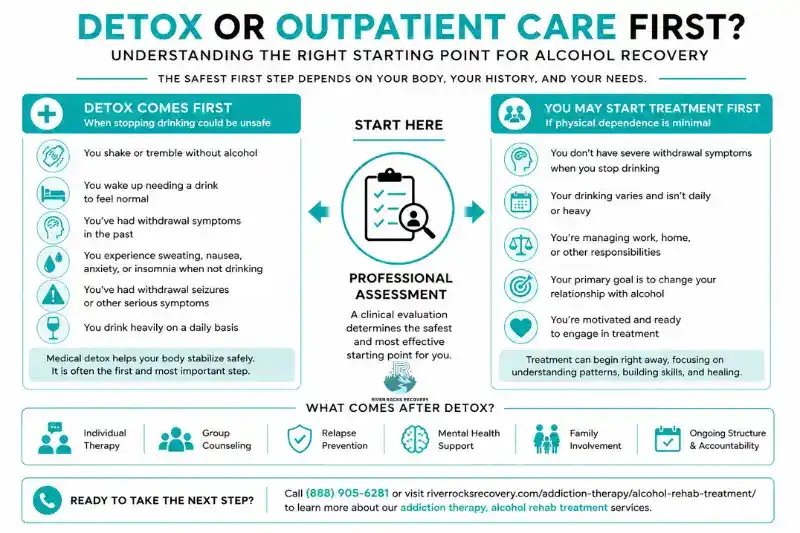
That’s where ongoing support matters. Detox gets substances out of your system. The next phase helps you build a life that doesn’t keep pulling you back toward them. Many people transition into programs like an intensive outpatient program because recovery needs structure long after withdrawal ends.
Feeling Better Can Be Dangerous
One of the strangest parts of early recovery is how quickly the brain can start negotiating.
You wake up feeling clearer. Your body starts recovering. Suddenly the problem doesn’t seem as serious as it did when you checked into detox.
I’ve seen people convince themselves they were cured after five good days.
The problem is that detox addresses the physical crisis. It doesn’t automatically fix the stress, loneliness, anxiety, habits, relationships, or thought patterns that were there before.
That’s why some of the highest relapse risk happens shortly after detox.
Not because people fail.
Because they mistake relief for recovery.
The Question Isn’t Whether You Need Help
For high-functioning people, the debate usually sounds different.
It’s not:
“Do I have a problem?”
It’s:
“Do I really need treatment after this?”
You may still have your job.
You may still pay your bills.
You may still be answering emails and showing up for family dinners.
From the outside, everything appears intact.
But if alcohol or drugs brought you to detox, something wasn’t working.
The goal isn’t simply avoiding another crisis.
It’s understanding why life felt impossible to manage without a substance in the first place.
Recovery Needs Somewhere to Go
Think of detox like pulling your car out of a ditch.
Great.
Now you’re back on the road.
But where are you driving?
Without a plan, many people end up circling the same neighborhoods that got them stuck.
That’s where multi-day weekly treatment can help. Instead of putting life completely on hold, you continue working on recovery while practicing new skills in real-world situations.
You learn how to handle stress on a Tuesday afternoon, not just inside a treatment facility.
You learn how to navigate cravings when they actually happen.
You learn what to do when life gets messy again.
Why High-Functioning People Often Wait Too Long
The people who struggle the longest are not always the people who look the sickest.
Sometimes they’re the ones holding everything together.
The executive who never misses a meeting.
The parent who keeps every commitment.
The business owner who seems successful from the outside.
High-functioning addiction often hides behind achievement.
That creates a dangerous illusion:
“If my life still works, maybe I don’t need more help.”
The truth is that exhaustion has a way of becoming normal.
Many people don’t realize how much energy they’re spending managing their substance use until they stop.
Building a Life That Doesn’t Require Escape
The best treatment isn’t about punishment.
It’s about creating a life that feels manageable without alcohol or drugs.
That might mean repairing relationships.
Learning emotional regulation.
Addressing anxiety or depression.
Finding healthier routines.
Building a support network that actually understands what you’re facing.
For some people near Middletown, that may also include exploring nearby treatment options in Monroe or connecting with specialized help in Methamphetamine Rehab if stimulant use has been part of the picture.
The path forward doesn’t look identical for everyone.
But it almost always requires more than detox alone.
If You’re Searching for the Next Step
If you’ve found yourself searching for after detox treatment near me, you’re probably already asking the right question.
Not whether detox worked.
Whether you’re ready to build on it.
That’s a different conversation.
And it’s usually the one that matters most.
The people who do well long-term aren’t necessarily the strongest. They’re often the ones willing to stay engaged after the immediate crisis passes.
That’s where recovery starts becoming something more than survival.
It’s where it starts becoming a life.
Call (888) 905-6281 or visit our IOP program to learn more about our program, iop services in
Ohio.