


You thought things were stabilizing. Maybe not perfect—but better. Manageable.
And then something shifted.
If you’re here, you’ve likely felt that quiet, unsettling realization: something isn’t right again. Even if your child insists they’re okay.
And that moment—the one where your instincts and their words don’t match—is one of the hardest places a parent can stand.
Relapse Rarely Announces Itself Clearly
Relapse doesn’t always come with a dramatic event.
More often, it’s subtle. Gradual. Easy to second-guess.
You might notice:
- A change in tone—shorter, more distant conversations
- Old patterns quietly reappearing
- Less eye contact, less presence
- A sense that they’re somewhere else, even when they’re right in front of you
Parents often say, “I can’t prove anything—but I feel it.”
That feeling matters. It’s not overreaction. It’s awareness built from knowing your child deeply.
Why “I’m Fine” Can Be So Misleading
When your child says they’re fine, it puts you in a bind.
Because pushing back risks conflict.
But accepting it feels dishonest to what you’re seeing.
The truth is, “I’m fine” during relapse often means:
- “I don’t want to talk about this.”
- “I’m not ready to face it yet.”
- “I don’t know how to fix this.”
It’s not always deception. It’s often protection—of themselves, and sometimes even of you.
That doesn’t make it easier. But it helps explain why words and reality can feel so far apart.
The Emotional Whiplash Parents Experience
Relapse brings a very specific kind of emotional swing.
Hope… then doubt.
Relief… then fear.
Trust… then questioning everything again.
You might find yourself replaying conversations, analyzing behaviors, wondering if you missed something.
You didn’t fail.
This is part of how recovery can unfold.
And still—it hurts.
The “In-Between” Stage Is Where Decisions Feel Impossible
There’s a moment many parents reach where things aren’t clearly stable—but not fully collapsed either.
Your child might still be working. Still functioning. Still showing up in some areas.
Which leads to the question: Is it serious enough yet?
This is where families often hesitate—not because they don’t care, but because they’re trying to avoid making the wrong move.
But waiting for clarity can sometimes mean waiting for things to get worse.
More Support Doesn’t Have to Mean Starting Over
One of the biggest fears parents have is that relapse means going all the way back—to full disruption, full separation, full crisis mode.
That’s not always the case.
There are structured options designed for this exact moment—when someone needs more than occasional therapy, but isn’t in a place to commit to round-the-clock care.
If you’re exploring alternatives to inpatient treatment, this middle level of support can offer something critical: consistency without total disruption.
You can learn more about what that kind of support looks like through structured care options—not as a final decision, but as a starting point for understanding what’s available.
Why Structure Matters More Than Motivation Right Now
Many parents hope their child will “decide” to turn things around again.
And motivation does matter. But during relapse, it’s often inconsistent.
Structure fills that gap.
It creates:
- A predictable routine during an unpredictable time
- Daily clinical support when weekly check-ins aren’t enough
- Accountability that doesn’t fall entirely on family relationships
Think of it like scaffolding around a building under repair.
It doesn’t fix everything—but it holds things steady while the real work happens.
When Mental Health Is Part of the Picture
Relapse is rarely just about substance use.
Often, it’s tied to underlying stress, anxiety, depression, or emotional overwhelm that hasn’t fully resolved.
When mental health and substance use collide, things can escalate quickly—and feel harder to untangle.
That’s why broader care options, including treatment in treatment options in Methamphetamine Rehab, can sometimes be part of the conversation. Not because it labels your child, but because it expands the support available to them.
This isn’t about narrowing the problem.
It’s about seeing the full picture.
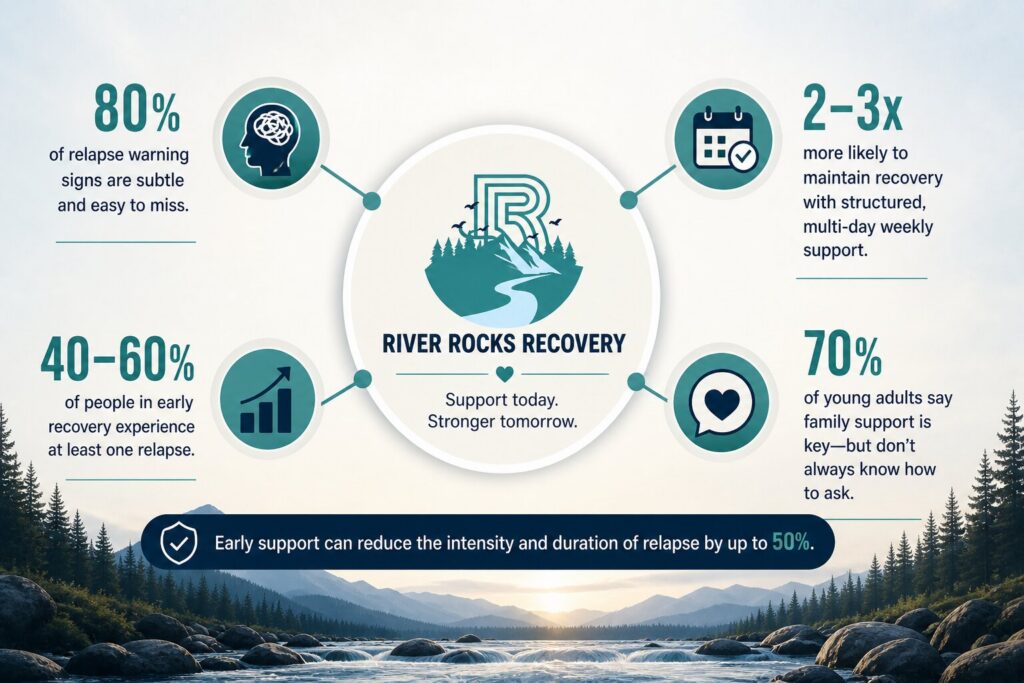
Acting Earlier Can Change the Outcome
There’s a quiet belief many parents carry:
“Let’s wait and see.”
Sometimes that comes from hope.
Sometimes from fear of pushing too hard.
But earlier intervention often means:
- Less intensity later
- More willingness from your child to engage
- A greater chance of stabilizing before things escalate
You don’t have to wait for things to fall apart to justify taking action.
You Are Carrying More Than You Should Have To
Parents often become the emotional center of everything during relapse.
You’re watching closely. Supporting quietly. Holding fear you don’t always share out loud.
It’s a heavy place to stand.
And while your love is powerful—it’s not meant to replace structured, professional support.
You deserve backup in this.
There Is Still Movement Forward—Even Now
Relapse can feel like everything has unraveled.
But clinically, it’s often part of a longer process—not the end of it.
What matters most isn’t that it happened.
It’s what happens next.
With the right level of support, many young adults:
- Re-engage more honestly
- Build stronger coping strategies
- Gain insight they didn’t have before
This moment—painful as it is—can still become a pivot point.
FAQ: What Parents Often Ask in This Moment
How do I know if this is actually relapse or just a rough patch?
It’s not always clear right away. Look for patterns, not single moments. If behaviors feel familiar from before—or your instincts keep signaling concern—it’s worth taking seriously.
Should I confront them directly?
Approach matters more than timing. Direct confrontation can sometimes create defensiveness. A calmer, curious approach—naming what you’ve noticed without accusation—can open more space for honesty.
What if they refuse help again?
This is one of the hardest parts. You can’t control their decision—but you can control the options you present and the boundaries you hold. Consistency matters, even when it feels like it’s not working.
Is this level of care too much if things aren’t “that bad” yet?
Not necessarily. In fact, this level of structured support is often designed for exactly this stage—before things reach a crisis point.
Will this disrupt their work or daily life?
Many structured programs are designed to allow individuals to continue parts of their routine while receiving consistent support. That balance is often what makes it more acceptable to young adults.
Did we do something wrong?
This question comes up almost every time. The answer, in most cases, is no. Recovery is complex, and relapse is not a simple reflection of parenting.
You Don’t Have to Navigate This Alone
If you’re standing in that uncertain space—where something feels wrong but you’re not sure what to do next—you’re not alone in it.
And you don’t have to wait for things to get worse to reach out.
Call (888) 905-6281 or explore our php services in Middletown, Ohio to learn more about what support could look like for your child.