


Alcoholic ketoacidosis is a life-threatening medical emergency that can develop after prolonged heavy alcohol use, especially when someone has stopped eating, is vomiting repeatedly, or has recently gone on a drinking binge followed by sudden withdrawal from alcohol. While it is less widely recognized than alcohol poisoning, it can become just as dangerous without immediate medical care.
If you or someone you know develops symptoms of alcoholic ketoacidosis, call 911 or go to the nearest emergency department immediately. Hospital treatment is essential, and this condition should never be managed at home.
For many people, alcoholic ketoacidosis is also a warning sign that drinking has progressed beyond occasional misuse. After emergency treatment, addressing the underlying alcohol use through professional alcohol addiction treatment can reduce the risk of future medical crises and support long-term recovery.
What Alcoholic Ketoacidosis Is
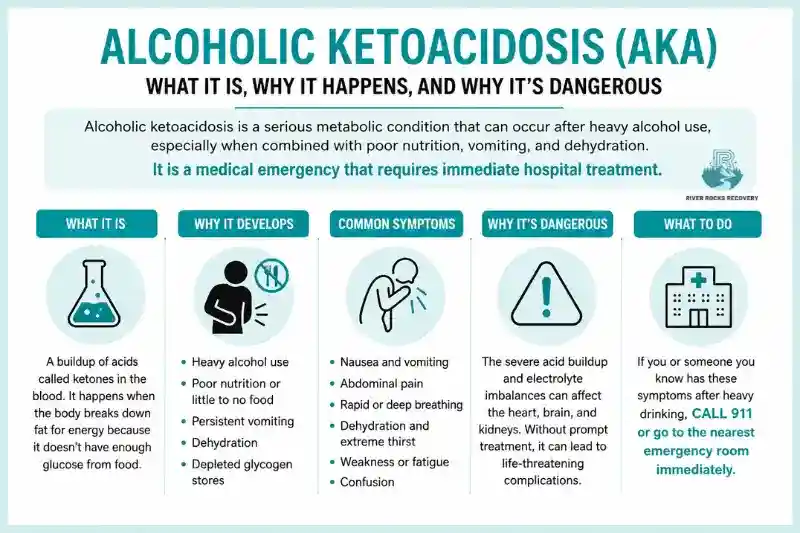
Alcoholic ketoacidosis is a serious metabolic condition that occurs when the body produces excessive amounts of acids called ketones. Under normal circumstances, the body primarily uses glucose for energy. When glucose becomes unavailable because someone has not eaten enough, the body begins breaking down fat for fuel instead.
This process naturally produces ketones. In alcoholic ketoacidosis, ketone production becomes excessive, causing the blood to become dangerously acidic.
Unlike diabetic ketoacidosis, alcoholic ketoacidosis typically develops in people with chronic heavy alcohol use who have experienced several days of poor food intake, persistent vomiting, or dehydration. Blood sugar may be normal, low, or only mildly elevated, making the condition different from diabetic emergencies even though some symptoms overlap.
Why It Develops
Alcoholic ketoacidosis usually results from several factors happening at the same time rather than from alcohol alone.
Heavy drinking often suppresses appetite, and some people go days eating very little. Alcohol also causes nausea and vomiting, making it even harder to replace fluids and nutrients. As glycogen stores become depleted, the body switches from using carbohydrates to breaking down fat for energy.
Several metabolic changes then occur simultaneously:
- Low food intake reduces available glucose.
- Persistent vomiting causes dehydration and electrolyte imbalances.
- Chronic alcohol use alters normal liver metabolism.
- Stress hormones increase fat breakdown.
- Ketones accumulate faster than the body can eliminate them.
The result is metabolic acidosis—a dangerous buildup of acid in the bloodstream that affects multiple organs and requires immediate hospital treatment.
Symptoms of Alcoholic Ketoacidosis
Symptoms often begin after several days of heavy drinking followed by vomiting, little food intake, or suddenly stopping alcohol consumption.
Common symptoms include:
- Severe nausea and vomiting
- Abdominal pain
- Rapid or deep breathing
- Extreme thirst
- Weakness and fatigue
- Dizziness
- Fast heart rate
- Dehydration
- Confusion or difficulty thinking clearly
Some people remain awake and alert despite being seriously ill, while others become increasingly confused as dehydration and acid buildup worsen.
Because these symptoms can resemble pancreatitis, gastrointestinal illness, diabetic ketoacidosis, or other medical emergencies, professional evaluation is essential. Only hospital testing can determine the underlying cause and provide appropriate treatment.
Why It Is a Medical Emergency
Alcoholic ketoacidosis is not something that improves with rest, hydration, or simply stopping drinking at home.
Without prompt medical care, severe dehydration, electrolyte abnormalities, and metabolic acidosis can interfere with normal heart, brain, and kidney function. People experiencing alcoholic ketoacidosis may also have additional complications such as alcohol withdrawal, pancreatitis, gastrointestinal bleeding, liver disease, or infections that require urgent treatment.
Hospital care typically includes:
- Intravenous fluids
- Dextrose (glucose) to help stop ketone production
- Thiamine (vitamin B1) before glucose when appropriate
- Electrolyte replacement
- Monitoring for alcohol withdrawal and other complications
- Treatment of any underlying medical conditions
If someone has persistent vomiting, rapid breathing, severe abdominal pain, confusion, or appears seriously ill after heavy alcohol use, seek emergency medical care immediately or call 911.
What Alcoholic Ketoacidosis Signals About Your Relationship with Alcohol
Not everyone who drinks heavily develops alcoholic ketoacidosis, but when it occurs, it often reflects a pattern of alcohol use that is placing significant strain on the body.
Many people who experience alcoholic ketoacidosis have been drinking heavily over time, skipping meals, struggling to control their alcohol use, or experiencing repeated cycles of binge drinking and withdrawal. Even after the immediate medical emergency is treated, those underlying patterns usually remain.
The hospitalization can become an important opportunity to address more than the immediate crisis. Once medically stable, many people benefit from speaking with addiction professionals about what led to the emergency and what support might help prevent another one.
Recovery isn’t about treating a single episode of illness. It’s about addressing the drinking pattern that made that emergency possible in the first place. For people in Middletown and throughout the Cincinnati and Dayton region, reaching out for professional support after a medical emergency can be an important step toward protecting both long-term health and quality of life.
Frequently Asked Questions
What causes alcoholic ketoacidosis?
Alcoholic ketoacidosis usually develops after prolonged heavy alcohol use combined with poor nutrition, little or no food intake, persistent vomiting, dehydration, and metabolic changes that cause excessive ketone production.
Is alcoholic ketoacidosis dangerous?
Yes. Alcoholic ketoacidosis is a medical emergency that requires immediate hospital treatment. Without prompt care, it can lead to severe complications involving the heart, brain, kidneys, and other organs.
Can alcoholic ketoacidosis be prevented?
The most effective way to prevent alcoholic ketoacidosis is to address unhealthy alcohol use before serious medical complications occur. For people who regularly drink heavily, seeking professional treatment can reduce the risk of future emergencies and improve overall health.
Moving Beyond the Emergency
An episode of alcoholic ketoacidosis is more than a medical diagnosis—it is often a sign that alcohol has begun causing serious harm to the body. While emergency treatment addresses the immediate crisis, lasting recovery means addressing the drinking that contributed to it.
If you or someone you care about has experienced alcoholic ketoacidosis, professional treatment can help identify the underlying causes of alcohol misuse, reduce the risk of future medical emergencies, and build a healthier path forward. River Rocks Recovery supports individuals throughout Middletown, Cincinnati, and Dayton who are ready to take that next step.