

Attention-deficit/hyperactivity disorder (ADHD) and addiction are closely connected in ways that many people don’t realize until they find themselves struggling with both. Some people receive an ADHD diagnosis years before developing a substance use disorder. Others don’t discover they have ADHD until they enter addiction treatment and begin looking at the patterns that contributed to their substance use.
One of the most important facts about ADHD and addiction is that treating only one condition often leaves the other driving the cycle forward. Someone may achieve sobriety but continue to struggle with untreated impulsivity, emotional dysregulation, or difficulty focusing. Another person may receive ADHD treatment while an active substance use disorder continues to interfere with progress.
That’s why integrated care matters. Effective treatment addresses both conditions together rather than asking one to wait for the other. For many people, comprehensive care that includes dual diagnosis treatment offers the best opportunity for lasting recovery.
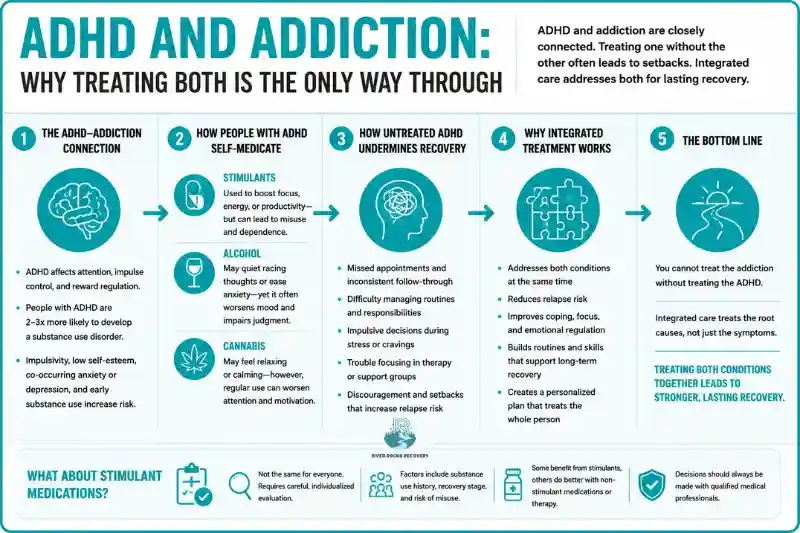
The ADHD–Addiction Connection
Research consistently shows that people with ADHD are at significantly higher risk of developing substance use disorders than those without ADHD. The reasons are complex and involve biology, behavior, and everyday life.
ADHD affects the brain systems involved in attention, motivation, reward, and impulse control. These differences can make it more difficult to delay gratification, regulate emotions, and resist urges. Over time, substances may become a quick way to change how someone feels, even when they ultimately create more problems.
Other factors also contribute to increased risk, including:
- Greater impulsivity that leads to experimenting with substances at a younger age
- Difficulty managing stress or frustration without unhealthy coping strategies
- Chronic feelings of failure or low self-esteem caused by untreated ADHD symptoms
- Co-occurring anxiety or depression, which are also more common in people with ADHD
Importantly, ADHD does not cause addiction on its own. Many people with ADHD never develop a substance use disorder. Instead, ADHD increases vulnerability, especially when symptoms go undiagnosed or untreated.
How People with ADHD Self-Medicate
Many people don’t begin using substances because they want to become addicted. They may be trying to quiet symptoms they don’t yet understand.
The specific substance often reflects the symptom they’re trying to manage.
Stimulants
Some people misuse prescription stimulants or illicit stimulants in an attempt to improve concentration, increase productivity, or feel mentally organized. While stimulants can temporarily improve focus, using them without appropriate medical supervision carries significant risks, including misuse, dependence, and addiction.
Alcohol
Alcohol may seem to quiet racing thoughts, reduce social anxiety, or provide temporary relief from emotional overwhelm. Unfortunately, alcohol also impairs judgment, worsens sleep quality, and can increase depression and anxiety over time.
Cannabis
Some individuals report that cannabis helps them slow down, relax, or reduce restlessness. However, regular cannabis use may also affect attention, motivation, memory, and executive functioning—areas that are already challenging for many people living with ADHD.
Although these substances may seem helpful in the moment, they don’t treat ADHD itself. Instead, they often create additional physical, emotional, and behavioral problems that make both conditions more difficult to manage.
How Untreated ADHD Undermines Addiction Recovery
Recovery involves much more than stopping substance use. It also requires building new routines, strengthening coping skills, managing emotions, and following through with treatment.
Untreated ADHD can make each of these tasks more difficult.
For example, someone may:
- Miss therapy or medical appointments because of disorganization
- Struggle to maintain healthy daily routines
- Act impulsively during moments of stress or craving
- Have difficulty concentrating during counseling or support groups
- Feel discouraged after repeated setbacks that stem from untreated symptoms rather than lack of motivation
These challenges can be misunderstood as a lack of commitment to recovery when they may actually reflect untreated ADHD.
Likewise, treating ADHD while ignoring an active substance use disorder usually produces disappointing results. Substance use can interfere with therapy, medication effectiveness, decision-making, and overall stability.
The goal isn’t to decide which condition is more important. It’s recognizing that each affects the other.
Why Integrated Treatment Works
The strongest approach is one that addresses both conditions simultaneously through a coordinated treatment plan.
Integrated care allows clinicians to understand how ADHD symptoms influence substance use and how substance use affects ADHD symptoms. Rather than treating each diagnosis in isolation, the treatment team develops strategies that work together.
An integrated treatment plan may include:
- Comprehensive psychiatric evaluation
- Individual therapy addressing both ADHD and substance use
- Cognitive behavioral therapy and other evidence-based approaches
- Relapse prevention planning that accounts for ADHD-related challenges
- Medication evaluation when appropriate
- Family education and ongoing recovery support
This approach helps reduce the risk that untreated ADHD symptoms will undermine recovery while also ensuring that substance use doesn’t interfere with managing ADHD.
What About Stimulant Medications During Recovery?
This is one of the most common—and most important—questions people ask.
The answer is not the same for everyone.
Stimulant medications are considered an effective treatment for ADHD for many individuals. However, for someone with a current or past substance use disorder, deciding whether to use stimulant medication requires careful, individualized assessment.
Clinicians consider factors such as:
- The person’s substance use history
- Current stage of recovery
- Risk of medication misuse or diversion
- Previous response to ADHD medications
- Whether non-stimulant medications may be appropriate
Some people successfully take prescribed stimulant medication as part of a carefully monitored recovery plan. Others benefit from non-stimulant ADHD medications or behavioral therapies. The safest and most effective approach depends on the individual, which is why medication decisions should always be made with qualified medical professionals familiar with both ADHD and addiction.
Getting Help at River Rocks Recovery
When ADHD and addiction occur together, treating only one condition often leaves important barriers to recovery in place. Addressing both simultaneously allows treatment to target the underlying patterns that contribute to ongoing substance use while helping people build practical skills for daily life.
At River Rocks Recovery, individuals from Middletown and surrounding communities, including Cincinnati and Dayton, can receive comprehensive care designed to address co-occurring mental health conditions alongside substance use disorders. Integrated treatment helps create a more complete foundation for long-term recovery by recognizing how these conditions interact instead of viewing them separately.
If you or someone you love is struggling with ADHD and addiction, reaching out for a professional assessment can be the first step toward a treatment plan that addresses the whole person—not just one diagnosis.
Frequently Asked Questions
Does ADHD cause addiction?
No. ADHD does not directly cause addiction. However, it significantly increases the risk of developing a substance use disorder because of factors such as impulsivity, emotional dysregulation, and attempts to self-medicate untreated symptoms.
Can you treat ADHD and addiction at the same time?
Yes. In many cases, treating both conditions simultaneously is considered the most effective approach. Integrated treatment allows clinicians to address how each condition influences the other while reducing barriers to lasting recovery.
What about stimulant medications in addiction recovery?
Stimulant medications may still be appropriate for some people in recovery, but the decision requires careful medical evaluation. Factors such as recovery stability, misuse risk, treatment history, and alternative medication options should all be considered before developing an individualized treatment plan.