
When you’re newly diagnosed—or even just beginning to wonder if something needs to change—it’s easy to feel overwhelmed by the idea of treatment. The word alone can bring up fears: Will it take over my life? Will it change who I am? Do I really need it?
At River Rocks Recovery, we hear these concerns every day. And they make sense. Especially for those navigating anxiety, depression, trauma, or dual diagnoses, treatment can feel like a huge leap. But here’s something we want you to know: not all care requires stepping away from your life. In fact, some of the most effective, sustainable healing happens right in the flow of your everyday world.
Our outpatient treatment program in Ohio was built for people who want real help without losing their autonomy. If you’re scared that seeking support means sacrificing your identity, creativity, or daily responsibilities, you’re not alone. This blog is for you.
Let’s walk through seven benefits of outpatient care—some of which might surprise you.
1. You Can Keep Living Your Life While You Heal
Outpatient treatment is structured to fit around your schedule, not the other way around. That means you can attend therapy sessions, group work, or psychiatric appointments without leaving your job, dropping out of school, or stepping away from your family.
For many people, especially those with new diagnoses, this balance is vital. You’re already managing symptoms and big questions like understanding the PTSD vs anxiety differences and how they affect your daily life. Outpatient care gives you the support to explore those safely without disconnecting from the world you’re still a part of.
2. Treatment That Doesn’t Feel Like a Takeover
When people picture treatment, they often imagine hospitalization or a highly medicalized environment. Outpatient treatment programs challenge that image. At River Rocks Recovery, your care feels more like collaboration than instruction.
We work with you to identify what’s getting in the way of your peace—and we do it with you in the driver’s seat. No white coats. No one-size-fits-all answers. Just thoughtful, human support that adapts to your needs.
3. Privacy That Feels Respectful—Not Secretive
Starting treatment doesn’t mean you owe anyone an explanation. Outpatient care allows you to attend appointments without having to explain long absences or overnight stays. It protects your privacy while still giving you access to consistent support. For individuals exploring choosing IOP recovery in Middletown Ohio, outpatient programs can offer flexible, structured care while maintaining everyday responsibilities and privacy.
This can be especially important for people in professional or academic environments where stigma still lingers. You get to control your story. And if you’re not ready to share it, that’s okay.
4. Flexible, Evidence-Based Support
Outpatient programs offer access to many of the same evidence-based practices used in residential care—including cognitive behavioral therapy (CBT), dialectical behavior therapy (DBT), medication management, and more. The difference? It’s paced in a way that works with your life.
You’re not being thrown into the deep end. You’re offered a structure that holds you up without overwhelming you. That’s especially helpful if you’ve felt hesitant about medication or therapy before. It gives you time, space, and partnership.
“I was scared that treatment would change who I was. But outpatient care helped me feel more like myself—not less. It didn’t erase anything. It helped me understand it.”
– Outpatient Client, 2023
5. Healing in Real Time, Not in Isolation
When you attend residential care, your environment is fully controlled. That can be helpful—but it can also mean you don’t get to test your skills until you’re back in the world.
Outpatient care is different. Because you’re still living your day-to-day life, you bring real challenges—work stress, relationship dynamics, sleep issues—into the room with you. And we work on them together, in real time.
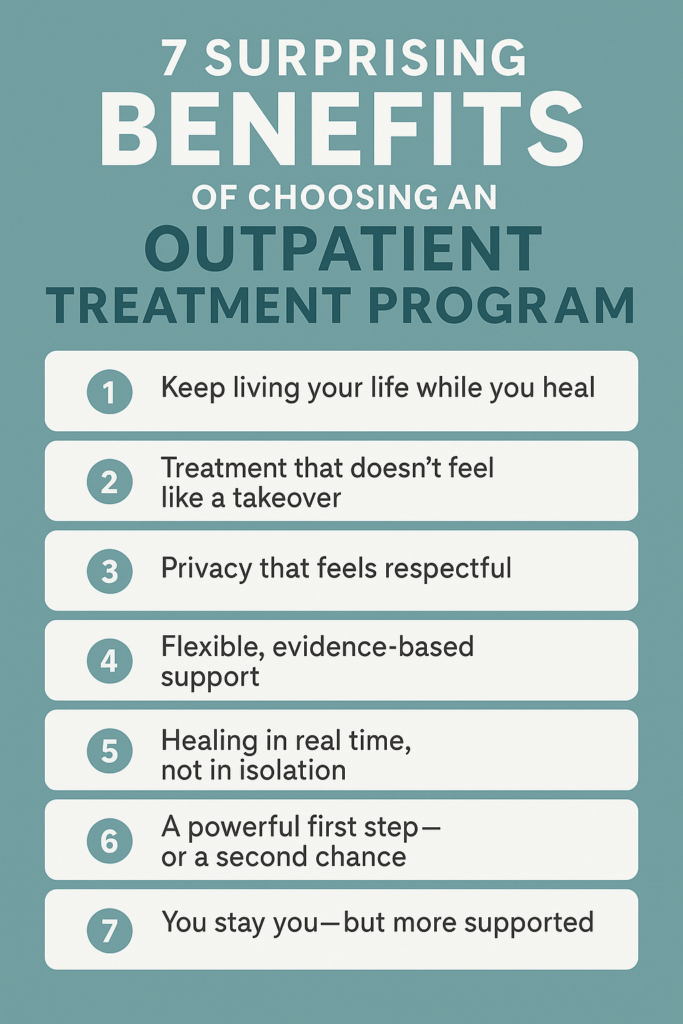
6. It Can Be a Powerful First Step—or a Second Chance
Not everyone is ready for intensive inpatient treatment. Some people need to dip their toes in. Others tried treatment before and it didn’t stick. Outpatient care honors both.
Whether you’re starting for the first time or finding your way back after a pause, outpatient programs meet you where you are. It’s not about starting over. It’s about starting again—with new tools, better timing, and a team that sees your strength.
7. You Stay You—But More Supported
Let’s name the fear: that treatment will dull you, numb you, or take something important away. Especially if you’re someone who’s creative, emotional, sensitive, or deeply thoughtful, the idea of “fixing” your brain can feel threatening.
At River Rocks Recovery, we don’t believe in flattening people. We believe in helping them come home to themselves. Whether you’re exploring therapy, medication, or both, the goal is always the same: to reduce your suffering and increase your clarity—without changing your essence. For many individuals, understanding inpatient vs outpatient alcohol rehab can help them choose a level of care that fits their needs, lifestyle, and stage of recovery.
Still Have Questions? We’ve Got You.
What’s the difference between outpatient and inpatient treatment?
Inpatient (or residential) treatment requires you to live at the facility, often for weeks or months. Outpatient treatment means you attend sessions during the day or evening but continue living at home. Outpatient care offers more flexibility and is ideal for people who don’t require round-the-clock supervision.
How do I know if outpatient treatment is enough for me?
That depends on your needs, safety, and current challenges. Outpatient treatment is often recommended for people with stable living environments, good support systems, and a readiness to engage in therapy without needing full-time care. If you’re unsure, we’re happy to help assess that with you—no pressure, just clarity.
What if I’m scared to start medication?
You’re not alone. So many people feel nervous about what medication might mean—especially when they’ve just received a diagnosis. Our team includes professionals who understand both the science and the emotional weight of that decision. You’ll never be pushed. We’ll walk through options with you, and you’ll make the call.
Is outpatient treatment covered by insurance?
Often, yes. Most insurance plans cover outpatient mental health services. Our staff can help you verify your benefits and understand what’s included before you commit to anything.
Can I switch to inpatient later if I need to?
Absolutely. Treatment is a dynamic process. If outpatient care isn’t enough or you need more support, we’ll help you transition to a higher level of care—either within our network or through a trusted partner.
Let’s Talk Through It—Together
If you’re considering outpatient treatment but still feel unsure, that’s okay. You don’t have to have it all figured out to start a conversation. At River Rocks Recovery, we specialize in meeting people gently, honestly, and without pressure. You deserve care that respects your identity, your pace, and your voice.
Call us at (888) 905-6281. We’re here to help you feel clear, supported, and in control of what comes next.