

If you’re exploring medication options for opioid use disorder, you may have come across Sublocade. Unlike medications that require a daily dose, this treatment is given as a monthly injection by a healthcare professional. For some people, that can make recovery feel simpler by removing the need to remember medication every day while reducing opportunities for missed doses or diversion.
Medication is only one part of recovery, but for many people it can provide the stability needed to focus on counseling, lifestyle changes, and long-term healing. When combined with comprehensive opioid addiction treatment, medication-assisted treatment (MAT) can help support sustained recovery.
Here’s what you should know about how this monthly medication works, who it may be appropriate for, and what to expect if you’re considering it.
What Sublocade Is
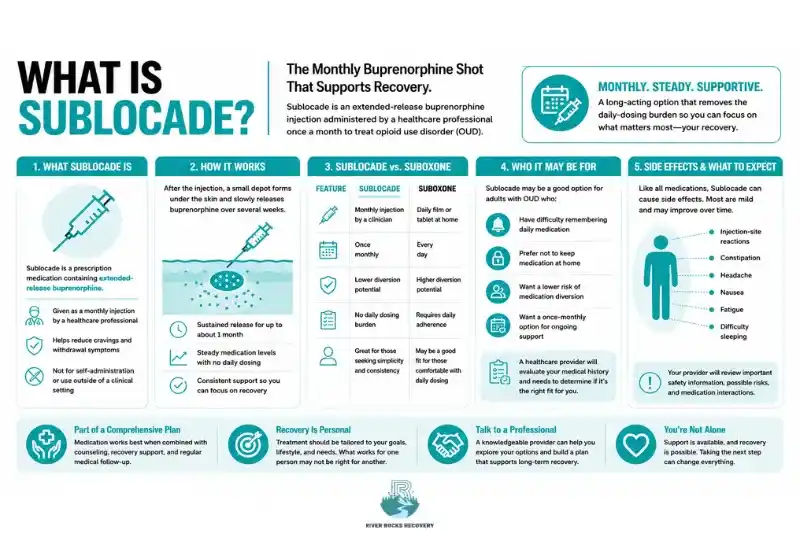
Sublocade is a prescription medication containing extended-release buprenorphine, a partial opioid agonist used to treat opioid use disorder. Rather than taking medication every day, patients receive an injection from a qualified healthcare provider approximately once each month.
The medication slowly releases buprenorphine over time, helping maintain steady levels in the body. This can reduce opioid cravings and withdrawal symptoms without producing the same effects as full opioid agonists when taken as prescribed.
An important difference from some other medications is that Sublocade must be administered by a clinician. It is not available for home use and cannot be self-administered.
How the Monthly Shot Works
After the injection is administered beneath the skin by a healthcare provider, the medication forms a small depot that gradually releases buprenorphine over several weeks.
Because the medication is continuously released:
- There is no need to remember a daily dose.
- Medication levels remain more consistent throughout the month.
- Missed daily doses become less of a concern.
- There is less opportunity for medication diversion because patients do not take the medication home.
Many patients appreciate the convenience of monthly treatment, particularly if taking medication every day has been difficult due to work schedules, travel, family responsibilities, or inconsistent routines.
Although the injection can simplify medication management, it is still most effective when paired with behavioral therapy, recovery support, and regular medical follow-up.
Sublocade vs. Suboxone — Key Differences
Both medications contain buprenorphine and are approved to help treat opioid use disorder, but they differ in how they’re administered and how they fit into a person’s recovery plan.
| Feature | Sublocade | Suboxone |
|---|---|---|
| Administration | Monthly injection by a healthcare professional | Daily film or tablet taken at home |
| Dosing schedule | Approximately once per month | Daily |
| Convenience | No daily medication reminders | Requires consistent daily adherence |
| Diversion potential | Lower because it remains under clinician control | Greater potential because medication is dispensed for home use |
| Best for | People seeking a long-acting option after stabilization | People comfortable with or needing daily medication management |
Neither medication is universally better than the other. The right choice depends on factors such as medical history, treatment goals, lifestyle, and recommendations from a qualified healthcare provider.
Who Is a Candidate for Sublocade?
This medication may be appropriate for adults with opioid use disorder who meet clinical eligibility requirements established by their treatment provider.
Someone may benefit from a monthly injectable medication if they:
- Have difficulty remembering daily medication.
- Want a treatment option that requires fewer medication decisions throughout the month.
- Prefer not to keep medication at home.
- Have concerns about medication diversion or accidental access by others.
- Are looking for a longer-acting maintenance option as part of an ongoing recovery plan.
Not everyone is a candidate. Healthcare providers evaluate each person’s medical history, current treatment status, and overall recovery needs before determining whether this medication is appropriate.
Because treatment plans are individualized, medication decisions should always be made with a qualified clinician rather than based solely on convenience.
Side Effects and What to Expect
Like all prescription medications, Sublocade can cause side effects. Many people tolerate treatment well, but some experience mild or moderate symptoms, particularly after an injection.
Common side effects may include:
- Injection-site discomfort, redness, or itching
- Constipation
- Headache
- Nausea
- Fatigue
- Difficulty sleeping
Your healthcare provider will also discuss important safety information, including potential risks, medication interactions, and situations that require immediate medical attention.
Regular follow-up appointments help ensure the medication is working as intended while allowing your treatment team to monitor progress and address any concerns.
Frequently Asked Questions
How long does Sublocade last?
Each injection is designed to release buprenorphine gradually over approximately one month, which is why patients receive the medication on a monthly schedule determined by their healthcare provider.
What is the difference between Sublocade and Suboxone?
The primary difference is how they’re administered. Sublocade is a long-acting monthly injection given by a healthcare professional, while Suboxone is typically taken daily at home as a film or tablet. Both contain buprenorphine but may be appropriate for different patients depending on their treatment plan.
What are the side effects of Sublocade?
Common side effects can include injection-site reactions, constipation, headache, nausea, fatigue, and sleep changes. Your healthcare provider can explain possible risks and help determine whether the medication is appropriate based on your health history.
Finding the Right Medication-Assisted Treatment Plan
Medication-assisted treatment isn’t one-size-fits-all. Some people prefer a daily medication they can manage themselves, while others appreciate the simplicity and consistency of a monthly injection administered by a clinician.
If you’re considering medication options for opioid use disorder, speaking with an experienced treatment provider can help you understand which approach best fits your recovery goals, medical history, and lifestyle. A personalized treatment plan that combines medication with counseling and ongoing support offers the strongest foundation for long-term recovery.