
Waking up drenched in sweat after drinking can be unsettling. For some people, it happens occasionally after a night of alcohol and disappears by morning. For others, it becomes a recurring problem that signals something more serious.
The key difference is understanding why the sweating is happening. Sometimes alcohol night sweats are a temporary reaction to the way alcohol affects the body. In other cases, they can be an early warning sign of physical dependence and alcohol withdrawal, which can become a medical emergency.
If alcohol has become difficult to control or you’re experiencing withdrawal symptoms when you stop drinking, professional alcohol addiction treatment can provide medical supervision and support while reducing the risks associated with withdrawal.
What Alcohol Night Sweats Are
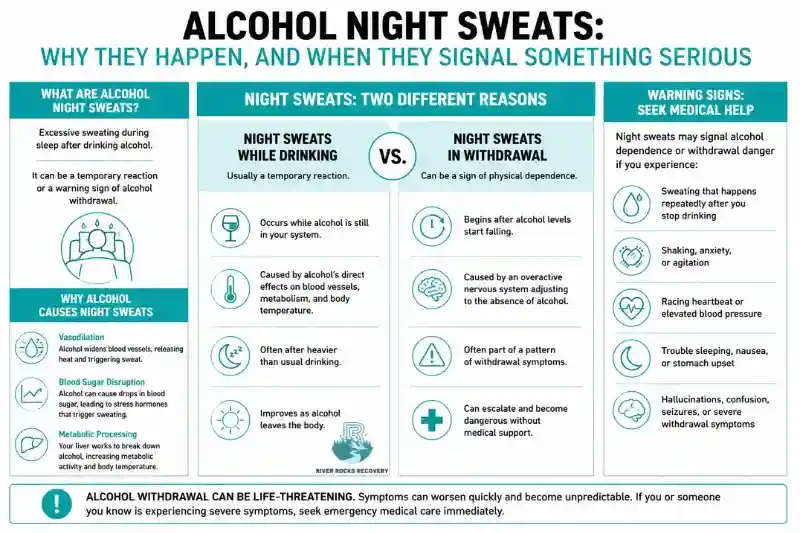
Alcohol night sweats refer to excessive sweating that occurs while sleeping after drinking alcohol. Some people wake up with damp clothing or sheets, while others experience intense sweating that disrupts their sleep multiple times during the night.
Night sweats themselves are a symptom rather than a condition. They can occur for many reasons, including infections, hormonal changes, certain medications, and alcohol use.
When alcohol is involved, the timing matters. Sweating that happens while alcohol is still in your system may have different causes than sweating that begins several hours later as your body starts withdrawing from alcohol.
Understanding that distinction can help determine whether the symptom is relatively harmless or something that deserves prompt medical attention.
Why Alcohol Causes Night Sweats
Several biological processes can contribute to alcohol night sweats, even in people who are not physically dependent on alcohol.
Alcohol widens blood vessels
Alcohol causes blood vessels near the surface of the skin to expand, a process known as vasodilation. As warm blood moves closer to the skin, your body releases heat more easily.
Although this can make you feel warm or flushed, your body may respond by activating sweat glands to regulate temperature, especially while you’re sleeping under blankets.
Blood sugar changes
Alcohol can interfere with the body’s ability to maintain stable blood sugar levels. Overnight drops in blood sugar may trigger the release of stress hormones such as adrenaline, which can cause sweating, shakiness, and interrupted sleep.
This effect may be more noticeable if you’ve been drinking without eating enough beforehand.
Increased metabolic activity
Your liver treats alcohol as a toxin that must be broken down and eliminated. Processing alcohol increases metabolic activity and can temporarily affect body temperature regulation. Combined with dehydration and disrupted sleep cycles, this can contribute to nighttime sweating.
For occasional drinkers, these effects typically resolve once the alcohol has been metabolized.
Night Sweats While Drinking vs. Night Sweats in Withdrawal — An Important Difference
This distinction is one of the most important things to understand.
Night sweats while drinking
Some people sweat while alcohol is still affecting their body. This usually relates to alcohol’s direct effects on blood vessels, metabolism, and body temperature regulation.
These episodes often occur after heavier-than-usual drinking and improve as the alcohol leaves the body.
Night sweats during alcohol withdrawal
Night sweats that begin after alcohol levels start falling—particularly in someone who drinks heavily or regularly—may be part of alcohol withdrawal.
When someone develops physical dependence, the brain and nervous system adapt to the constant presence of alcohol. Once alcohol is removed, the nervous system becomes overactive. Excessive sweating is one of the body’s responses to this heightened activity.
Withdrawal-related sweating may occur alongside symptoms such as:
- Tremors or shaking
- Anxiety or agitation
- Rapid heartbeat
- Difficulty sleeping
- Nausea
- Elevated blood pressure
In more severe cases, alcohol withdrawal can progress to hallucinations, seizures, or delirium tremens (DTs), a life-threatening condition that requires immediate medical care.
Because withdrawal symptoms can worsen rapidly, they should never be ignored or managed alone if there is a history of heavy or long-term alcohol use.
When Night Sweats Signal Alcohol Dependence or Withdrawal Danger
Occasional sweating after drinking does not necessarily mean someone has alcohol dependence. However, recurring alcohol night sweats deserve closer attention, especially when they appear consistently after reducing or stopping alcohol.
You should seek medical evaluation if:
- Night sweats happen regularly after you stop drinking.
- You wake up shaking, anxious, or with a racing heartbeat.
- Symptoms become more intense each time you stop drinking.
- You need alcohol to relieve withdrawal symptoms.
- You’ve previously experienced alcohol withdrawal.
Alcohol withdrawal can become unpredictable. Someone who had mild symptoms in the past may experience much more severe symptoms during a later withdrawal episode.
If severe symptoms develop—including seizures, confusion, hallucinations, or difficulty staying awake—call emergency medical services immediately. These symptoms require urgent medical treatment and should not be managed at home.
Getting Help with Alcohol Addiction
For people who experience withdrawal-related night sweats, the symptom is often a sign that the body has become physically dependent on alcohol rather than simply reacting to a night of drinking.
Medical professionals can evaluate your symptoms, determine your withdrawal risk, and recommend the safest level of care. In many cases, medically supervised withdrawal provides monitoring and treatment that can reduce complications while making the process safer and more comfortable.
Recovery doesn’t begin with having all the answers. It often begins with recognizing that a symptom you’ve been brushing aside may actually be telling you something important. If alcohol night sweats are becoming frequent or are accompanied by other withdrawal symptoms, reaching out for professional guidance is a safe next step.
For people in Middletown, Cincinnati, Dayton, and surrounding Ohio communities, River Rocks Recovery offers compassionate support for individuals seeking help with alcohol use and recovery.
Frequently Asked Questions
Why do I sweat after drinking alcohol?
Alcohol can trigger sweating by widening blood vessels, disrupting blood sugar regulation, increasing metabolic activity, and interfering with the body’s normal temperature control. These effects may occur even in people who are not physically dependent on alcohol.
Are night sweats a sign of alcohol withdrawal?
They can be. Night sweats are a common symptom of alcohol withdrawal, especially when they occur after alcohol levels begin falling in someone who drinks heavily or regularly. They are often accompanied by symptoms such as tremors, anxiety, rapid heartbeat, and insomnia.
When should I worry about alcohol night sweats?
You should seek medical evaluation if night sweats occur repeatedly after you stop drinking, are accompanied by other withdrawal symptoms, or become more severe over time. If symptoms include seizures, hallucinations, severe confusion, or loss of consciousness, seek emergency medical care immediately.