


You’re showing up.
You’re handling responsibilities, meeting expectations, keeping everything moving.
And if someone asked how you’re doing, you’d probably say, “I’m fine.”
But there’s a quieter truth underneath that.
You’re tired in a way that sleep doesn’t fix. You’re managing more than you let anyone see. And part of you is starting to wonder how long you can keep this version of “fine” going.
If that question has been getting louder, it matters. You can also explore what flexible structured support can look like—not as an extreme step, but as a realistic one.
You’re Not Falling Apart—You’re Holding Too Much
Most high-functioning people don’t break down.
They hold on.
Longer than they should. Harder than they should.
You push through stress. You compartmentalize. You tell yourself:
- “I’ll deal with it later.”
- “This is just a phase.”
- “I’ve handled worse.”
And maybe you have.
But that doesn’t mean it isn’t costing you something now.
Because holding everything together takes energy. And eventually, that energy runs out.
The Problem Isn’t Obvious—That’s Why It’s Easy to Ignore
If things were worse, it might be easier to act.
But you’re not in crisis.
You’re in that middle space where:
- Nothing looks broken
- But nothing feels fully right
That’s where a lot of people stay stuck.
Because it’s just comfortable enough to tolerate… and just uncomfortable enough to keep wearing on you.
You’ve Learned How to Function—But Not How to Rest
This is the part most people don’t realize until they slow down.
You’re good at functioning.
You know how to:
- Get through the day
- Meet expectations
- Keep things moving
But rest?
Real mental rest—the kind where your thoughts slow down and your body relaxes—that’s harder to access.
So you find ways to create it:
- A drink at the end of the day
- Something to take the edge off
- A habit that helps you shut your mind off, even briefly
And over time, that becomes part of your routine.
You’ve Probably Tried to Adjust It Quietly
Cut back. Reset. Try to handle it differently.
And for a while, it works.
Then something stressful happens. Or exhausting. Or emotional.
And you slide back into the same pattern.
Not because you don’t care.
Because your environment hasn’t changed—and your patterns live inside that environment.
This Is Where Structure Changes the Equation
When everything depends on you managing it alone, it becomes exhausting.
Structure doesn’t replace your life—it supports it.
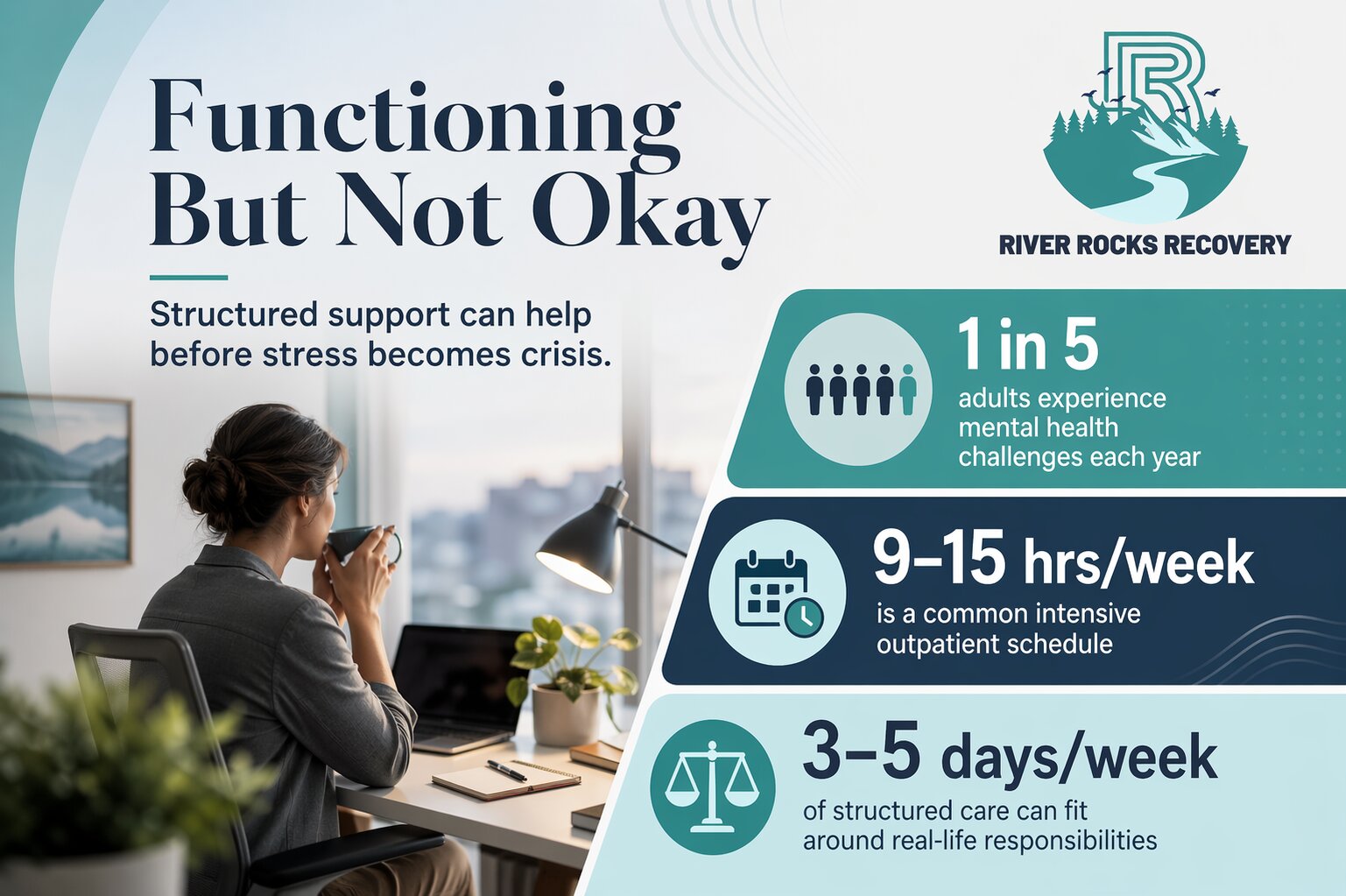
With multi-day weekly treatment, you’re not guessing your way through change.
You’re building:
- Consistency in your day
- Space to process instead of react
- Support that shows up even when you don’t feel like it
That consistency reduces the pressure you’ve been carrying by yourself.
And that’s where things begin to shift.
You Don’t Have to Walk Away From Your Life to Reset It
This is where many people hesitate.
Because they assume getting help means stepping away from everything.
It doesn’t.
You can:
- Keep working
- Stay connected to your responsibilities
- Continue showing up in your life
While also creating space to actually feel better inside it.
For individuals navigating this in places like Hamilton, Ohio, having access to support that fits into real life—not outside of it—can make the decision feel possible instead of overwhelming.
This Isn’t About Losing Control—It’s About Regaining Alignment
You’re not out of control.
That’s why this feels confusing.
But control isn’t the same as alignment.
You can be in control of your schedule, your work, your responsibilities…
And still feel disconnected from yourself.
That’s the gap.
And that’s what this level of support is designed to address—not just what you’re doing, but how you’re feeling underneath it.
The Patterns Might Be Deeper Than They Look
Sometimes what starts as a way to decompress becomes something more ingrained.
Stress builds. Mental fatigue increases. Emotional avoidance becomes automatic.
And for some, especially when stimulant use enters the picture, patterns can evolve in ways that need more targeted support.
That’s why some individuals explore support in Methamphetamine Rehab as part of a broader approach.
Not because things are out of control.
Because they’re recognizing what’s actually going on beneath the surface.
Change Doesn’t Have to Be Dramatic to Be Real
A lot of people expect transformation to feel big.
But real change is often subtle.
You might notice:
- Your thoughts aren’t as loud
- You don’t feel the same pull toward certain habits
- You respond differently to stress
It’s like turning down a constant background noise.
And once it’s quieter, you realize how much it was affecting you.
You’re Not Weak—You’re Worn Out
This is the truth most high-functioning people avoid.
You’re not failing.
You’re exhausted from managing everything on your own.
From:
- Carrying stress without processing it
- Handling emotions without support
- Maintaining control without relief
That kind of exhaustion doesn’t fix itself.
It needs space.
It needs support.
You Don’t Have to Wait Until It Gets Worse
This is the part that matters most.
Because you could keep going like this.
You could keep managing. Keep functioning. Keep holding it together.
But you don’t have to wait until something breaks to decide something needs to change.
For those in nearby communities like Monroe, Ohio, access to flexible support means you can step in early—before things escalate into something harder to manage.
That’s not overreacting.
That’s being aware.
FAQs: When You’re Functioning but Not Okay
Do I really need help if I’m still managing everything?
Managing isn’t the same as feeling okay. If something feels off consistently, it’s worth paying attention to.
What if I don’t want to disrupt my routine?
You don’t have to. Support can be integrated into your life without pulling you away from it.
Is this only for people in crisis?
No. Many people in this stage are functioning well externally—but struggling internally.
Why can’t I just fix this on my own?
Because patterns are tied to your environment and habits. Changing them often requires more than willpower.
How do I know if this is the right step?
If you’ve been questioning how you feel—even quietly—that’s often enough reason to explore it.
You’re Allowed to Want More Than “Fine”
You don’t have to justify this.
You don’t have to prove that it’s bad enough.
If something in you is saying, “I don’t want to keep feeling like this,” that’s enough.
That’s where change starts.
Ready to Feel Better Without Losing What You’ve Built?
You’ve already built a life that works on the outside.
Now it’s time to make it feel better on the inside.
Call (888) 905-6281 or visit our Intensive Outpatient Program in Middletown, Ohio to learn how structured, flexible support can help you reset—without stepping away from your life.