


You’re not waking up in a ditch.
You’re not missing work.
You’re not slurring through meetings.
From the outside, you’re successful. Reliable. Respected.
But inside? You’re tired of negotiating with yourself.
As a clinician, I’ve worked with countless high-functioning professionals who entered alcohol addiction treatment long before a crisis forced their hand. Not because their lives had collapsed — but because they could feel the slow drift.
And the drift scared them more than a dramatic fall ever could.
High-Functioning Is a Mask — Not Immunity
You can lead a team and still struggle at night.
You can close deals and still need three drinks to quiet your thoughts.
You can be the most competent person in the room — and still feel dependent the moment the day ends.
High-functioning drinking doesn’t look chaotic. It looks controlled.
Until you realize how much control it’s actually taking from you.
The people who seek help early often say the same thing:
“I can still manage everything. I’m just exhausted doing it.”
That exhaustion is data.
The Crisis You’re Waiting For Might Never Arrive
Many professionals assume treatment is reserved for disaster.
DUI.
Job loss.
Ultimatums.
But alcohol doesn’t always create explosions. Sometimes it creates erosion.
- Sleep becomes lighter and less restorative.
- Irritability increases.
- Anxiety creeps in on alcohol-free nights.
- Tolerance rises quietly.
- Mornings feel heavier, even when nothing “bad” happened.
Erosion is easy to ignore because nothing dramatic happens.
But erosion still changes the structure.
Your Brain Is Already Adjusting
Alcohol alters neurotransmitters long before visible consequences show up.
Dopamine shifts.
Cortisol increases.
GABA receptors adapt.
Over time, your brain begins relying on alcohol to regulate stress and mood. That’s why skipping a night can feel uncomfortable — not just psychologically, but physically.
You may notice:
- Restlessness when you don’t drink
- Trouble relaxing naturally
- A short fuse at home
- Difficulty sleeping without it
That’s not weakness. That’s neuroadaptation.
The earlier you interrupt that pattern, the easier it is to recalibrate.
You’re Not Seeking Help Because You’re Failing
You’re considering help because you’re aware.
There’s a big difference.
The strongest clients I see don’t arrive in chaos. They arrive in clarity.
They say things like:
“I don’t want this to get worse.”
“I don’t like how much I think about it.”
“I’m successful — but I’m not okay.”
That’s not rock bottom.
That’s insight.
The Lie of “I Can Just Cut Back”
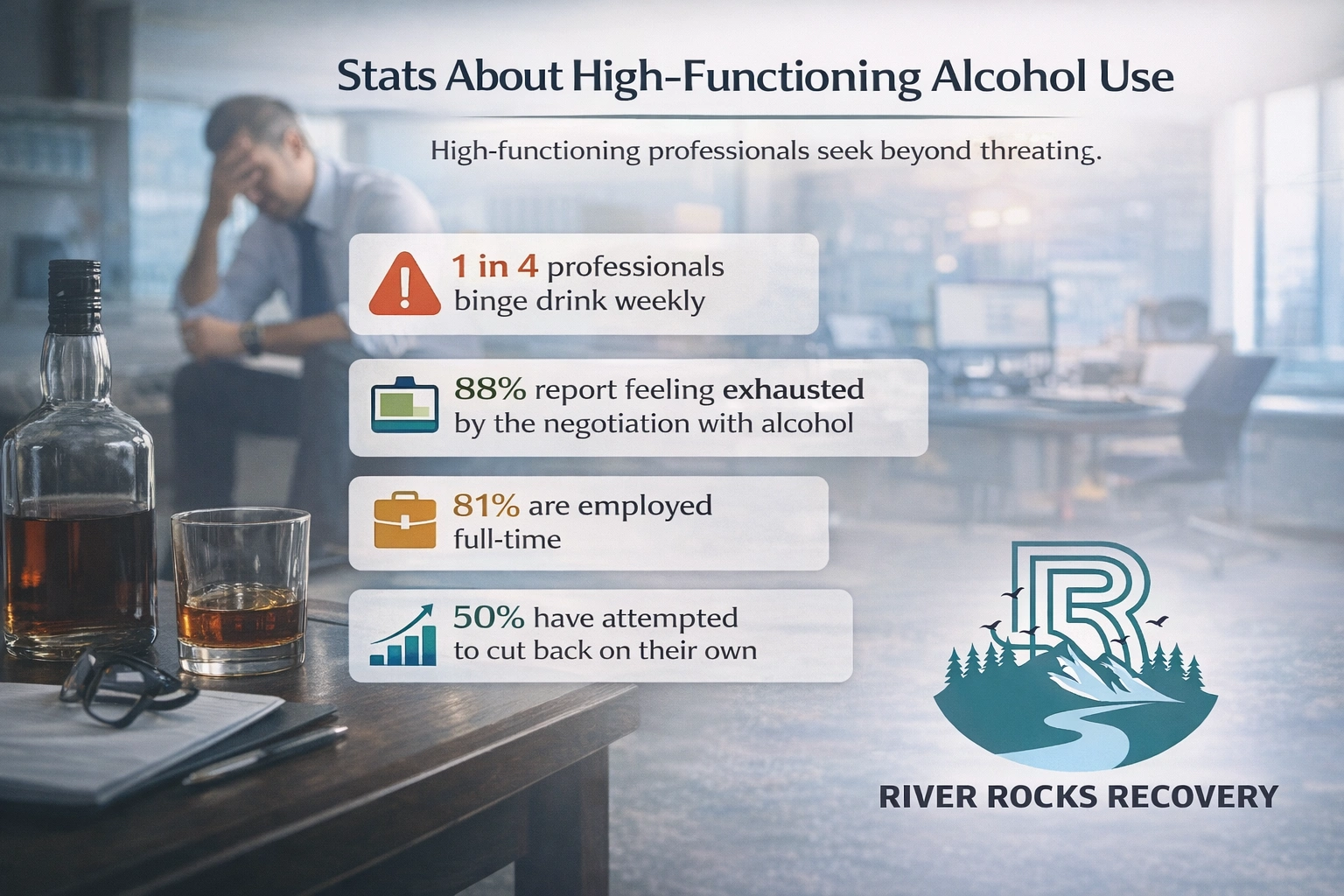
Most high-functioning drinkers have tried to regulate on their own.
Rules are made:
- Only on weekends
- No hard liquor
- Never alone
- Not before 6 p.m.
- Dry months
And sometimes it works — temporarily.
But the mental math becomes exhausting. The constant monitoring. The bargaining. The subtle shame if the rule shifts.
If moderation feels like a full-time job, something deeper is happening.
You shouldn’t need that much effort just to feel normal.
Early Treatment Is Strategic, Not Dramatic
When someone enters alcohol addiction treatment before a crisis, the tone is different.
It’s proactive.
Instead of emergency stabilization, the focus becomes recalibration:
- Learning to regulate stress without alcohol
- Repairing sleep cycles
- Addressing burnout or anxiety
- Untangling identity from drinking
- Rebuilding internal confidence
Sometimes that looks like structured daytime care. Sometimes multi-day weekly treatment that allows you to maintain work responsibilities. Sometimes more intensive support if dependence is stronger than expected.
It’s individualized — not one-size-fits-all.
And for many professionals in Hamilton, Ohio, seeking help early has meant protecting both their health and their careers before either was visibly at risk.
Success Doesn’t Cancel Struggle
I’ve sat with surgeons who drank nightly to decompress.
Executives who hid mini bottles in briefcases.
Parents who waited until everyone was asleep to start.
None of them fit the stereotype.
All of them felt alone in it.
High-functioning people are often the last to ask for help because everything still “looks fine.”
But functioning is not the same as thriving.
And maintaining performance at the cost of your nervous system isn’t sustainable.
When Mental Health Is Driving the Drinking
For many professionals, alcohol is not the root issue — it’s the coping strategy.
Burnout.
Performance anxiety.
Unprocessed trauma.
Chronic stress.
Depression masked by productivity.
When mental health and substance use collide, alcohol becomes the fastest relief available.
It works quickly. It’s socially accepted. It’s predictable.
Until it becomes necessary.
If other substances have entered the picture, some individuals also explore options like care in Methamphetamine Rehab to stabilize every layer of risk.
The goal isn’t to shame you.
It’s to reduce the need for chemical coping altogether.
What You Risk by Waiting
Waiting rarely leads to stability.
What I see when people delay:
- Increased anxiety over time
- Subtle cognitive fog
- Blood pressure creeping upward
- Emotional distance from partners
- Less patience with children
- A heavier dependence on alcohol to unwind
It’s not dramatic.
It’s cumulative.
And cumulative strain eventually becomes visible.
Professionals in Monroe, Ohio who sought support before crisis often describe one consistent feeling afterward: relief.
Not because everything disappeared overnight — but because they were no longer white-knuckling their evenings.
Treatment Is Not an Identity
You may fear one thing more than anything else:
“If I go to treatment, what does that say about me?”
It says you’re self-aware.
It says you value your longevity.
It says you don’t need catastrophe to justify change.
Treatment is not about labeling you. It’s about restoring autonomy — so alcohol isn’t dictating when you relax, how you sleep, or how you cope.
You are more than a coping strategy.
The Quiet Question That Matters
Here’s the question I ask high-functioning clients:
“If nothing changes, where will this be in five years?”
Not catastrophic.
Just slightly heavier.
Slightly more necessary.
Slightly more difficult to stop.
That trajectory matters.
Starting early interrupts it.
FAQs for the High-Functioning Professional
If I’m still successful, is this really a problem?
Success doesn’t measure internal strain. If alcohol is required to regulate mood, sleep, or stress, it’s worth examining — regardless of external achievements.
What if I don’t think I’m “that bad”?
Treatment is not reserved for extremes. Many clients enter support before severe consequences appear. Early intervention often leads to smoother recovery.
Will I have to stop working?
Not necessarily. Treatment plans can include flexible formats like structured daytime care or multi-day weekly sessions that accommodate professional schedules.
What if people find out?
Confidentiality is a core component of care. Protecting your privacy is part of building trust.
Can I just try harder on my own?
You can try — and many people do. But if you’ve already attempted moderation repeatedly and feel stuck in negotiation, additional support may provide the structure you’ve been missing.
Does seeking treatment mean I’m an alcoholic?
Labels are less important than function. The key question is whether alcohol is limiting your autonomy, health, or emotional stability.
You Don’t Need a Crisis to Deserve Clarity
Waiting for disaster is not a requirement.
You are allowed to want better sleep.
Lower anxiety.
Clearer mornings.
More presence at home.
More freedom from negotiation.
Alcohol addiction treatment isn’t about punishment. It’s about restoring internal balance before erosion becomes collapse.
The most successful recoveries I’ve witnessed started before the headlines, before the legal consequences, before the public fall.
They started with honesty.
If you’re ready to stop negotiating with alcohol and explore a more stable way forward, we’re here to have that conversation.
Call (888) 905-6281 to learn more about our alcohol addiction treatment in Middletown, Ohio.