
There’s a quiet moment that happens before “rock bottom.”
It’s not dramatic. No sirens. No headlines.
Just a thought you can’t shake: I can’t keep doing this.
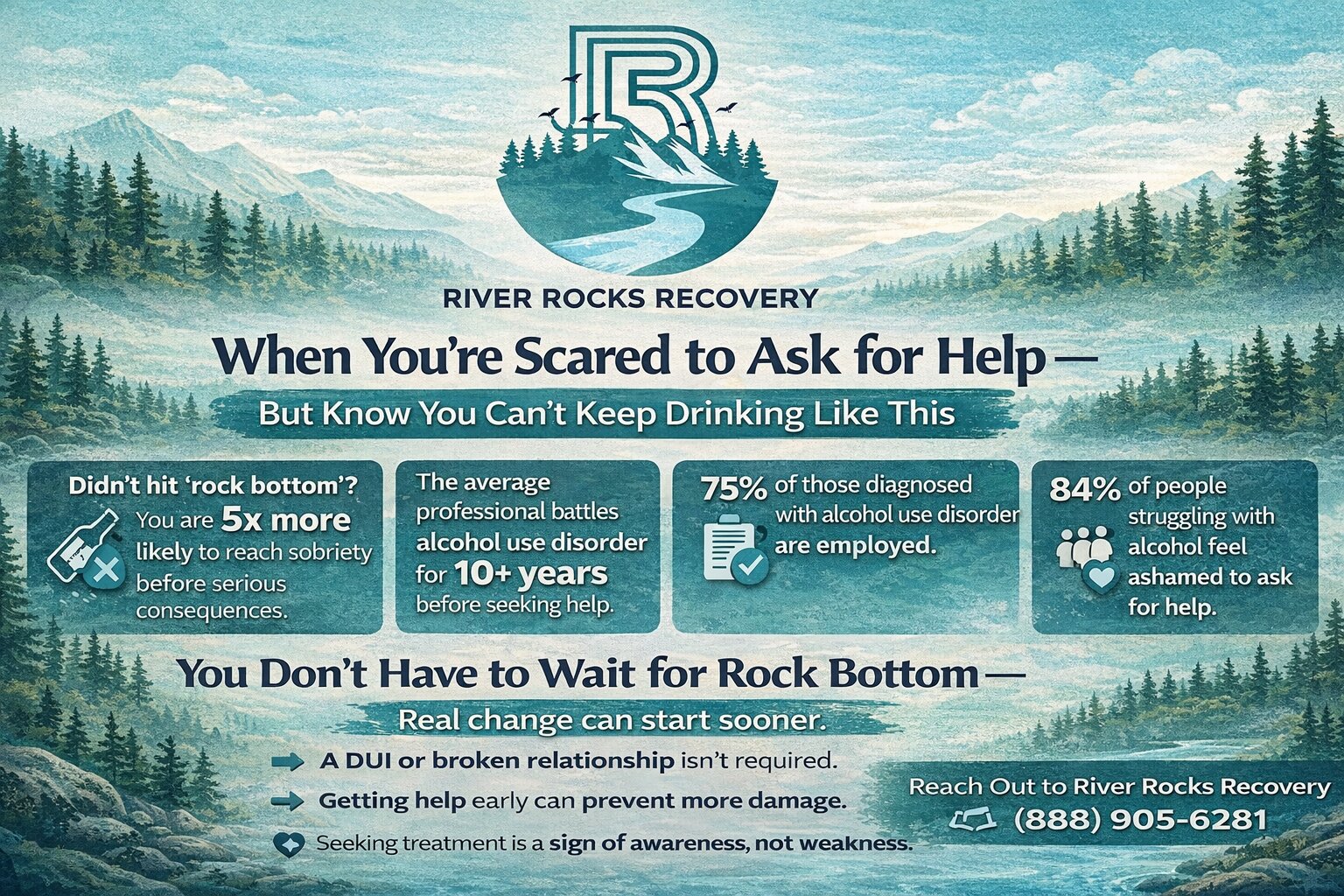
If that’s where you are right now, we want you to hear this clearly—you do not have to lose everything to deserve help. You don’t have to wait for a DUI, a broken relationship, or a medical emergency.
If you’re already searching for answers—and looking into alcohol addiction treatment—that’s not weakness. That’s awareness.
And awareness is powerful.
The Myth of “Rock Bottom”
For decades, we’ve been told that people only change when they hit bottom.
It’s a compelling story. The dramatic fall. The wake-up call. The redemption arc.
But in real life? Rock bottom isn’t a single event. It’s a moving target.
For some people, it’s a legal consequence.
For others, it’s a health scare.
And for many, it’s something much quieter:
- The shame after promising (again) to cut back
- The exhaustion of hiding how much you drink
- The anxiety that creeps in when alcohol isn’t nearby
- The fear that someone will finally notice
You don’t need a catastrophic event to justify getting support. You only need honesty with yourself.
What “High-Functioning” Struggle Really Looks Like
A lot of people who reach out for help don’t look like the stereotypes.
They’re working. Parenting. Showing up. Paying bills.
On the outside, things seem fine.
On the inside, it’s different.
You might feel:
- Constant mental bargaining (“I’ll only drink on weekends.”)
- Increasing tolerance—needing more to feel the same effect
- Irritability or restlessness when you don’t drink
- A creeping sense that alcohol is becoming your coping strategy for everything
You might still be “holding it together.”
But it feels like you’re holding it together with duct tape.
You don’t have to fall apart publicly to admit you’re struggling privately.
Why Waiting for It to Get Worse Can Backfire
There’s a belief that things have to get “bad enough.”
But addiction doesn’t announce itself loudly at first. It builds slowly. It adjusts. It convinces you that tomorrow will be the day you rein it in.
Waiting often means:
- Deeper physical dependence
- Increased anxiety or depression
- Greater strain on relationships
- More shame layered on top of existing shame
The longer alcohol becomes your primary coping mechanism, the harder it can feel to imagine life without it.
Getting help earlier doesn’t mean you’re dramatic. It means you’re proactive.
And early intervention often means more flexibility in care. Some people benefit from live-in treatment with round-the-clock support. Others do well in structured daytime care or multi-day weekly treatment that allows them to stay connected to work or family.
If alcohol isn’t the only substance involved, we also provide options like support in Methamphetamine Rehab, so treatment reflects your full experience—not just part of it.
“What If I’m Not Bad Enough?”
This is one of the most common fears.
You might be thinking:
- Other people have it worse.
- I haven’t lost my job.
- I haven’t been arrested.
- Maybe I’m overreacting.
Here’s something important: addiction is not a competition.
You don’t have to prove your suffering. You don’t need a dramatic backstory. If alcohol is negatively impacting your physical health, mental clarity, relationships, or sense of control—that’s enough.
Pain doesn’t have to be catastrophic to be real.
“What If I Try and Fail?”
That fear is valid. Especially if you’ve tried to cut back before.
Maybe you’ve told yourself:
- “This is the last time.”
- “I’ll just moderate.”
- “I can handle it.”
And for a few days or weeks, you could.
Then stress hit. Or boredom. Or loneliness.
And you were back where you started.
Seeking treatment isn’t about proving you have iron willpower. It’s about recognizing that support works better than white-knuckling it alone.
Recovery isn’t a test you pass or fail. It’s a process. One that includes learning new coping tools, understanding triggers, addressing underlying anxiety or trauma, and building support systems that don’t revolve around alcohol.
It’s not about perfection. It’s about progress.
What Actually Happens When You Reach Out?
Many first-time treatment seekers are afraid of what comes next.
Will you be forced into something extreme?
Will you be judged?
Will you lose control over your own decisions?
At River Rocks Recovery, the first step is simply a conversation.
We listen.
We ask questions.
We understand your history, your current concerns, and what you’re hoping will change.
From there, we help outline options—whether that’s more intensive support or structured care that fits into your life.
You stay involved in the decisions.
You stay informed.
You are treated with dignity.
Treatment is not about punishment. It’s about stabilization, clarity, and rebuilding trust—with yourself and others.
You Get to Decide What “Enough” Means
Here’s the truth that often gets overlooked:
Rock bottom can be a choice.
It can be the moment you decide, “This is low enough for me.”
Not because you’ve lost everything.
But because you don’t want to.
You don’t have to wait until your body forces you.
Or your job forces you.
Or your relationships force you.
Choosing help before everything collapses is not weakness.
It’s strength.
Recovery isn’t about dramatic redemption. It’s about steady restoration. Clear mornings. Honest conversations. Regaining energy you didn’t realize you’d lost.
You’re not signing up to become someone else. You’re returning to who you were before alcohol took up so much space. Recovery in West Chester, Hamilton, Monroe & Dayton, starts with support that understands. Explore our servuces and find safe ways to process your memories.
Frequently Asked Questions
Do most people wait until rock bottom?
Many do—but they don’t have to. A lot of people seek help after a crisis because it forces the issue. Others reach out earlier because they recognize patterns they don’t like. Both are valid. Earlier intervention often leads to more options and less disruption.
How do I know if I need professional help?
If you’ve tried to cut back and can’t maintain it…
If drinking is affecting your relationships, mood, or responsibilities…
If you’re thinking about alcohol more than you want to…
Those are meaningful signals.
You don’t need a diagnosis in your hand to start a conversation.
What if I’m scared of withdrawal?
This is an important concern. Alcohol withdrawal can be uncomfortable—and in some cases, medically risky. That’s why it’s important not to attempt sudden detox alone if you’re physically dependent. A professional team can assess your situation and recommend the safest path forward.
You don’t have to guess your way through it.
Can I still work or take care of my family during treatment?
In many cases, yes. Treatment isn’t one-size-fits-all. Some people need immersive, live-in support. Others participate in structured daytime or multi-day weekly programs that allow them to maintain responsibilities while receiving care.
The right level depends on your situation—and that’s something we help assess together.
What if I’ve tried treatment before?
Trying before and struggling afterward does not mean you’re incapable of recovery. It may mean the level of care, environment, or support system wasn’t the right fit at the time.
Recovery paths evolve. So do people.
If you’re willing to revisit the conversation, that matters.
Will people find out?
Confidentiality is a core part of professional treatment. Your privacy is protected. Many people quietly get help while continuing to maintain parts of their daily lives.
Reaching out does not mean publicly announcing anything.
What’s the first step?
The first step is a conversation.
Not a commitment to a lifetime.
Not a dramatic leap.
Just a call. Or a message. A willingness to explore.
You don’t have to decide everything today. You just have to decide whether you’re tired of doing this alone.
You don’t need to hit rock bottom to qualify for support. If you’re reading this and something in you feels ready—even if it’s scared—that’s enough.
At River Rocks Recovery, we provide compassionate, personalized alcohol addiction treatment designed for real people at real turning points. Whether you’re overwhelmed, uncertain, or simply tired of negotiating with yourself, we’re here to help you sort through what comes next.
Call (888) 905-6281 or visit our alcohol addiction treatment services to learn more about our alcohol addiction treatment services in Middletown, Ohio.