


You’re not falling apart.
But you’re not fully okay either.
That in-between space is confusing. Because nothing looks urgent on the outside—but something keeps nudging you on the inside: “I think I need to change something.”
If that thought has been showing up more often, you’re not overthinking it. You’re paying attention.
And there’s a way to act on it without turning your entire life upside down. You can explore structured daytime support options while we walk through how this kind of reset actually works.
Step 1: Pay Attention to the Subtle Signs You’ve Been Ignoring
Most people don’t wake up one day and decide to change everything.
It starts smaller.
A pattern you can’t unsee:
- You rely on something to unwind more than you used to
- Your mental clarity isn’t where it once was
- You feel off—but can’t fully explain why
These aren’t dramatic warning signs. They’re quiet signals.
And the truth is, the earlier you listen to them, the easier it is to shift direction.
You don’t need a crisis to justify change.
Step 2: Stop Measuring Yourself Against “Worse” Scenarios
One of the biggest traps sober-curious people fall into is comparison.
You tell yourself:
- “It’s not that bad.”
- “Other people have bigger problems.”
- “I’m still functioning.”
All of that can be true—and you can still not feel okay.
Functioning isn’t the same as thriving.
And waiting until things get worse only makes the process harder later.
You’re allowed to want more clarity, more energy, more control—without needing a breaking point.
Step 3: Understand Why Willpower Keeps Failing You
If you’ve tried to reset habits before, you probably know this cycle:
You decide to cut back.
You feel motivated.
You follow through—for a while.
Then something pulls you back.
That’s not a discipline issue.
It’s a structure issue.
Your environment hasn’t changed, so your patterns haven’t either.
Real change requires more than intention. It requires support that interrupts your default patterns long enough for something new to take hold.
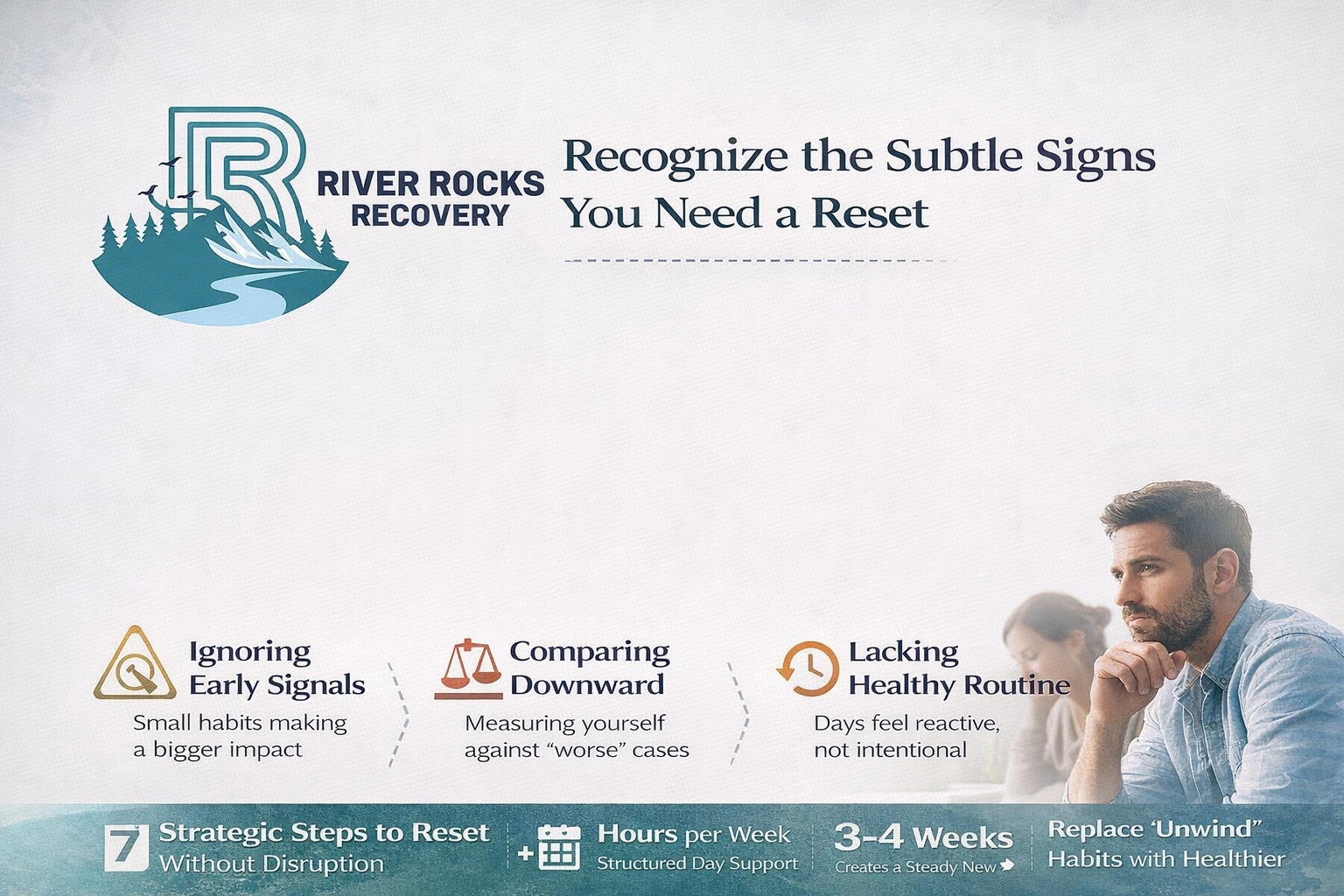
Step 4: Create a Daily Rhythm That Supports Change
This is where structured daytime care becomes powerful.
Instead of trying to figure it out alone, your day begins to include intentional space:
- Time to pause instead of react
- Conversations that help you understand your patterns
- A steady rhythm that replaces chaos with clarity
You’re not removed from your life—you’re supported inside it.
That difference matters.
Because it allows you to practice change in real time, not just in theory.
Step 5: Give Your Mind Time to Reset, Not Just Your Habits
Habits are visible.
But what drives them usually isn’t.
Stress. Anxiety. Emotional overload. Mental fatigue.
When those go unaddressed, habits tend to return—even if you’ve temporarily stopped them.
Structured support helps you slow things down enough to notice:
- What you’re actually feeling
- What you’ve been avoiding
- What your mind has been trying to manage on its own
And once you understand that, change becomes more natural—and less forced.
Step 6: Replace What You Remove
One of the biggest reasons people struggle to maintain change is this:
They remove a habit… but don’t replace it.
So the space gets filled again—usually by the same thing.
Real change means building alternatives:
- Healthier ways to decompress
- New routines that feel sustainable
- Support systems that don’t disappear when things get hard
This is where many people start to feel something unexpected:
Relief.
Because it’s no longer about restriction—it’s about building something that actually works better.
Step 7: Stay in Your Life While You Change It
You don’t have to disappear to reset.
In fact, staying connected to your life is part of what makes this approach effective.
You can:
- Keep your responsibilities
- Maintain relationships
- Apply what you’re learning immediately
For individuals in places like West Chester, Ohio, having access to support that fits into real life—not outside of it—can make the difference between trying and actually sustaining change.
Because change that happens in isolation often fades.
Change that happens inside your life tends to stick.
Step 8: Adjust Your Approach Based on What You Discover
As you move through this process, something important happens:
You learn about yourself.
Not in a surface-level way—but in a way that actually informs your next steps.
You start to see:
- What triggers certain patterns
- What support actually helps
- What needs more attention
For some people, especially those navigating stimulant-related patterns, that might include exploring care in Methamphetamine Rehab as part of a broader plan.
The goal isn’t to follow a rigid path.
It’s to respond to what you’re learning about yourself in real time.
What This Kind of Reset Actually Feels Like
It’s not dramatic.
It’s not a sudden transformation.
It’s quieter than that.
You might notice:
- Your thoughts feel less crowded
- You pause before reacting
- You feel more present in your own life
It’s like clearing fog from a window.
The view was always there—you just couldn’t see it clearly.
The Truth Most People Don’t Say Out Loud
You don’t have to wait until things fall apart.
You don’t have to earn the right to feel better.
You don’t have to prove that it’s “bad enough.”
You can choose to change because you want your life to feel different.
That’s enough.
FAQs About Resetting Habits Without Hitting Rock Bottom
Do I need to have a serious problem to get support?
No. Many people seek support because something feels off—not because things have fallen apart.
Can I still live my normal life while doing this?
Yes. That’s one of the biggest benefits. You stay connected to your responsibilities while building new patterns.
What if I’ve tried to change before and it didn’t last?
That’s common. The difference here is having structure and support—not just willpower.
Will this feel overwhelming?
Most people find it grounding rather than overwhelming. The structure often reduces stress instead of adding to it.
How do I know if this is right for me?
If you’ve been thinking about change—even quietly—it’s worth exploring. You don’t need full certainty to take a first step.
You’re Allowed to Want a Different Version of Your Life
There’s a version of you that feels clearer.
More present. More steady. Less dependent on habits that don’t serve you anymore.
You’ve probably felt glimpses of it.
This process isn’t about becoming someone new.
It’s about removing what’s been in the way of who you already are.
Ready to Take a Step Toward That Version of You?
If something in you is ready—even a little—that matters.
Call (888) 905-6281 or visit our Partial Hospitalization Program in Middletown, Ohio to learn more about your options and what a flexible, supportive path forward can look like.