

You’re not crashing your car.
You’re not missing work.
You’re not the stereotype.
You’re just… thinking about it more than you used to.
If you’ve been quietly researching alcohol addiction treatment but immediately close the tab because it feels too extreme, you’re not alone.
Most sober curious people aren’t afraid of quitting.
They’re afraid of what quitting might cost them.
Let’s talk about how to start without detonating your career, relationships, or identity.
Step 1: Admit You’re Curious — Not Broken
You don’t have to call yourself anything.
You don’t have to declare a problem.
You just have to acknowledge the tension:
- You think about drinking more than you used to.
- You plan around it.
- You negotiate with it.
- You wonder what life would feel like without it.
That curiosity matters.
You can explore change without deciding you’ve “hit bottom.” Most people who start early never hit bottom at all.
Step 2: Separate Drama From Reality
When people imagine treatment, they picture disappearing for a month, public announcements, awkward HR meetings, family panic.
That’s not how it has to work.
There are flexible options:
- Multi-day weekly treatment that fits around work
- Structured daytime care where you return home in the evenings
- Private assessments that don’t obligate you to anything
You don’t have to disappear to get support.
For many professionals in West Chester, Ohio, the biggest surprise wasn’t how disruptive treatment was — it was how manageable it felt once they understood their options.
Fear grows in vagueness. Clarity shrinks it.
Step 3: Start With a Confidential Conversation
You don’t need a dramatic commitment.
You can start with one private conversation.
An assessment isn’t an enrollment form. It’s information. It helps you understand:
- Whether physical dependence is present
- What level of support matches your life
- How to reduce safely if needed
- What emotional patterns may be driving the drinking
Talking does not equal signing up.
It equals understanding.
And understanding gives you leverage.
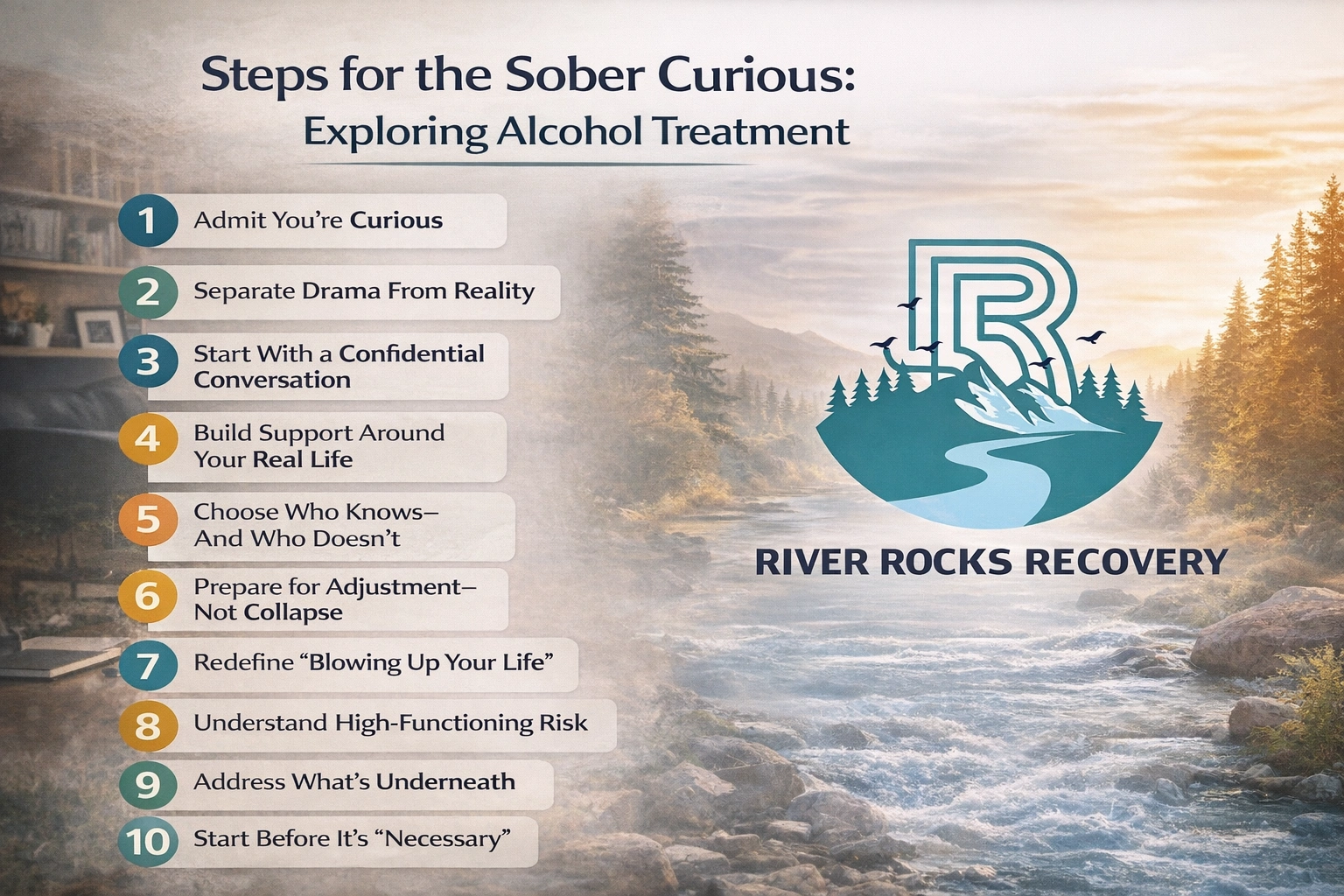
Step 4: Build Support Around Your Real Life
The goal is not to dismantle your world.
It’s to strengthen it.
Many sober curious individuals assume that treatment equals isolation. In reality, many programs are designed for people who have responsibilities, careers, and families.
You can continue:
- Working
- Parenting
- Attending important events
- Maintaining privacy
Support should stabilize your life — not explode it.
If alcohol isn’t the only concern, some individuals also explore options like care in Methamphetamine Rehab to address any overlapping risks.
This isn’t about overreacting.
It’s about covering your bases.
Step 5: Choose Who Knows — And Who Doesn’t
One of the biggest fears is exposure.
Here’s the truth:
- Confidentiality is protected.
- You decide who you tell.
- Employers are not automatically notified.
- Your medical information remains private.
Some clients tell a spouse. Others tell no one. Some choose one trusted friend for accountability.
You control your narrative.
And protecting your health is not something you need permission for.
Step 6: Prepare for Adjustment — Not Collapse
Let’s be honest.
When you reduce or stop drinking, there can be emotional shifts.
Sleep might change. Anxiety might rise temporarily. Social events may feel awkward at first.
That’s recalibration — not destruction.
Your nervous system has adapted to alcohol. Removing it means your brain needs time to rebalance.
That doesn’t mean your life will implode.
In fact, most clients report something unexpected:
Clearer mornings.
Less background anxiety.
Better focus.
Stronger emotional range.
You may lose the numbing effect.
But you gain yourself.
Step 7: Redefine What “Blowing Up Your Life” Really Means
If we’re being direct, blowing up your life usually happens when drinking continues unchecked — not when it’s addressed.
Waiting can lead to:
- Health complications
- Professional consequences
- Relationship erosion
- Escalating tolerance
- Emotional burnout
Starting early protects the life you’ve built.
It’s prevention, not destruction.
Professionals in Dayton, Ohio often describe one consistent realization after beginning support: they waited longer than they needed to because they were afraid of change.
The irony? The real risk was staying the same.
Step 8: Understand That High-Functioning Doesn’t Mean Untouched
You can excel at work and still struggle privately.
You can meet deadlines and still rely on alcohol nightly.
You can maintain relationships and still feel internally dependent.
High-functioning drinking often looks stable from the outside.
Inside, it feels like constant negotiation.
“How much is too much?”
“Can I skip tonight?”
“Will I sleep without it?”
That mental math is exhausting.
You don’t need visible collapse to justify relief from that cycle.
Step 9: Address What’s Underneath
For many sober curious individuals, alcohol isn’t the main issue — it’s the coping tool.
Stress.
Burnout.
Loneliness.
Performance pressure.
Old trauma.
When mental health and substance use collide, alcohol becomes the fastest regulator available.
Early support focuses on teaching you how to regulate without it.
Better stress tools.
Sleep restoration.
Emotional processing.
Boundary setting.
This is about building capacity — not stripping something away.
Step 10: Start Before It Becomes Necessary
There’s a quiet difference between choosing change and being forced into it.
The people who do best are often the ones who start while they still have leverage.
Before:
- A medical scare
- A professional warning
- A family ultimatum
- A legal consequence
You don’t need catastrophe to justify growth.
You just need honesty.
What You Might Be Afraid To Admit
Maybe you’re afraid sobriety will make you boring.
Maybe you worry social events won’t feel the same.
Maybe you’re scared of feeling everything without a buffer.
That fear is normal.
But here’s what many clients discover: alcohol wasn’t making them interesting. It was dulling their edges.
Without it, they feel sharper. More present. More authentic.
Not perfect. Just real.
FAQs for the Sober Curious
What if I don’t think I’m “bad enough” for treatment?
You don’t have to be at rock bottom. Many people start early because they want to prevent escalation. Curiosity and concern are enough to begin a conversation.
Will I have to quit my job?
In most cases, no. Flexible care models are designed to work around professional responsibilities. Treatment can fit into your schedule.
What if my family overreacts?
You control how much you share and when. Many people choose selective disclosure. Support doesn’t require public announcements.
Can I just cut back on my own?
Some people can. Many try repeatedly and find the mental effort exhausting. If moderation feels like constant negotiation, structured support can reduce that strain.
Will treatment label me?
Treatment is about function, not identity. It focuses on restoring autonomy and health — not assigning permanent labels.
What if I start and realize I don’t need it?
An assessment helps clarify that. There is value in understanding your relationship with alcohol, even if you decide on a lighter path forward.
The Life You’re Trying to Protect
You don’t want to blow up your life.
You want to protect it.
Your career.
Your family.
Your health.
Your reputation.
Your sense of self.
Starting alcohol addiction treatment doesn’t mean collapse.
Often, it’s the thing that keeps collapse from ever happening.
You can take action quietly.
Strategically.
Without drama.
You don’t need certainty. You just need willingness.
If you’re ready to explore support in a way that protects your stability and privacy, we’re here to help.
Call (888) 905-6281 to learn more about our alcohol addiction treatment in Middletown, Ohio.