

You don’t always see it coming.
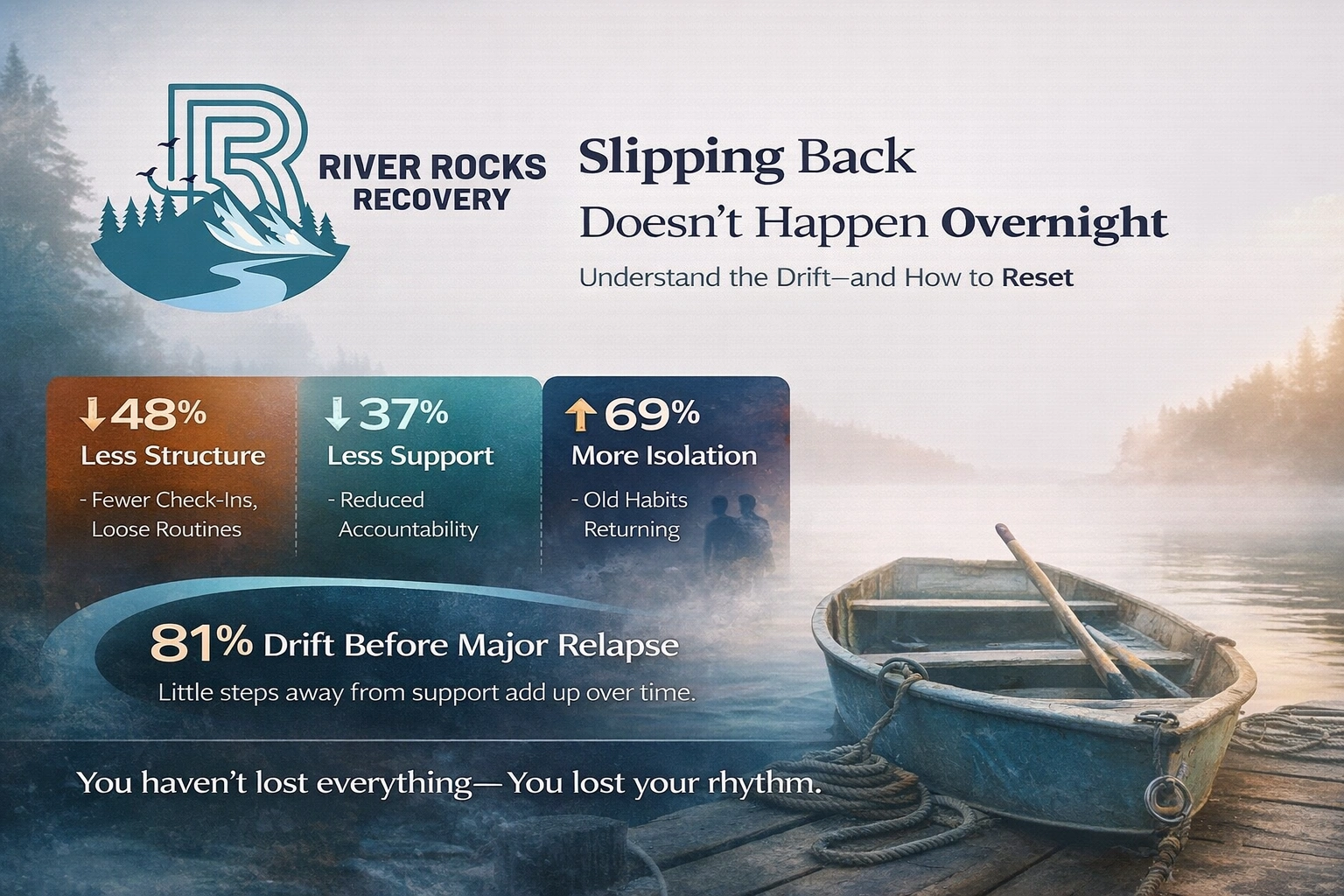
It doesn’t happen all at once. There’s no single moment where everything falls apart.
It’s quieter than that.
A missed check-in. A stressful day you handle differently. A thought you don’t challenge this time.
And suddenly, you’re sitting there thinking:
“How did I end up back here?”
If that’s where you are, take a breath.
You didn’t lose everything. Not even close.
And if part of you is wondering whether going back to structured support makes sense—you can explore structured daytime care options while we walk through why this moment isn’t what it feels like.
It Didn’t Fall Apart—It Drifted
Most people expect relapse or slipping to feel dramatic.
But for many alumni, it’s not.
It’s a drift.
You slowly move away from the things that helped:
- Less structure
- Fewer check-ins
- More time in your own head
And because it’s gradual, you don’t always catch it right away.
By the time you do, it feels like everything is gone.
But it’s not gone—it’s just been sitting underneath the surface.
The Strength You Felt Before Was Real
This part matters.
Because your brain might be telling you:
“Maybe it wasn’t real. Maybe I just thought I was doing better.”
That’s not true.
You were doing better.
You had:
- More clarity
- More control
- More awareness of your patterns
That doesn’t disappear.
It just gets harder to access when old habits come back into play.
Think of it like a muscle—you didn’t lose it. You just stopped using it consistently.
Real Life Is Harder Than Structured Support (And That’s Not Your Fault)
One of the biggest gaps people underestimate is the transition.
Inside structured support, things are:
- Predictable
- Supported
- Guided
Outside, everything changes.
You’re making decisions in real time. Handling stress without immediate support. Navigating environments that haven’t changed—even if you have.
That’s a lot.
And for many people, that’s where things start to slip.
For individuals balancing recovery while living in places like West Chester, Ohio, this transition can feel even sharper—because real life doesn’t slow down just because you’re trying to stay steady.
You Didn’t Fail—You Outgrew the Level of Support You Had
This is the reframe most people never hear.
It’s not that you couldn’t do it.
It’s that the level of support you had at the time wasn’t enough to sustain what you were building.
That’s not a personal failure.
It’s a structural gap.
And gaps can be filled.
Going Back Feels Like Defeat—But It’s Actually Strategy
Let’s be honest about it.
Going back doesn’t feel empowering at first.
It feels like:
- “I should’ve been able to handle this.”
- “I already did this once.”
- “What’s wrong with me?”
Nothing is wrong with you.
What’s happening is this:
You’re recognizing what you need.
And acting on that recognition—even when it’s uncomfortable—is one of the strongest moves you can make.
You’re Not Starting Over—You’re Starting Informed
This is the part that changes everything.
You’re not walking in blind.
You know:
- What helped you before
- Where things started to slip
- What didn’t work as well as you thought
That awareness gives you an advantage.
Because now, you can approach support differently:
- Stay connected longer
- Be more honest earlier
- Adjust your structure before things unravel
That’s not starting over.
That’s starting smarter.
The Shame Is Loud—But It’s Not Accurate
Shame has a way of rewriting the story.
It tells you:
- “You messed it all up.”
- “You don’t deserve another chance.”
- “People are going to judge you.”
But shame isn’t truth—it’s fear trying to protect you from feeling exposed.
The reality is simpler:
You tried.
You made progress.
You learned something about what you need.
And now, you’re adjusting.
That’s not failure. That’s growth in motion.
This Time, You Can Catch It Earlier
One of the biggest advantages you have right now is hindsight.
You can see:
- The early warning signs
- The moments where things started to shift
- The patterns that led you here
That means you don’t have to wait for things to get worse.
You can step in earlier.
And earlier intervention is often the difference between a short reset and a full reset.
You Don’t Have to Leave Your Life to Rebuild Stability
This is one of the biggest concerns people have about going back.
They think:
“I don’t want to step away from everything again.”
But structured daytime care works differently.
You can:
- Stay connected to your responsibilities
- Live at home
- Apply what you’re learning immediately
For people in communities like Dayton, Ohio, this flexibility makes returning to support feel more realistic—because it fits into real life, not outside of it.
Sometimes You Need More Specific Support
As you reflect, you might notice your needs are more specific than you first realized.
Certain patterns—like stimulant use—can require more targeted approaches.
That’s why some individuals explore help in Methamphetamine Rehab alongside structured care.
Not because they’re “worse.”
Because they’re getting more precise about what helps.
You Didn’t Lose Everything—You Lost Your Rhythm
That’s the difference.
You didn’t lose your progress.
You lost the rhythm that was supporting it.
And rhythm can be rebuilt.
Faster than you think.
The Quiet Truth Most People Don’t Say
A lot of people come back.
They just don’t talk about it.
Because it doesn’t fit the story we expect recovery to look like.
But coming back often means:
- You care enough to notice
- You’re aware enough to adjust
- You’re willing enough to try again
That’s not weakness.
That’s commitment.
FAQs: Returning to Support After Slipping
Does going back mean I failed?
No. It means you recognized something wasn’t working and chose to respond. That’s awareness, not failure.
Will it feel the same as the first time?
Not exactly. You’ll likely be more aware and more intentional, which can make the process more effective.
Am I starting from scratch?
No. You’re building on what you already learned, not starting over.
What if I feel embarrassed to come back?
That’s common. But it’s also what keeps people stuck. Coming back is a forward step—even if it feels uncomfortable.
How do I know if I need more support?
If things started slipping after structure decreased, that’s often a sign that more consistent support could help./
You’re Still Closer Than You Think
It doesn’t feel like it right now.
But you are.
Because you’ve already done part of the work.
You’ve already seen what’s possible.
And you’re already aware enough to question where you are.
That matters.
Ready to Take a Step That Builds on What You’ve Already Done?
You don’t have to start over.
You just have to reconnect.
Call (888) 905-6281 or visit our Partial Hospitalization Program in Middletown, Ohio to learn more about your options and what a flexible, supportive path forward can look like.