


You didn’t mean to disappear.
It probably started small. A missed day. Then another. Then the idea of going back just felt… harder than staying away.
Now you’re stuck in that quiet space where part of you knows you should reconnect—but another part of you feels completely drained at the thought.
If that’s where you are, you’re not broken. You’re not behind. You’re just disconnected.
And reconnection doesn’t start with motivation—it starts with one honest step. You can explore what flexible structured support can look like while we walk through how to come back, even when you don’t feel ready.
Step 1: Stop Waiting for Motivation to Show Up
Let’s be direct about this.
Motivation is not coming first.
That’s not how this works—especially when you’ve already stepped away once.
Right now, your brain is trying to protect you:
- From discomfort
- From embarrassment
- From feeling like you have to start over
So it tells you:
“Wait until you feel ready.”
But readiness is often a result of action—not the cause of it.
You don’t need to feel motivated.
You just need to decide to show up once.
Step 2: Let Go of the “I Already Messed This Up” Story
There’s usually a quiet narrative running underneath everything:
“I had my chance.”
“I should’ve stuck with it.”
“I ruined it.”
That story makes coming back feel heavier than it needs to be.
But it’s not accurate.
You didn’t ruin anything.
You learned something:
- What gets hard for you
- Where support dropped off
- What didn’t hold the way you expected
That’s not failure.
That’s information you didn’t have before.
Step 3: Make the Return Smaller Than Your Mind Is Making It
Right now, going back probably feels like a huge decision.
So your brain resists it.
Shrink it.
Don’t think:
- “I have to fully recommit”
- “I have to fix everything”
Think:
- “I’ll just show up once”
That’s it.
One step is manageable.
And most of the time, one step leads to the next.
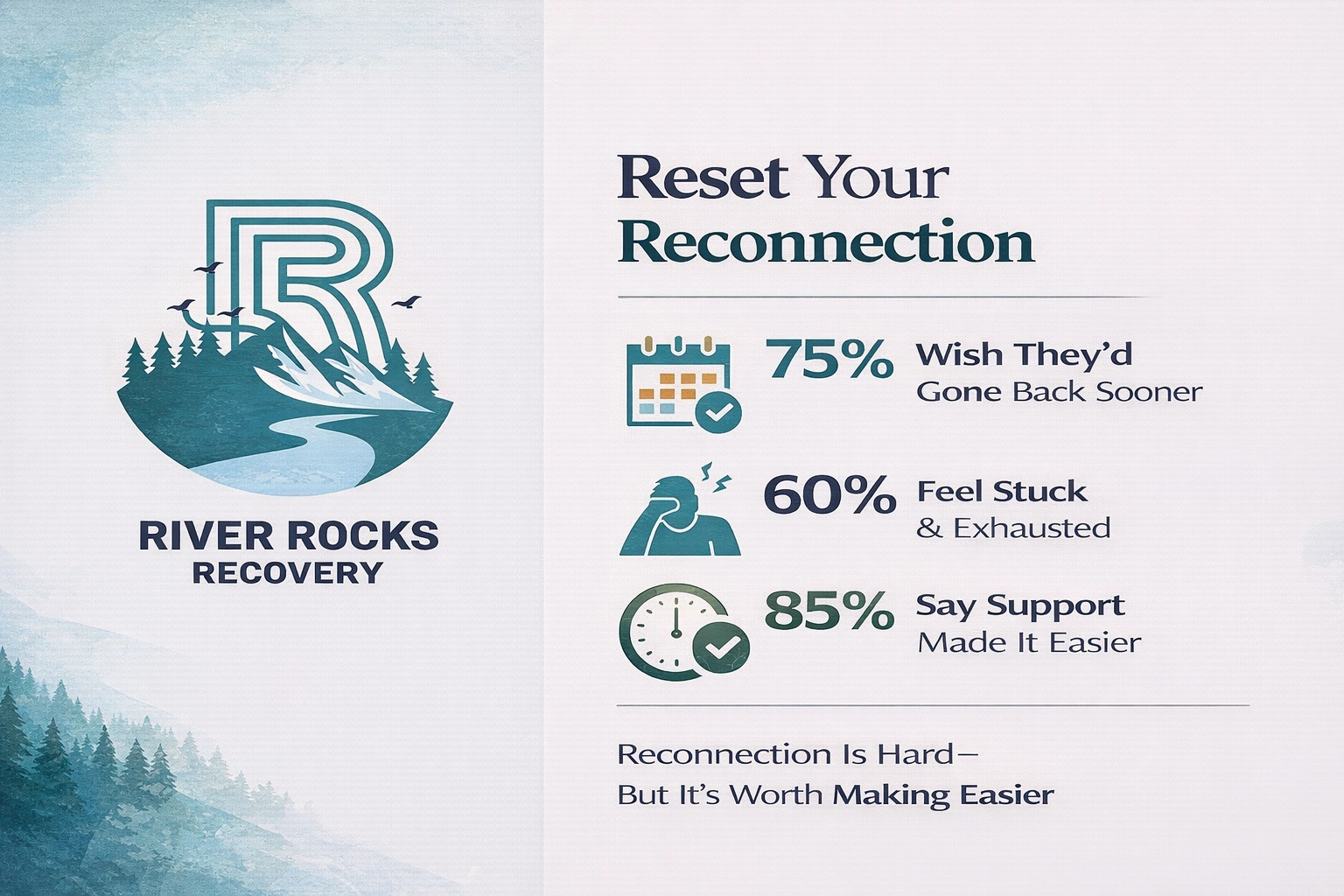
Step 4: Expect It to Feel Uncomfortable (And Go Anyway)
This part matters.
You might feel:
- Awkward walking back in
- Disconnected from the process
- Unsure what to say
That’s normal.
Most people who return don’t feel confident.
They feel unsure—but they go anyway.
Because waiting for comfort keeps you stuck.
And movement, even uncomfortable movement, creates change.
Step 5: Let Structure Hold You When You Feel Like You Can’t Hold Yourself
When motivation is low, self-reliance doesn’t work well.
That’s where structure becomes important.
With multi-day weekly treatment, you don’t have to:
- Push yourself every day
- Figure everything out alone
- Stay consistent purely on willpower
The structure does part of the work for you.
It creates rhythm.
And rhythm creates stability.
For people navigating this in places like West Chester, Ohio, having access to support that fits into real life—not outside of it—makes coming back feel possible instead of overwhelming.
Step 6: Be Honest Sooner Than You Were Before
If you’ve stepped away before, you already know something:
Holding things in doesn’t help.
This time, you can do it differently.
You can say:
- “I stopped showing up.”
- “I lost motivation.”
- “I didn’t know how to keep going.”
You don’t have to explain it perfectly.
You just have to be real.
Because honesty isn’t a weakness in this process—it’s the starting point.
Step 7: Understand That Needing More Support Is Not a Step Back
This is one of the biggest mindset shifts.
You might think:
“I should be able to do this on my own by now.”
But what if the opposite is true?
What if leaving showed you that:
- You need more structure
- You need longer support
- You need a different rhythm than you thought
That’s not regression.
That’s clarity.
Step 8: Look at What Pulled You Away—Without Judging It
Before you fully re-engage, take a moment to notice:
What made you stop?
Was it:
- Burnout?
- Avoidance?
- Feeling like it wasn’t working fast enough?
- Getting overwhelmed emotionally?
There’s no judgment here.
Just information.
Because when you understand what pulled you away, you can come back differently—not just repeat the same pattern.
Step 9: Focus on Staying Connected, Not Being Perfect
Perfection is what makes people leave.
Connection is what helps people stay.
You don’t have to:
- Show up perfectly
- Feel motivated every day
- Have everything figured out
You just have to stay connected:
- To support
- To structure
- To honesty
That’s what keeps things moving forward—even on the hard days.
Step 10: Sometimes the Pattern Needs More Specific Support
As you come back, you might realize something important:
Your needs are more specific than you thought.
For example, if stimulant use has been part of your pattern, exploring care in Methamphetamine Rehab can help address those layers more directly.
That’s not a setback.
That’s getting more precise about what works.
What Coming Back Actually Feels Like
It’s not dramatic.
There’s no big moment where everything clicks.
It’s quieter than that.
You show up.
You sit there, maybe unsure.
You reconnect slowly.
And over time:
- The resistance softens
- The fog lifts a little
- The next step feels slightly easier
That’s how momentum rebuilds.
Not all at once.
But steadily.
The Truth About Motivation (That No One Tells You)
Motivation is unreliable.
It comes and goes.
Structure doesn’t.
And when you rely on structure instead of motivation, something shifts.
You stop waiting to feel ready.
And you start building consistency instead.
You’re Not Too Far Gone—You’re Just Out of Rhythm
This is the reframe.
You didn’t lose everything.
You didn’t go backwards completely.
You lost your rhythm.
And rhythm can be rebuilt.
Faster than you think.
For Some, Location and Access Change Everything
Sometimes, the barrier isn’t willingness—it’s access.
For individuals in areas like Dayton, Ohio, having structured support that fits into daily life can make returning feel realistic instead of overwhelming.
Because when something fits your life, you’re more likely to stay connected to it.
FAQs: Reconnecting After Dropping Out
Do I need motivation before I go back?
No. Most people don’t feel motivated when they return. Motivation usually follows action.
Will people judge me for leaving?
No. Returning is more common than you think—and it’s seen as a positive step.
Am I starting over?
No. You’re building on what you already learned.
What if I leave again?
Then you come back again. Progress isn’t always linear.
How do I make it stick this time?
Focus less on perfection and more on staying connected, being honest, and letting structure support you.
You Don’t Have to Feel Ready to Come Back
You just have to be willing.
Willing to take one step.
Willing to show up once.
Willing to try differently than before.
That’s enough.
Ready to Take One Step Back Toward Stability?
You don’t have to fix everything today.
You just have to reconnect.
Call (888) 905-6281 or visit our Intensive Outpatient Program in Middletown, Ohio to learn how structured, flexible support can help you reset—without stepping away from your life.