


You start by focusing on what you can see.
The behavior. The patterns. The moments that feel out of control.
But then something shifts.
You notice the timing. The triggers. The way it shows up after stress, after conflict, after something emotional that never quite gets said out loud.
And a harder truth begins to form:
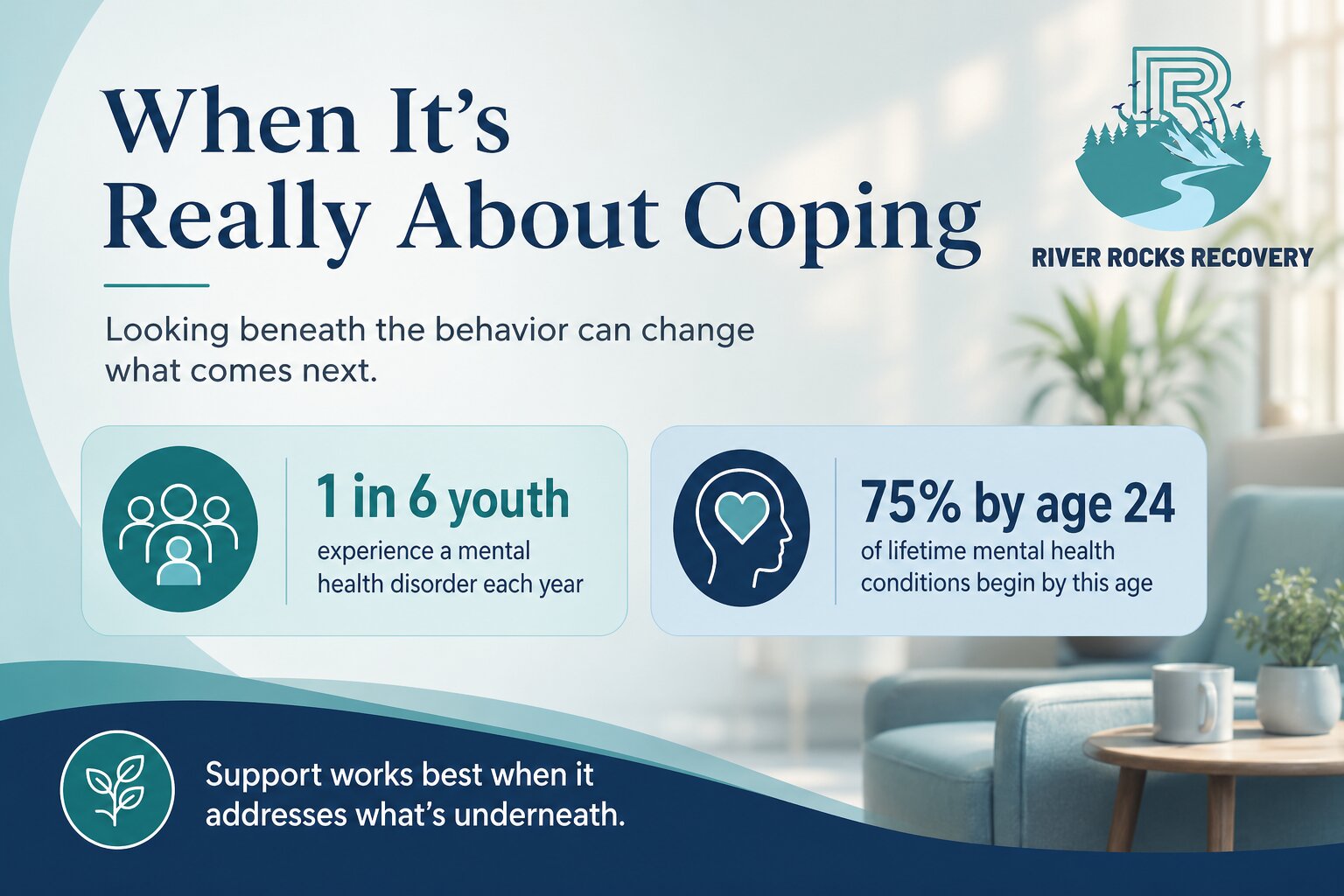
“This isn’t just about using… this is about coping.”
If you’re here, you’re not imagining things. You’re seeing deeper than most people do—and that matters.
You can also explore structured daytime care options that support both behavior and what’s underneath it. But first, let’s walk through what’s really happening—and why it feels so hard to interrupt.
It Looks Like a Choice—But Often Feels Like Relief to Them
From the outside, it can feel like your child is choosing something harmful.
And that’s where the frustration comes in.
“Why would they keep doing this?”
But from their perspective, it often doesn’t feel like a choice in the way we think.
It feels like:
- A way to quiet their thoughts
- A way to come down from emotional overload
- A way to feel normal, even briefly
That doesn’t make it okay.
But it does explain why it keeps happening.
Because when something provides relief—even temporarily—it becomes hard to let go of without something else to replace it.
You Might Be Trying to Stop the Only Tool They Think They Have
This is one of the most painful dynamics for parents.
You’re trying to remove something that’s hurting them.
But they may feel like you’re taking away the only thing that helps them cope.
That creates tension:
- You see danger
- They feel survival
And both of those things can be true at the same time.
Until they learn new ways to manage what they’re feeling, letting go can feel like losing control—not gaining it.
Self-Medication Isn’t Always Loud or Obvious
It doesn’t always look like what you expect.
Sometimes it’s subtle:
- Using “just to relax” every night
- Becoming more withdrawn
- Avoiding conversations or responsibilities
Other times it’s more visible.
But underneath, the pattern is the same:
They’re trying to change how they feel.
And they haven’t found another way that works yet.
Why It Keeps Coming Back (Even After It Stops)
You may have seen progress before.
Moments where things felt better.
Times where they stopped—or at least slowed down.
And then… it came back.
That cycle is exhausting.
But here’s what’s often happening:
The behavior stops temporarily—but the underlying stress, anxiety, or emotional pain doesn’t.
So when something triggers it again, the same coping pattern returns.
Not because they didn’t care.
Because nothing replaced it.
This Is Where Structure Changes the Direction
When everything feels chaotic, structure can feel like resistance at first.
But over time, it becomes something else:
Relief.
With structured daytime support, your child begins to experience:
- Predictability in their day
- Space to slow down instead of react
- Support that doesn’t disappear when things get hard
And that consistency matters more than most people realize.
Because stability isn’t created in big moments—it’s built in repeated, steady ones.
For families navigating this in places like Hamilton, Ohio, having access to that level of consistent support can be the difference between reacting to each crisis—and finally interrupting the pattern altogether.
Understanding Comes Before Change
It’s natural to want immediate change.
To see the behavior stop and stay stopped.
But lasting change usually follows a different order:
First, understanding.
Then awareness.
Then new patterns.
When your child begins to understand:
- What they’re feeling
- Why they’ve been coping this way
- What actually helps instead
That’s when change starts to become sustainable.
Not forced.
Not temporary.
But real.
You Didn’t Miss Something—This Is Hard to See From the Outside
Many parents quietly carry this question:
“How did I not see this sooner?”
But self-medication patterns often develop internally.
They’re not always visible.
They don’t always show up clearly until they’ve already taken hold.
You didn’t fail to notice.
You’re noticing now.
And that matters more than you think.
You Can’t Solve This Alone—And You’re Not Supposed To
This isn’t something you can fix by watching more closely or trying harder.
Because it’s not just about behavior.
It’s about:
- Emotional regulation
- Mental health
- Patterns your child may not even fully understand yet
That’s why support exists.
Not to replace you.
But to support both of you.
There Are Different Levels of Support—And They Can Evolve
One of the biggest misconceptions is that there’s only one “right” level of care.
In reality, support can shift based on what your child needs.
Some need more structure at first.
Others need a gradual approach.
For those navigating more specific patterns—like stimulant use—families sometimes explore care in Methamphetamine Rehab as part of a broader plan.
The goal isn’t perfection.
It’s finding what works right now—and adjusting as things become clearer.
Progress Won’t Always Look the Way You Expect
You might be waiting for something obvious.
A clear sign that things are better.
But progress often looks smaller than that:
- A slightly calmer reaction
- A moment of honesty
- A willingness to stay engaged
These moments can feel easy to overlook.
But they’re not small.
They’re the beginning of change.
The Shift Most Parents Don’t Expect
At some point, something starts to feel different.
Not perfect.
Not fixed.
But different.
You might notice:
- More presence in conversations
- Less defensiveness
- Small signs of self-awareness
And that’s when it becomes clear:
This was never just about stopping something.
It was about helping them find another way to exist without needing it.
It’s also important to understand the dangers of inhaling Raid bug spray, as inhalant misuse can cause severe neurological, respiratory, and cardiac complications, making early intervention critical.
FAQs: Understanding Self-Medication Patterns in Young Adults
Is my child doing this on purpose?
Not in the way it may seem. Many young adults use substances to cope with overwhelming internal experiences, not simply to make poor choices.
Why does it keep happening even after progress?
Because the underlying issues haven’t been fully addressed yet. Without new coping strategies, old patterns return.
Should I focus more on behavior or emotions?
Both matter, but understanding the emotional drivers behind the behavior is key to long-term change.
What if they don’t think they need help?
That’s common. Support can still begin gradually, even if they’re not fully ready or aware.
How do I know what kind of support they need?
It depends on how much structure and consistency they require. This often becomes clearer once support begins.
You’re Seeing Something That Can Change Everything
If you’ve realized this isn’t just about behavior—that it’s about coping—you’ve already taken an important step.
Because it changes how you respond.
It moves you from:
- Trying to control
- Trying to stop
- Trying to fix
To something more effective:
Trying to understand.
Ready to Explore Support That Addresses the Root, Not Just the Pattern?
If you’re trying to help your child break a cycle that keeps returning, you don’t have to carry this alone.
Call (888) 905-6281 or visit our Partial Hospitalization Program in Middletown, Ohio to learn more about your options and what a flexible, supportive path forward can look like.