


You made a decision most people never fully understand unless they’ve lived it.
You chose to step in when things felt out of control. And now that your child is finally in care, a different kind of uncertainty has taken over.
What are they feeling right now? Are they scared? Are they okay?
If your mind keeps going there—you’re not alone. And you don’t have to fill in the blanks by imagining the worst.
You can also take a closer look at how early support begins through alcohol rehab treatment services—but first, let’s walk through what this first week actually looks like.
The Beginning Is Quieter Than Most Parents Expect
There’s often an assumption that the first week is intense, emotional, or dramatic.
In reality, it’s usually quieter than that.
The focus isn’t on breakthroughs or deep conversations yet. It’s on helping your child settle into a space that feels safer than where they’ve been.
That can look like:
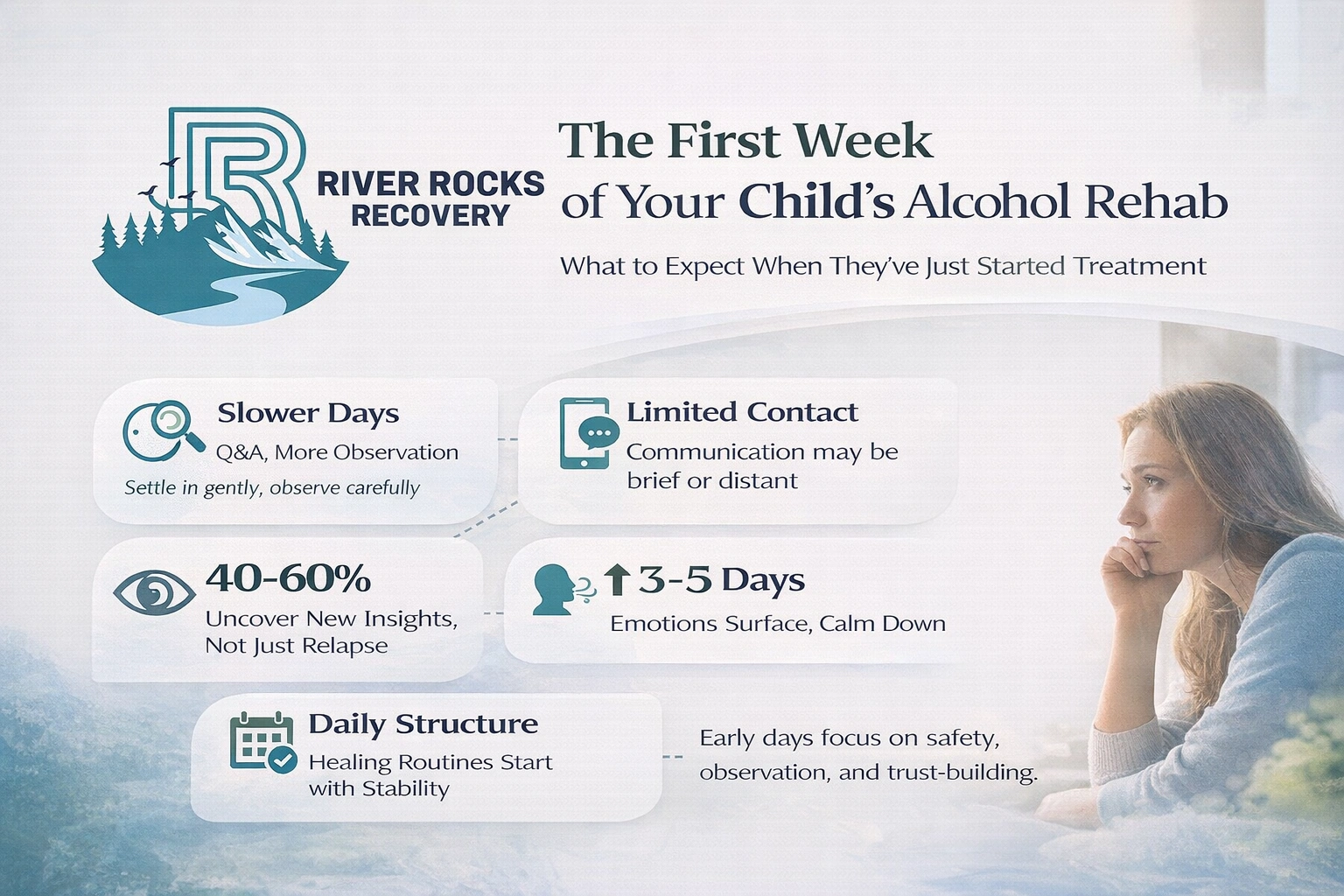
- Slower days
- Less stimulation
- More observation than action
This isn’t a delay in progress.
It is progress.
Because before anything can change, the nervous system has to calm down.
The First Day Is About Stabilizing, Not Fixing
When your child first arrives, the goal is simple: get them grounded.
They may feel:
- Disoriented
- Defensive
- Tired or emotionally shut down
That’s expected.
Clinicians aren’t trying to “fix” anything on day one. They’re focused on understanding what your child needs physically and emotionally.
Think of it like resetting a system that’s been overloaded for a long time.
You don’t rush that process. You steady it.
Communication May Feel Limited—And That Can Be Hard
One of the most painful parts for parents is the initial distance.
You may not hear from your child right away.
And when you do, it might not sound the way you hoped.
They might:
- Be short in conversation
- Seem disconnected
- Express frustration about being there
That doesn’t mean it’s not working.
It often means they’re still adjusting.
The first week is less about connection with you—and more about helping them reconnect with themselves.
Emotions Don’t Settle—They Surface
Once the initial shock wears off, emotions tend to rise.
This can be confusing.
You might hear:
- “I hate this.”
- “I don’t need to be here.”
- “I want to leave.”
And then, hours or days later:
- “I think I needed this.”
- “I feel a little better.”
This back-and-forth is normal.
Your child is stepping out of a pattern that may have numbed or avoided emotions for a long time.
Now those emotions are coming back online.
It’s not regression. It’s reactivation.
Structure Starts to Do Quiet Work
One of the most powerful things happening during the first week is something you may not even see: structure.
Your child’s day begins to follow a rhythm:
- Wake-up times
- Meals at consistent intervals
- Scheduled sessions and downtime
For many young adults in crisis, this is unfamiliar.
And at first, it can feel uncomfortable.
But over time, structure creates something they may not have felt in a while:
Stability.
For families in communities like Hamilton, Ohio, having access to this kind of consistent environment can be the difference between chaos continuing—and something new starting to take shape.
Physical Symptoms Can Be Part of the Process
Depending on what your child has been experiencing, the first week may include physical and mental adjustments.
You might notice:
- Increased sleep or fatigue
- Irritability
- Difficulty focusing
- Changes in appetite
This can be unsettling to hear.
But it’s part of the body recalibrating.
Healing doesn’t always look like improvement right away. Sometimes it looks like rest.
Trust Takes Time—And That’s Okay
Parents often wonder:
“Why aren’t they opening up yet?”
But trust doesn’t happen immediately.
Especially if your child has been:
- Guarded
- Hurt
- Unsure about being in treatment at all
The first week is about building safety.
Not forcing vulnerability.
Some clients begin sharing quickly. Others take longer.
Both paths are valid.
Small Signs Matter More Than Big Breakthroughs
You may be hoping for a clear signal that things are “working.”
But in the first week, progress often looks like small shifts:
- Staying one more day
- Participating in a session, even minimally
- Showing a moment of honesty
These moments can seem insignificant.
They’re not.
They’re the beginning of willingness—and willingness is where everything starts.
This Is the Foundation—Not the Full Picture
The first week is just that: the beginning.
It’s where your child starts to:
- Slow down
- Stabilize physically and emotionally
- Experience support in a consistent way
From here, care can evolve.
For some individuals—especially those dealing with more complex substance use patterns—families may also explore options like care in Methamphetamine Rehab as part of a broader treatment plan.
But right now, nothing needs to be decided all at once.
The goal is simple:
Let the first step happen fully.
What You’re Carrying Matters Too
While your child is adjusting, you are too.
And parents often carry more than they let on.
You might feel:
- Relief that they’re finally safe
- Guilt about how things got here
- Fear about what happens next
You might replay moments, wondering if you could have done something differently.
That’s part of this experience.
But getting them into care wasn’t failure.
It was an act of protection.
You Don’t Have to Solve the Future This Week
It’s tempting to look ahead.
To ask:
- “What happens after this?”
- “How long will this take?”
- “Will this actually work?”
Those are valid questions.
But they don’t need answers right now.
Right now, your child needs:
- Time
- Stability
- Space to adjust
And you need permission to focus on this moment—not the entire road ahead.
FAQs: What Parents Often Ask During the First Week
Is it normal if my child sounds upset or resistant?
Yes. Adjustment takes time, and resistance is often part of that process—not a sign that care isn’t working.
Why haven’t I heard much from them yet?
Early communication can be limited while your child stabilizes and begins engaging with the clinical team.
What if they say they want to leave?
This is common in the first week. It doesn’t always reflect how they’ll feel once they settle into the routine.
How will I know if things are improving?
Look for small changes—willingness to stay, slight emotional shifts, or openness in conversation.
Should I be doing something right now?
The most helpful thing you can do is stay steady. Let the process unfold while staying available and supportive.
Is it too early to think about next steps?
Yes. The first week is about stabilization. Future planning comes after your child has had time to adjust.
You’re Not Alone in This Waiting
Waiting is one of the hardest parts.
Not knowing exactly how your child is feeling. Not being able to fix it yourself.
But something important is happening—even if you can’t see all of it yet.
Your child is in a space designed to help them slow down, stabilize, and begin again.
For families near Monroe, Ohio, having access to this level of support can bring a sense of grounded hope—especially in moments that feel uncertain.
Ready to Stay Supported Through This Process?
You don’t have to carry this alone.
Call (888) 905-6281 or visit our alcohol rehab treatment in ohio to learn how we support both your child and your family through each stage of care.