
When someone you love is struggling, but still functioning just enough to stay out of crisis—it’s one of the hardest places to be.
You see the red flags: the mood swings, the drinking that’s no longer “social,” the missed work, the promises to change that don’t last. But when you start looking for help, it can feel like all the options are either too much—or not enough.
Inpatient sounds intense, like something for someone who’s hit bottom. Outpatient therapy feels too easy to skip. That’s where a Partial Hospitalization Program (PHP) can be a lifeline.
Not just for the person you love—but for you, too.
What Is a Partial Hospitalization Program?
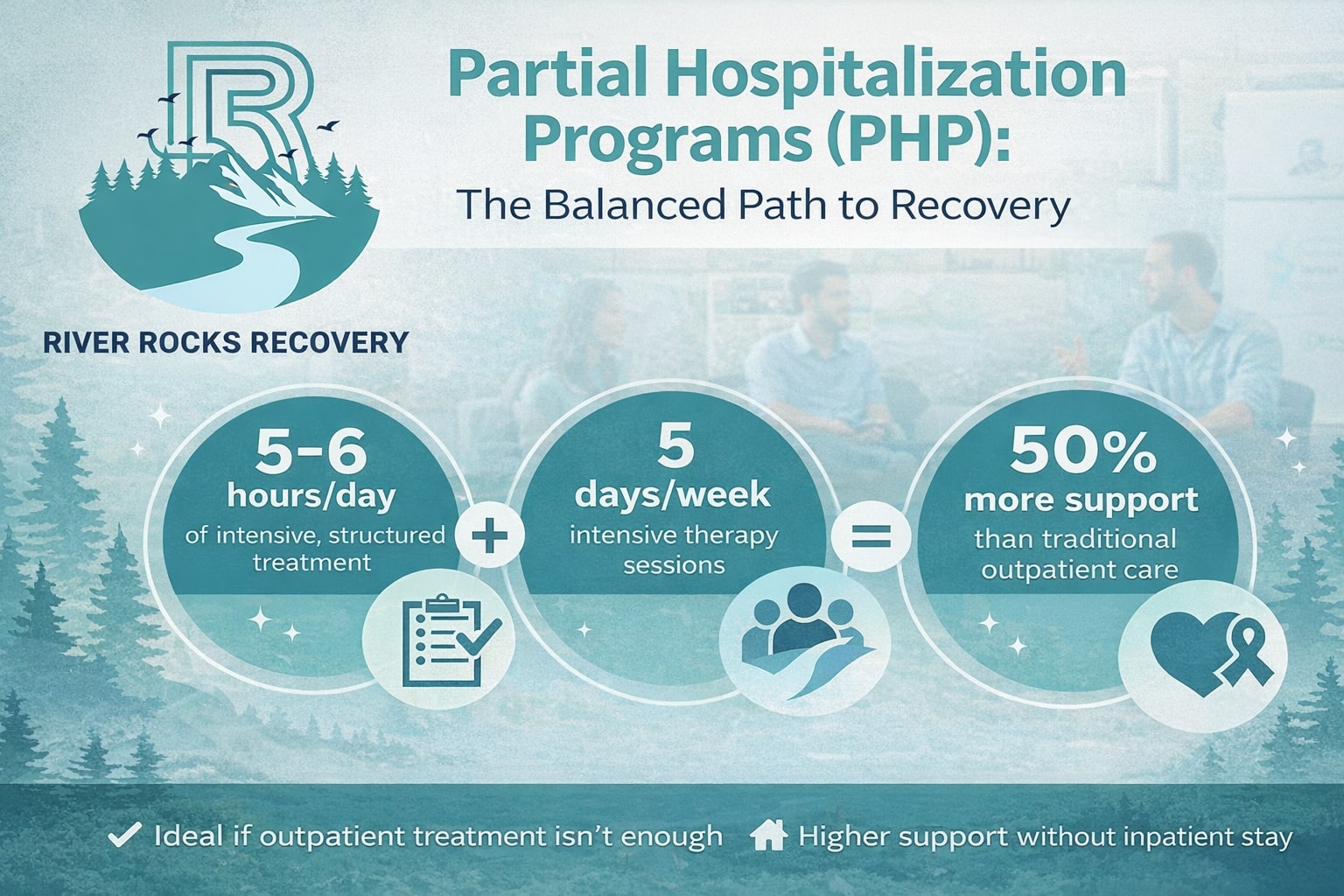
A Partial Hospitalization Program is a structured, intensive treatment program for mental health and/or substance use disorders. Unlike inpatient rehab, it doesn’t require overnight stays. Participants attend several hours of therapy and clinical support each day—typically five days a week—and return home in the evenings.
Think of it like this: PHP is hospital-level care without hospital-level disruption.
Your loved one can receive group therapy, individual counseling, psychiatric medication support, and skills training—all in one coordinated setting. For many, it’s the first time their treatment feels connected. Not scattered across appointments, but whole.
Who Is PHP Designed For?
A Partial Hospitalization Program can help when:
- Your loved one is struggling with mental health or substance use, but doesn’t meet inpatient criteria
- Weekly therapy hasn’t helped enough
- Their symptoms are worsening, but they’re still able to manage some daily tasks
- They’re willing to get help, but afraid to enter full residential care
- They recently discharged from an inpatient program and need continued structure
This level of care is especially helpful when things feel urgent, but not quite emergent. It’s for those middle spaces where pain is real, but hope is still alive.
Why Inpatient Feels Like Too Much—and Outpatient Doesn’t Feel Like Enough
Families often feel stuck choosing between extremes: do nothing and hope things improve—or send them away completely.
But that binary isn’t the full picture.
Inpatient treatment can be life-saving, but it’s also disruptive. It requires leaving home, jobs, children. For some, that’s just not possible. For others, it feels like surrendering to something they’re not ready to name.
Outpatient therapy, on the other hand, can feel like a Band-Aid on something deeper. One hour a week doesn’t always stand a chance against the gravity of addiction or the weight of untreated trauma.
PHP bridges the gap. It says: You’re struggling—and you deserve real care. But you don’t have to disappear from your life to get it.
What Happens Each Day in a PHP?
Every program is different, but at River Rocks Recovery in Middletown, a typical PHP day might include:
- Group therapy sessions that focus on emotional regulation, relapse prevention, communication, or trauma recovery
- Individual therapy to work through personal challenges with a licensed clinician
- Medication management and psychiatric evaluation if needed
- Skill-building sessions like mindfulness, grounding techniques, and healthy coping tools
- Case management support to help with legal, family, housing, or work-related needs
Clients usually attend 5–6 hours of programming a day, five days per week. The structure itself becomes therapeutic—helping to rebuild rhythm, routine, and accountability.
The Hidden Relief of Daily Structure
One of the most overlooked gifts of PHP is the emotional containment it offers.
People struggling with addiction or mental health don’t always show it clearly. They might still go to work. Still say “I’m fine.” Still lie about the drinking or downplay the panic attacks.
But when they enter PHP, the truth starts to have space.
There’s no more pretending for 50 minutes once a week. In PHP, the staff sees the real person—how they show up day after day, what patterns emerge, how their defenses fall when trust builds.
That’s where healing starts.
If You’re in Love With Someone Who’s Still Using
You don’t have to leave them to want them to get help.
You don’t have to choose between staying and suffering—or walking away and feeling like you’ve abandoned them.
A Partial Hospitalization Program is a middle path. It offers care that honors both realities: the person you love is hurting, and you’re hurting too.
You’ve likely been managing their moods, covering for them at work, walking on eggshells, maybe even hiding your own pain. You might feel guilty for being resentful—or scared that you’ve waited too long.
But this is the moment to pause. Not to fix it all. Just to get help.
Finding Help Near Middletown
You don’t have to send them across the country to find a high-quality program. River Rocks Recovery offers a Partial Hospitalization Program right here in Middletown, Ohio. And if you’re looking for a Partial Hospitalization Program in West Chester or Monroe, our program is accessible to both regions.
Treatment is hard enough without a long commute or the weight of being far from home. Local care makes it easier to show up, to stay engaged, and to keep your support system nearby.
Frequently Asked Questions About PHP
Is PHP only for people with addiction?
No. Many people enter PHP for mental health reasons—like depression, anxiety, trauma, or mood instability. River Rocks Recovery supports both substance use and co-occurring mental health needs.
What’s the difference between PHP and IOP?
The main difference is intensity. PHP usually involves 5–6 hours per day, 5 days per week. IOP (Intensive Outpatient Program) is a step down, typically 3 hours per day, 3–5 days per week. PHP offers more support for more complex or unstable situations.
Can someone work while in PHP?
It depends on the schedule and job. Many PHP participants take a temporary leave from work. Some with flexible or part-time jobs can continue working. Our case managers can help navigate leave paperwork if needed.
What if my loved one doesn’t think they need this?
That’s common. Many people resist treatment until they feel truly seen, safe, or out of options. PHP can be framed as support, not punishment. We can help you have that conversation with compassion and clarity.
Call (888) 905-6281 or visit to learn more about our Partial Hospitalization Program services in Middletown, Ohio.
You’re not failing them by asking for help. You’re showing up with love—and boundaries. That’s one of the hardest and bravest things you can do.