
When you’re in love with someone who’s using opiates, logic often goes out the window. One minute you’re promising yourself you’ll draw a boundary. The next, you’re driving them to a pharmacy at 2 a.m. or covering a missed rent payment. Maybe they’ve promised to stop. Maybe they’ve even tried. And maybe someone—maybe even you—has said, “They just need to detox.”
That idea can feel like a life raft. But here’s the truth: detox is only the beginning. If your partner is going to heal—not just stop using, but really get better—it will take more than getting through withdrawal. And if you’re going to survive this with your heart still intact, you’ll need more than waiting and hoping.
At River Rocks Recovery, our opiate addiction treatment approach is designed for exactly this kind of situation. We know the rollercoaster you’re on. We also know what real help can look like—and why so many couples never get the chance to find it.
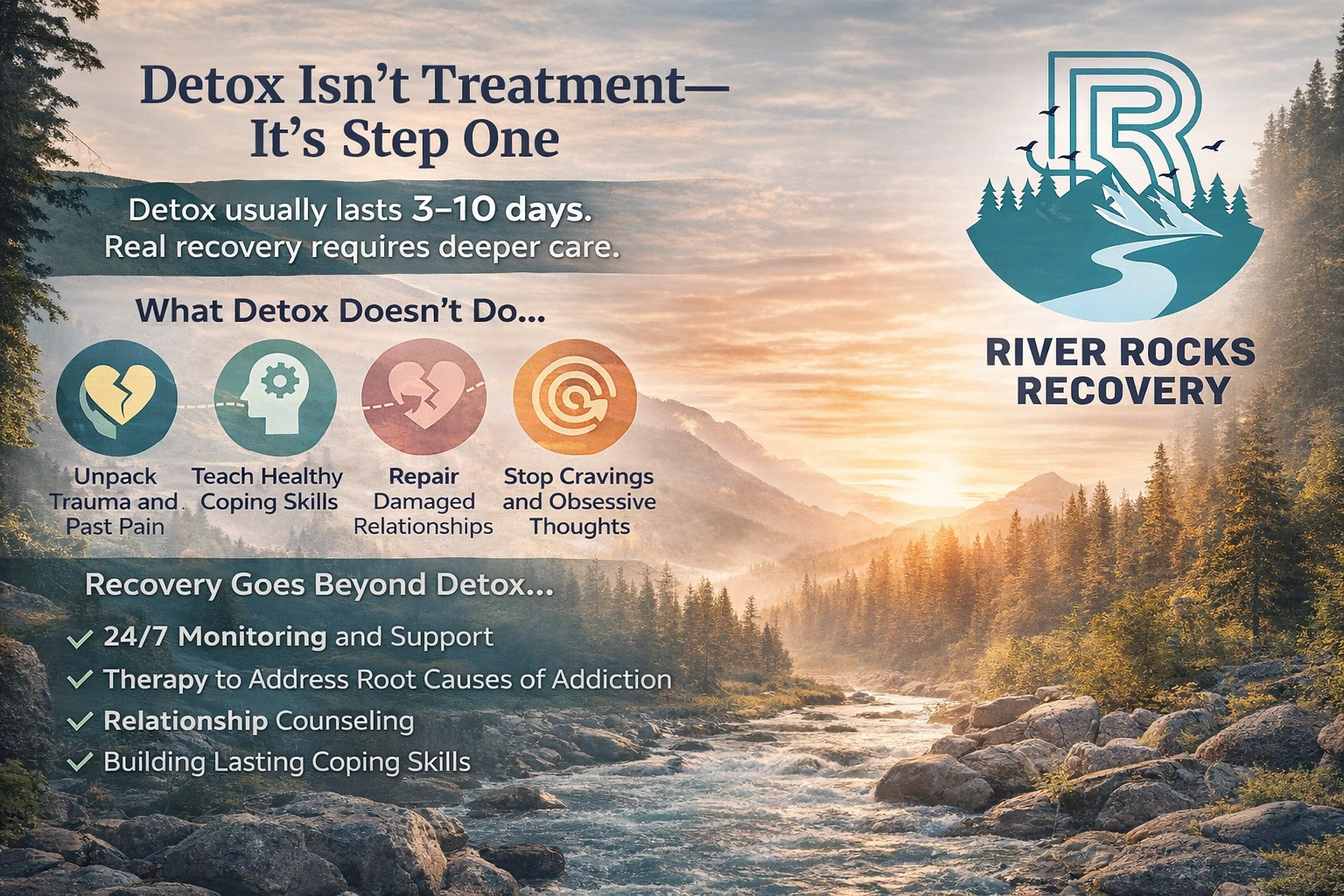
Detox Isn’t Treatment—It’s Step One
When someone enters detox, the goal is simple: safely manage withdrawal. That process usually lasts between three to ten days. For opiates, it can be painful—physically and emotionally. But once it’s over, they’re not “better.” They’re just no longer in withdrawal.
It’s tempting to think that once the drugs are out of their system, things will go back to normal. But if you’ve been through this cycle before, you know what often comes next: they’re clean for a while… and then they’re not.
Why? Because detox doesn’t touch the parts of addiction that live under the surface.
- It doesn’t unpack trauma or past pain
- It doesn’t teach coping skills
- It doesn’t repair damaged relationships
- It doesn’t stop cravings or obsessive thinking
- It doesn’t rebuild trust between you
In some ways, detox is like restarting a phone with a broken battery. It turns back on—but without repair, it won’t hold a charge.
Why People Relapse After Detox
Relapse after detox isn’t a failure—it’s common. That’s not because your partner doesn’t love you, or isn’t trying hard enough. It’s because opiate addiction rewires the brain’s reward system and emotional processing.
Without follow-up care, your partner is walking out of detox with raw nerve endings, fragile hope, and none of the tools to handle stress, shame, or emotional triggers. It’s not willpower that sustains recovery—it’s support, structure, and new skills.
Recovery requires a deeper process. That often means a combination of:
- Live-in treatment with round-the-clock supervision
- Multi-day weekly treatment that allows people to live at home while building new habits
- Therapy focused on emotional regulation, not just substance use
- Relationship counseling or family involvement to rebuild trust
- Peer connection and accountability
- Addressing mental health issues that often coexist with addiction
Opiate use rarely happens in a vacuum. Neither does healing.
How Partners End Up Carrying Too Much
If you’re still reading, chances are you’ve been carrying the emotional weight of your partner’s addiction for a long time. Maybe you’re the one who finds treatment programs, pays the bills, or talks them down when things spiral. You might be keeping the peace, protecting your kids, or covering up for them at work or with family.
None of this makes you weak. It makes you human. It makes you someone who loves deeply.
But here’s the hard part: love can’t fix addiction. And neither can managing, controlling, or rescuing someone through it.
Real recovery asks your partner to do their own work. And it asks you to consider what you need, too.
What Real Treatment Looks Like
True recovery isn’t about forcing someone to stop using. It’s about helping them build a life where they no longer need to.
That often means a phased, flexible treatment approach—starting with stabilization and moving toward long-term support. At River Rocks Recovery, we offer multiple paths depending on the person’s needs and readiness. That can include:
- A live-in program for those who need safe distance from triggers and 24/7 support
- Multi-day weekly treatment that combines individual and group therapy, often a next step after detox or inpatient care
- Dual-focus support for those dealing with both substance use and mental health struggles
- Family support sessions to help you stop walking on eggshells and start healing, too
In Hamilton, Ohio, we’ve worked with countless families who thought detox would be enough. But real change happened when the deeper work began—when both partners had space to breathe, reflect, and rebuild.
If You’re in Love with Someone Still Using
This is one of the hardest places to be. You love them. But you’re tired. Maybe you’re angry. Maybe you feel like a version of yourself you barely recognize. You’ve read articles, talked to friends, maybe even called treatment centers before—but nothing has stuck.
You’re not naive. You’re not weak. You’re in pain.
It’s okay to still hope. And it’s okay to need help for yourself, even if they’re not ready yet.
If you’re living in Monroe, Ohio, and wondering if there’s support for people like you, the answer is yes. Real, nonjudgmental help exists for partners navigating this exact pain. You don’t have to pretend everything is fine. You don’t have to fix it alone.
What You Can Do—Even If They’re Not Ready
- Talk to someone who understands. A counselor, a support group, or a treatment center can help you sort through what’s yours to carry and what isn’t.
- Stop waiting for the perfect time. Many people wait for a major crisis to act—an overdose, an arrest, a rock bottom. But you’re allowed to ask for help now.
- Gather information. Even if your partner says they’re not ready, knowing your options can bring you clarity. It prepares you for the moment they are ready—or the moment you decide what you need next.
- Set boundaries that serve you. That doesn’t mean cutting someone off cold. It means defining what you’re willing to accept, and what you’re not. Boundaries protect your heart from bleeding out entirely.
You’re Not Alone in This
Maybe you’re scared to make the wrong move. Maybe you’ve already tried and failed to get them help. Maybe you’re afraid that trying again will lead to more disappointment.
But every story of recovery—every one—starts with someone trying again.
Opiate addiction is treatable. Even if it doesn’t feel like it from where you’re standing. Even if they’ve tried before. Even if you’ve tried everything. There is a version of your life that feels safer, steadier, and more peaceful. It starts by recognizing that detox isn’t the whole answer—and that you deserve clarity and care, too.
Frequently Asked Questions (FAQs)
How long does detox last, and what happens afterward?
Detox typically lasts between 5–10 days for opioids, depending on the severity of use. After detox, individuals need structured care to address the emotional, psychological, and behavioral patterns that led to substance use. Detox clears the body, but not the mind.
My partner has already detoxed before. Why didn’t it work?
Detox is not a cure—it’s just a beginning. Without ongoing support, relapse is common. If underlying trauma, mental health concerns, or life stressors aren’t addressed, it’s likely your partner returned to substances to cope.
Can I make my partner go to treatment?
You can’t force lasting change. But you can set boundaries, provide options, and remove yourself from the role of rescuer. Many people begin recovery not because they were ready—but because someone close to them stepped back and let them feel the impact.
Is there support for partners like me?
Yes. Many treatment centers offer family therapy, support groups, or one-on-one counseling for loved ones. Healing happens in relationships—yours included.
What if my partner is only willing to do detox, not long-term care?
Start there. Any step toward healing matters. But be honest with yourself about what happens after detox and how you’ll both get the support needed to make change last.
Ready to Talk?
Call 888-905-6281 to learn more about our opiate addiction treatment in Middletown, Ohio.