

Starting treatment can feel like stepping into the unknown. If you’re reading this, you’re likely searching for clarity, safety, and a path forward. You might be nervous, unsure of what comes next, or wondering if you deserve help. That’s a deeply human place to be—and the fact that you’re here shows courage. A partial hospitalization program (PHP) could be the structured care you need to begin feeling like yourself again. At River Rocks Recovery, we walk with you through every stage of this program, explaining what happens from start to finish so you can step into care with confidence and hope. Before we go further, know that a PHP is more than a schedule of appointments—it’s a supported journey toward lasting recovery. We’ll take it one step at a time.
Before diving into the daily details, you should know that PHP is designed for people who need more support than typical outpatient therapy but don’t require 24/7 medical supervision in a hospital. It’s an intensive, day-long schedule of therapeutic activities, clinical support, and skill building that helps stabilize your health and strengthen your recovery foundation.
One thing we hear again and again from people in treatment is that the world outside can feel messy and unpredictable. PHP gives your brain and body a stable rhythm—like daylight breaking after a long night.
What Happens Before Your First Day
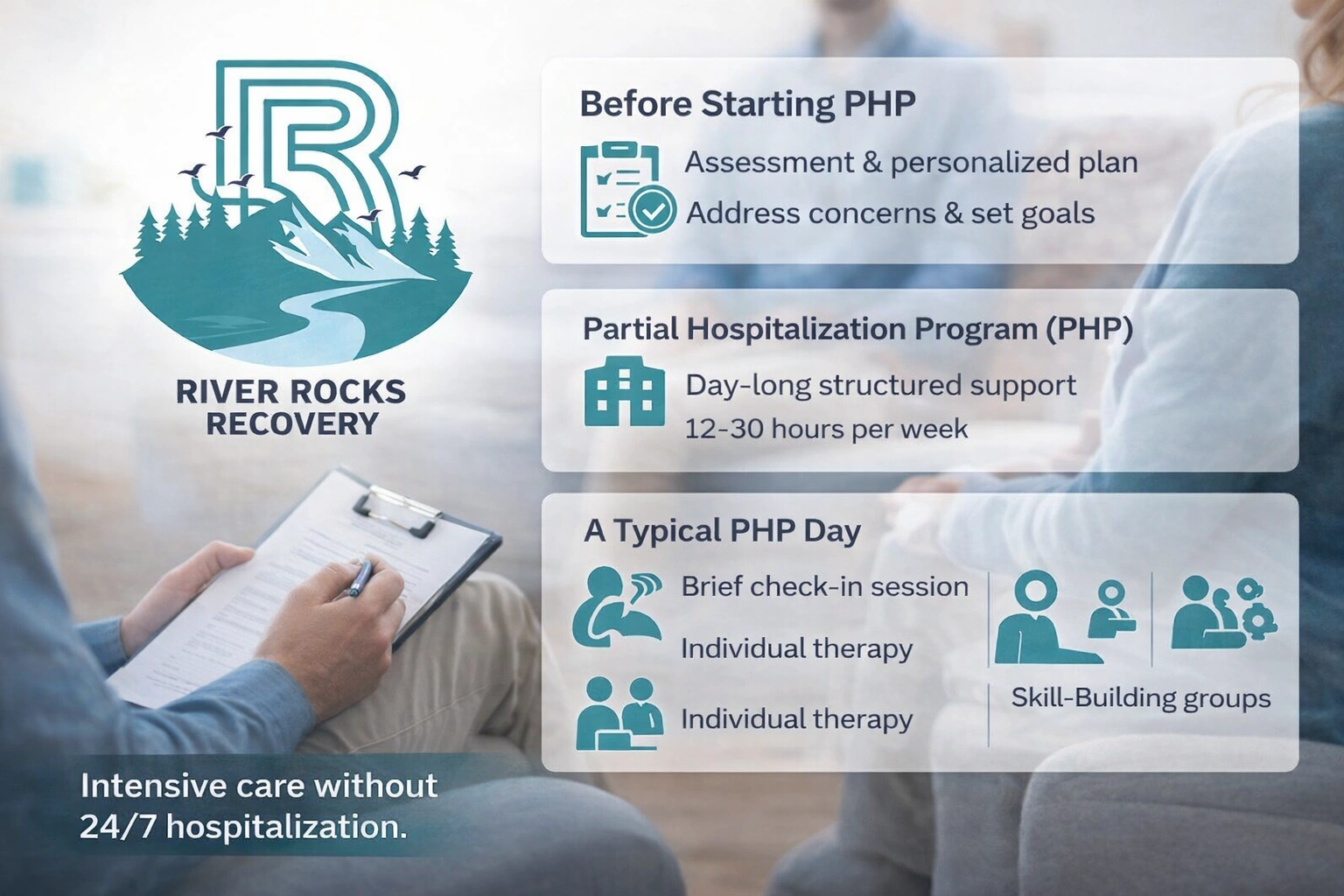
Your first day doesn’t begin on Day One of programming—it begins with the preparation leading up to it. Before starting PHP, you’ll go through an assessment with a licensed clinician. This is a conversational process, not an interrogation. You’ll talk about your personal history, your challenges, your medical needs, and your goals. This assessment helps us build a plan that fits you, not some generic template.
At this stage, you’ll also be invited to ask questions. You can talk through worries like: Will I feel judged? What if I’ve never done therapy before? What if I’m not sure I belong in treatment? You get honest, clear answers because your comfort matters.
This step is a bit like mapping a journey before setting out. You wouldn’t begin a road trip without knowing your first turn, and we think treatment deserves the same care.
Orientation: Your First Moments in the Program
On your first morning in PHP, you’ll meet the team and experience the space. You’ll learn the schedule, where groups happen, and we’ll introduce you to people with similar goals. Some folks might already be in their second or third week. Seeing others in recovery can be quietly reassuring—it reminds you that this is real and that you’re absolutely not alone.
You’ll get a tour, meet your primary therapist, and hear how days are structured. Don’t worry if this feels overwhelming at first; most people do. It’s okay to feel nervous. Most of us are most nervous right before things start getting better.
If you’re coming from a nearby community like Hamilton, Ohio, you might find it comforting to know others in the program may be from your area too—people who understand your local environment, your stressors, and even the recovery resources close to home.
Daily Life in PHP: Rhythm, Routine, and Healing
Once you’re settled in, your day starts to follow a consistent rhythm. There’s structure, but not rigidity. A typical day includes:
- Morning check‑in: A brief group session to set intentions and connect.
- Therapy groups: These may include cognitive‑behavioral therapy (CBT), dialectical behavior therapy (DBT), trauma‑informed care, relapse prevention, and more.
- Individual therapy: One‑on‑one time with a clinician to go deeper into your personal experiences.
- Life‑skills sessions: Learning coping strategies, emotion regulation skills, stress management tools, and communication techniques.
- Peer support and community time: Time with others in recovery to share and listen.
These sessions give you tools you can use in your everyday life, not just ideas you think about while in treatment. Think of PHP as a place where your recovery muscles get strong enough to carry you beyond the program.
Emotional Work and Real-World Growth
The core of PHP is emotional processing. Each day creates a space where you can uncover what’s been buried—grief, fear, shame, or loneliness—and finally meet it with something new: understanding. You don’t have to perform in this space. You don’t have to “get it right.” You only have to show up and be willing.
Because PHP lets you return home at night, you’ll also start testing what you learn in real life. You might try a communication skill in a tough family conversation. You might notice you handled a trigger better than before. And then you return the next day to talk about it. This cycle—practice, reflect, adjust—is how growth becomes real.
Wellness Supports Beyond Talk Therapy
Healing is physical, emotional, and spiritual. That’s why many PHP programs, including ours, include body-based and creative supports. This might look like guided meditation to calm your nervous system, or a small art project that helps express something you couldn’t find the words for. These experiences aren’t extras—they’re essentials.
When you’re in survival mode, your body often holds stress even after your mind starts to understand it. These activities help release that tension and reintroduce calm as something that’s not only possible—but normal.
Some participants from Monroe, Ohio have shared how refreshing it feels to have this kind of whole-person care close enough to home that daily attendance is realistic.
The End Is Just the Next Step
As you get closer to completing PHP, your care team will begin planning your next phase. Most clients step down into IOP (intensive outpatient program), where they receive a few hours of support per week. Others may continue individual therapy, join peer support groups, or return to work or school with new tools.
The end of PHP isn’t a cliff—it’s a transition. And it happens with your team, not in isolation. You’ll talk about what stability looks like for you. What support still feels essential. What progress you’re proud of, and where you still feel unsure.
We build that next step together.
Frequently Asked Questions About PHP
What’s the average length of time someone stays in PHP?
It depends on the individual, but most people attend for 2–6 weeks. Your care team will continuously assess your progress and discuss timing with you.
Is PHP only for addiction?
No. Many people use PHP to manage anxiety, depression, trauma, or other mental health issues—sometimes alongside substance use, sometimes not.
Can I work while doing PHP?
Because PHP typically runs 5–6 hours per day, five days a week, it can be hard to maintain a full-time job. Some people take a leave from work, while others coordinate flexible schedules.
Will I be with the same group every day?
Yes and no. You’ll see many of the same people in your core groups, but some sessions rotate. That means you’ll have both continuity and variety in who you share space with.
How is PHP different from residential treatment?
The biggest difference is that you go home at night. PHP gives you clinical care during the day but allows you to sleep in your own bed—or in a supportive recovery residence if needed.
Call (888) 905‑6281 to learn more about our partial hospitalization program in Middletown, Ohio.