

When you’re newly sober and still figuring out who you are, everything can feel off—especially if you’re young. Everyone your age is going to parties, getting drinks after class, or posting pictures from bars with captions like “best night ever.” And here you are—watching from the outside, wondering if something’s wrong with you for wanting something different or trying to figure out how to get sober in a world that often normalizes drinking.
The weirdness is real. Sobriety, especially early on, can make you feel like you’re speaking a different language from everyone around you. But the truth? You’re not weird—you’re brave. And you’re not alone.
At River Rocks Recovery, we work with a lot of people who got sober young. Not because they hit some dramatic rock bottom, but because something in their gut said, “I can’t keep living like this.” That decision—whether it was made after a detox, a scare, or a quiet moment alone—is valid.
And if you’re wondering how treatment could help you not just stay sober, but actually feel good in your sobriety, this is for you.
1. You Meet People Who Actually Get It
There’s something different about being around people who don’t look at you like you’re broken when you say you’re sober. In treatment, especially in multi-day weekly programs, you’ll meet other people who’ve made the same choice—even if it was for totally different reasons.
You’ll hear stories that sound a lot like your own. You’ll laugh at things you thought only you did. You’ll stop explaining and start connecting.
2. You Get to See Why You Used—Without Judgment
Most people don’t start using drugs or alcohol just to wreck their lives. It starts with trying to feel better, quieter, more confident, less alone. Treatment helps you unpack why you leaned on substances—and what that says about what you really need.
That self-awareness? That’s the start of confidence. Because once you understand what you were trying to fix, you can start actually fixing it.
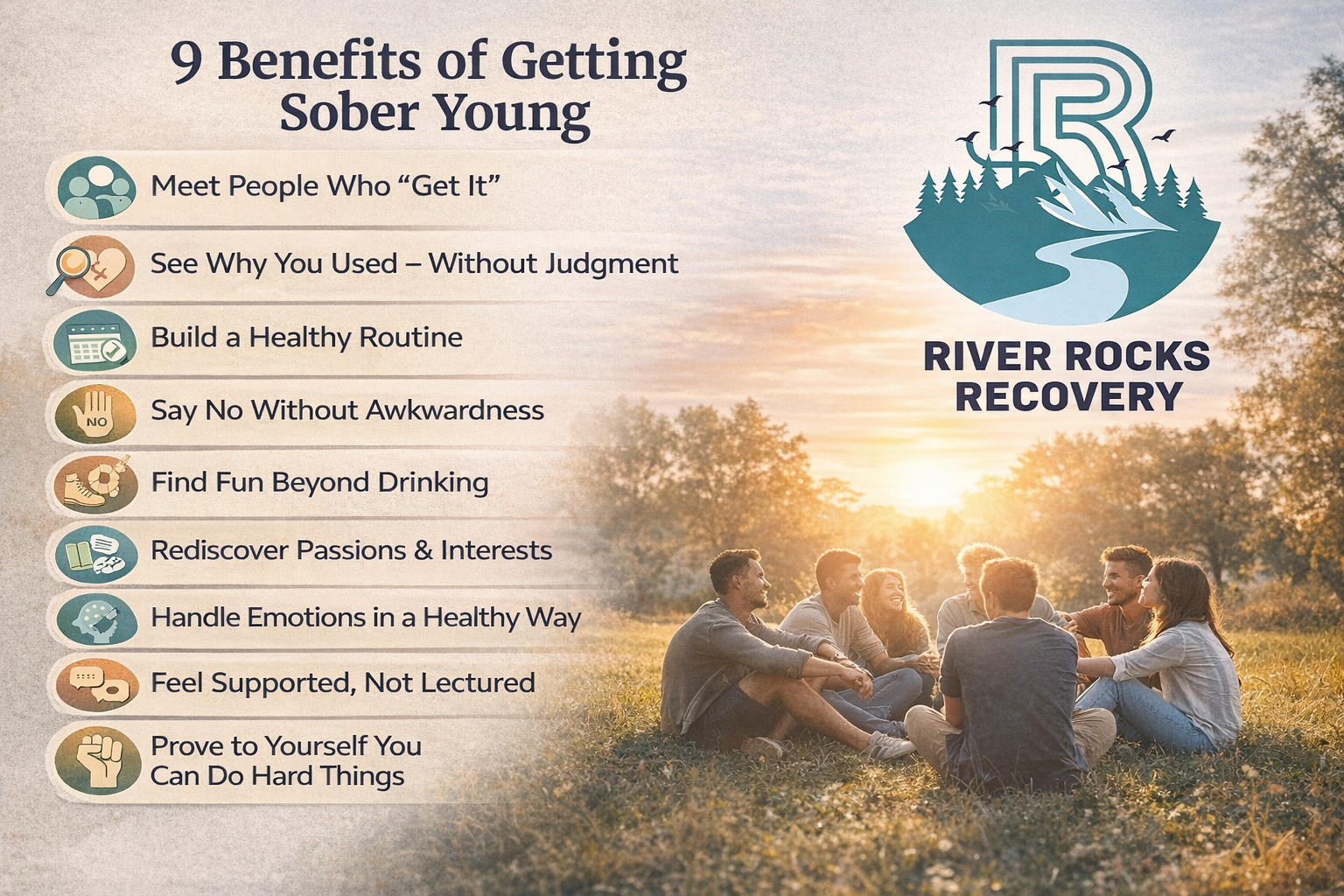
3. You Start to Build a Real Routine
When you’re using, time becomes fuzzy. Days blur. Nights stretch too long. Meals get skipped. Sleep becomes optional. Treatment reintroduces rhythm. You eat. You sleep. You show up.
That routine isn’t punishment—it’s scaffolding. It holds you up while you get your legs under you again. And slowly, you realize that structure doesn’t have to feel like control. It can feel like peace.
4. You Learn How to Say No Without Feeling Lame
Let’s be honest: being the sober one in a drinking crowd can suck. People ask questions. Some push drinks on you. Others look at you like you’re judging them. In treatment, you learn that it’s not your job to make other people comfortable with your choices.
You also practice what to say—and how to say it—so it feels like you, not some script. Whether it’s a simple “I’m good” or something deeper, you start owning your decisions.
5. You Find Out Sobriety Doesn’t Equal Boring
This might be one of the hardest mental blocks for young people to get past. Sobriety feels like saying goodbye to fun. But in reality? You’re saying goodbye to one version of fun—usually the one that left you feeling hungover, anxious, or ashamed.
In treatment, you discover that fun still exists. You laugh—really laugh—in group. You go on outings. You play games, listen to music, and talk about real things. It’s not forced. It’s just… different. And better.
6. You Reconnect With the Stuff You Actually Care About
Once the substances are gone, there’s space. Space to remember what used to light you up. Maybe it’s music. Or sports. Or hiking. Or reading weird fantasy books. Treatment gives you the time and clarity to find those pieces again—and new tools to protect them.
Sobriety isn’t just taking something away. It’s getting things back.
7. You Learn How to Sit With Feelings Without Imploding
Early sobriety comes with a lot of emotions. Guilt. Shame. Boredom. Anxiety. Loneliness. Happiness so big it feels like a threat. In a safe treatment space, you learn how to ride those waves instead of drowning in them.
You get real tools—like grounding skills, mindfulness, communication strategies—not just vague “good vibes” advice. And the more you ride those emotional waves without using, the more confident you become.
8. You Feel Supported, Not Lectured
If you’re young and sober, you’ve probably heard it all: “You’re too young to have a problem.” “Just be careful.” “You’ll grow out of it.” Treatment is different. You’re not talked down to. You’re not dismissed.
You’re taken seriously. People want to know your story—not to judge it, but to help you understand it. That respect builds self-respect.
9. You Realize You Can Handle More Than You Thought
The first few days of treatment might feel shaky. But each time you show up for group, share something vulnerable, or just stay when you want to leave—you’re proving something to yourself. You’re building confidence by doing hard things.
You’re rewriting the story in your head from “I can’t” to “I’m doing it.”
In West Chester, Ohio, we’ve met young people just like you—navigating sobriety while their peers were still partying. The first time they walked into treatment, most felt out of place. But within a few weeks, they were laughing with others, setting goals, and reclaiming parts of themselves they thought they’d lost.
And we’ve seen that same strength in Dayton, Ohio, where being young and sober isn’t as rare as it feels. In both places, people have discovered that treatment isn’t just about staying sober—it’s about becoming someone you’re proud of.
Frequently Asked Questions (FAQs)
Do I have to hit rock bottom to go to treatment?
No. You don’t need to wait for a crisis to get support. If your use is affecting your life—or even if you’re just worried it might—you’re allowed to ask for help now.
What if I’m not sure I want to stay sober forever?
That’s okay. Most people aren’t sure at first. Treatment helps you explore that uncertainty without pressure. You’ll gain clarity at your own pace.
Will I be the youngest person in treatment?
Not necessarily. Many programs have a wide age range, but more young people are entering treatment earlier. And even if you are the youngest, you won’t be the only one feeling unsure, scared, or out of place. That feeling connects people, not age.
What if I’ve already tried treatment and it didn’t work?
Trying again doesn’t mean you failed—it means you’re still fighting for yourself. Maybe the last place wasn’t a good fit. Maybe the timing wasn’t right. That doesn’t mean you don’t deserve another shot.
Can I do treatment without moving into a facility?
Yes. Many people benefit from multi-day weekly treatment that allows them to live at home while attending structured therapy and support. It’s flexible, effective, and often a great fit for young adults balancing work, school, or family responsibilities.
Ready to Talk?
Call 888-905-6281 to learn more about our opiate addiction treatment in Middletown, Ohio.