
There’s a stage in recovery that people don’t warn you about.
You’re sober. Life is stable. The chaos that once defined your days is gone.
And somehow… everything feels a little flat.
Not bad. Not dangerous. Just ordinary.
I remember noticing it one afternoon while doing something completely normal—laundry, I think. Nothing dramatic was happening. No crisis. No cravings. No emotional storms.
Just quiet.
And the thought that showed up surprised me:
Is this what life is supposed to feel like now?
If you’ve been sober for a while, you might recognize that moment. It doesn’t mean recovery failed. It usually means you’ve reached a new phase.
Some people reconnect with growth during this stage by revisiting support systems like alcohol rehab treatment. Not because they’re starting over, but because they’re ready to keep evolving.
Recovery doesn’t stop after the chaos ends.
In many ways, it’s just getting started.
When the Emergency Finally Ends
Early recovery is intense.
Every day feels important. You’re rebuilding routines, repairing relationships, and learning how to live without substances. Emotions come fast. Breakthroughs happen often.
There’s urgency in everything.
But eventually, the emergency fades.
You wake up and sobriety feels normal. Work becomes manageable again. Family relationships stabilize.
This is the goal most people fight for.
But the end of crisis creates a strange emotional shift.
Without the constant battle for survival, life becomes… ordinary.
And for some people, ordinary can feel confusing at first.
The Moment Recovery Stops Feeling Exciting
In the beginning, every milestone matters.
Thirty days sober.
Ninety days.
Six months.
A year.
People celebrate those moments because they represent survival and hope.
But after a while, the milestones stop feeling dramatic.
Sobriety becomes part of everyday life rather than something you actively fight for.
You still appreciate it—but it doesn’t feel like an achievement every day.
That’s when some alumni start feeling something unexpected.
Disconnection.
Not from sobriety itself, but from the excitement that once surrounded it.
When Life Turns Into Maintenance Mode
Long-term recovery sometimes slips into what I call maintenance mode.
You’re doing the right things.
You stay sober.
You go to work.
You take care of responsibilities.
But inside, something feels slightly muted.
The chaos is gone—but the meaning that once came from fighting that chaos may feel distant.
Many people quietly ask themselves questions they’re almost afraid to say out loud:
Have I stopped growing?
Is this all there is?
Did I lose something along the way?
Those questions aren’t signs of failure.
They’re signs that recovery is evolving.
The Second Chapter of Recovery
Early recovery is about survival.
Later recovery is about identity.
Once sobriety stabilizes, deeper questions begin to appear:
What kind of life do I actually want?
What matters to me now that substances are gone?
What am I building toward?
These questions can feel uncomfortable because they don’t come with simple answers.
But they also represent progress.
You’re no longer just escaping addiction.
You’re building something beyond it.
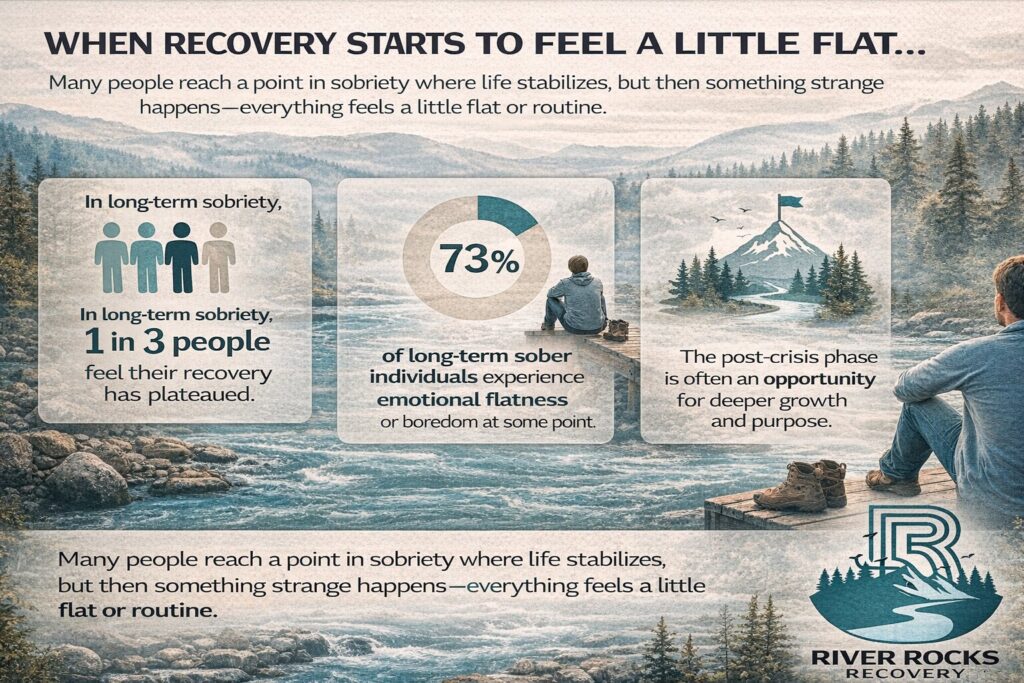
The Plateau That Many People Misinterpret
In recovery circles, people sometimes talk about “plateaus.”
A plateau doesn’t mean you’re stuck forever.
It means you’ve reached a level of stability where the next phase of growth requires different work.
Think of recovery like climbing a mountain.
The first stretch is steep and dangerous. Every step requires focus. Eventually, you reach a flat section where you can breathe.
That flat section might feel uneventful.
But it’s also where you gather energy for the next climb.
Why Some Alumni Return to the Work
One thing I’ve seen again and again is long-term alumni reconnecting with deeper healing.
Not because they relapsed.
Because they want more.
They want to understand themselves beyond the surface level of sobriety. They want to process emotions that early recovery didn’t have time to explore.
Some people return to therapy. Others reconnect with recovery communities. Some explore structured programs again—not as beginners, but as people continuing their growth.
For individuals who struggled with different substances over time, additional resources—like compassionate programs offering help in Methamphetamine Rehab—can also become part of a broader healing journey.
Recovery isn’t a single chapter.
It’s a long story.
The Surprising Part of Long-Term Sobriety
Here’s something many people don’t realize until they experience it themselves.
Sobriety removes chaos.
But it doesn’t automatically create purpose.
Purpose is something you build.
And building it requires curiosity.
Some people discover new careers. Others reconnect with creativity. Some find meaning in helping people who are earlier in recovery.
The possibilities expand once addiction stops dominating your life.
But discovering those possibilities takes time.
A Story I Hear Often From Long-Term Alumni
I’ve had conversations with people who say something like this:
“I’m grateful for my sobriety… but I feel stuck.”
And what usually follows is fascinating.
They start exploring things they never had space for before.
Art.
Travel.
Education.
Mentoring others in recovery.
Sometimes they revisit deeper healing through addiction therapy—not because they’re struggling again, but because they want to grow beyond survival.
That stage can become one of the most meaningful parts of recovery.
Because for the first time, life isn’t about escaping something.
It’s about building something.
If Recovery Feels Routine Right Now
You’re not alone.
Many people experience this quiet phase after the excitement of early sobriety fades.
It doesn’t mean recovery stopped working.
It means you’re ready for the next chapter.
Growth in this stage often looks different from early recovery. It’s less about avoiding substances and more about discovering purpose, identity, and connection.
In other words, you’re not starting over.
You’re leveling up.
And that stage of recovery can be just as powerful as the first. Recovery in West Chester, Hamilton, Monroe & Dayton, starts with support that understands. Explore our servuces and find safe ways to process your memories.
Frequently Asked Questions
Is it normal for long-term sobriety to feel routine?
Yes. Many people experience a phase where sobriety becomes normal rather than exciting. This shift often happens once life stabilizes and the urgency of early recovery fades.
Does feeling disconnected mean recovery isn’t working?
Not necessarily. Feeling disconnected can actually signal a transition into a new stage of recovery where deeper personal growth and purpose become the focus.
Why do some people return to therapy years after getting sober?
Many long-term alumni return to therapy to explore personal growth, unresolved emotions, or new life goals. Recovery often evolves beyond simply staying sober.
How can I find meaning again in long-term recovery?
Meaning often comes from exploring new passions, strengthening relationships, mentoring others, or continuing personal development. Growth doesn’t stop once sobriety becomes stable.
What should I do if I feel stuck in recovery?
Talking with trusted peers, counselors, or recovery professionals can help. Sometimes reconnecting with support systems or exploring new goals can reignite momentum.
If you’re ready to reconnect with growth and purpose in recovery, support is available. Call (888) 905-6281 or explore our alcohol rehab treatment services to learn more about care options available through River Rocks Recovery.