
The moment after a diagnosis is often quieter than people expect.
No dramatic music. No sudden clarity. Just a pause.
Sometimes people stare at the floor. Sometimes they nod politely while their thoughts race somewhere else entirely. I’ve seen people laugh nervously, change the subject, or ask a completely different question.
But underneath those reactions, something deeply human is happening.
A person is trying to understand what this moment means for their life.
As a clinician, I’ve sat across from hundreds of people in that moment. Many later explore support options like addiction therapy, but in the beginning, what people usually need isn’t a detailed plan.
They need space to process.
Because a diagnosis doesn’t just bring answers.
It also brings questions.
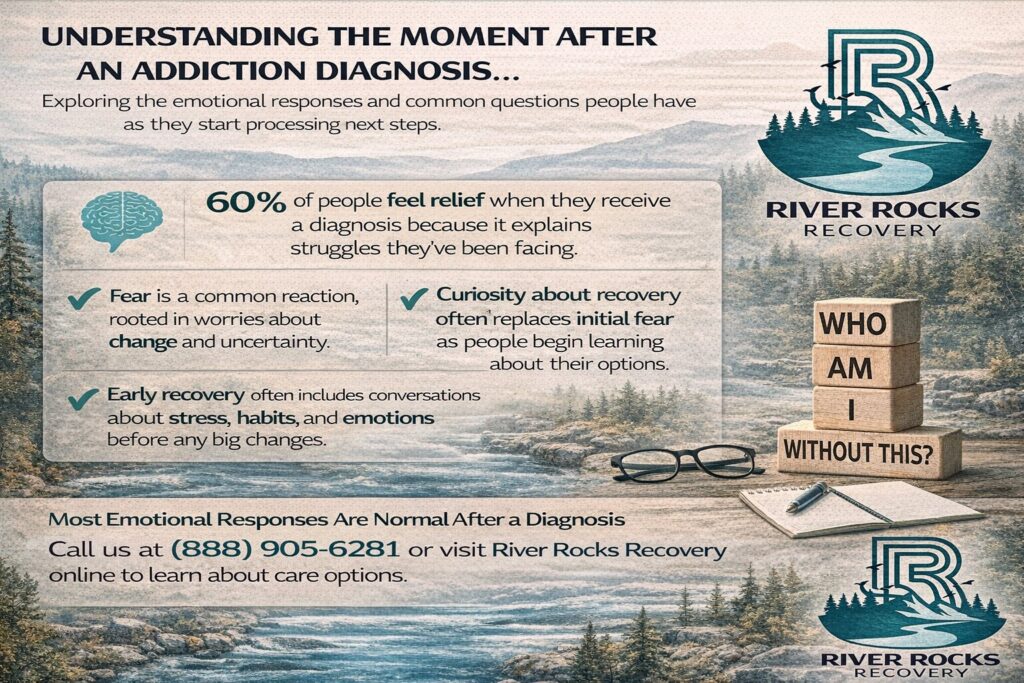
The First Reaction Is Often Fear — Not Resistance
One thing people misunderstand about addiction diagnoses is the emotional response that follows.
Most people don’t react with denial or anger.
They react with fear.
Not fear of treatment, necessarily. Fear of what treatment might change.
Someone once said to me during their first appointment, “I’m scared I’ll lose the version of myself people like.”
That sentence carries a lot of weight.
Substances sometimes become tied to social confidence, creativity, relaxation, or emotional relief. People worry that removing them will leave a blank space where those qualities used to live.
But the truth is usually the opposite.
Substances borrow those traits from you for a while.
Recovery simply gives them back.
Why the Brain Tries to Slow Everything Down
After a diagnosis, it’s common for people to hesitate before taking the next step.
That hesitation isn’t weakness.
It’s the brain doing exactly what it’s designed to do when something uncertain appears: pause and evaluate.
Your mind may start asking questions like:
- Do I really need help right now?
- What if I can manage this on my own?
- What if treatment changes who I am?
- What if I fail?
These questions are not signs of failure.
They’re signs that you care deeply about your future.
And that kind of reflection often becomes an important part of recovery.
The Relief People Don’t Always Expect
There’s another emotional response that sometimes surprises people.
Relief.
A diagnosis can feel heavy, but it can also explain things that never made sense before.
Why stopping felt so hard.
Why certain patterns kept repeating.
Why willpower alone never seemed to solve the problem.
Many people quietly say something like:
“I thought it was just me.”
Naming the problem doesn’t create it.
It simply gives you language to understand it.
And understanding is the first step toward change.
The Beginning of Recovery Is Usually Gentle
Movies often show recovery starting with dramatic life overhauls.
In reality, the beginning is much quieter.
Sometimes it starts with a conversation about stress. Sometimes it’s exploring how anxiety, trauma, or burnout shaped substance use.
Other times, it’s simply acknowledging something out loud for the first time.
“I think I might need help.”
Those five words carry incredible courage.
They represent a willingness to look honestly at something difficult without running from it.
And that willingness matters more than perfection ever could.
The Fear Around Medication Is Completely Normal
Many newly diagnosed individuals worry about medication.
They worry it might dull their emotions, flatten their personality, or make them feel like a different person entirely.
That concern deserves respect.
Medication decisions are personal, and thoughtful conversations with clinicians help people understand their options and comfort level. The goal is never to erase someone’s personality.
The goal is stability.
When someone feels emotionally stable, they often regain clarity, creativity, and connection—things substances may have slowly disrupted.
Treatment is not about replacing who you are.
It’s about helping you feel like yourself again.
The Role of Structure in Early Recovery
Another concern people often express is whether recovery will take over their life.
They imagine rigid rules or overwhelming schedules.
But early support often focuses on something much simpler: structure.
Structure provides rhythm during a time that may feel chaotic. Some people benefit from meeting regularly with counselors. Others explore programs that provide consistent weekly support, accountability, and community.
And for people dealing with specific substances, additional specialized care—like support in Methamphetamine Rehab—can provide targeted guidance during difficult transitions.
The key idea isn’t restriction.
It’s stability.
And stability often creates the conditions where healing becomes possible.
The Identity Question That Shows Up Early
One of the deepest questions people ask after a diagnosis is surprisingly simple:
Who am I without this?
Substances sometimes become woven into identity over time. They show up in routines, social situations, celebrations, or ways of coping with stress.
Removing them can feel like removing a piece of yourself.
But what many people discover later is something unexpected.
Substances didn’t define who they were.
They simply shaped how they navigated pain, stress, and connection.
When those pressures are addressed directly, people often rediscover parts of themselves they thought were gone.
Confidence.
Creativity.
Emotional presence.
Connection with others.
Recovery isn’t about becoming someone new.
It’s about uncovering who was there all along.
What I Often Tell Patients in Their First Session
If you walked into my office after receiving a diagnosis, I wouldn’t expect you to have answers.
You don’t need a five-year recovery plan.
You don’t need perfect motivation.
And you certainly don’t need certainty about every step ahead.
Instead, I usually encourage patients to focus on something smaller.
Stay curious.
Curiosity opens doors that fear tends to close. It allows people to explore support without feeling trapped by it.
Recovery doesn’t demand instant transformation.
It begins with one honest conversation.
And then another.
And gradually, something remarkable starts happening.
Life begins expanding again.
A Final Thought for This Moment
A diagnosis can feel like a label at first.
But over time, many people come to see it differently.
It’s not a verdict.
It’s a flashlight.
It helps illuminate patterns that were once confusing or hidden.
And once you can see clearly, you gain the power to choose what comes next.
Recovery doesn’t start with perfection.
It starts with awareness—and the quiet decision to keep moving forward.
Explore our services and discover safe ways to process your memories. Recovery in West Chester, Hamilton, Monroe, and Dayton begins with support that truly understands.
Frequently Asked Questions
Is it normal to feel overwhelmed after an addiction diagnosis?
Yes, it’s extremely common. Many people experience a mix of emotions including fear, relief, confusion, and uncertainty. A diagnosis often brings clarity but also raises important questions about the future.
Do I have to start treatment immediately after being diagnosed?
Not necessarily. While early support can be helpful, many people need time to process the diagnosis and understand their options. Recovery often begins with conversations and gradual steps rather than immediate drastic changes.
Will treatment change my personality?
This is a common concern. The goal of treatment is not to erase personality traits or identity. Instead, the goal is to help people regain emotional stability and clarity so their natural strengths can re-emerge.
What if I’m unsure whether I’m ready for treatment?
Uncertainty is normal. Many people begin recovery while still feeling unsure or hesitant. Exploring support options and asking questions can help you understand what feels right for your situation.
What kinds of support are available after a diagnosis?
Support can take many forms including counseling, group support, structured treatment programs, and specialized care depending on individual needs. The right level of support depends on personal circumstances and recovery goals.
If you or someone you care about has recently received a diagnosis and is considering the next step, help is available. Call (888) 905-6281 or explore our addiction therapy services to learn more about care options available through River Rocks Recovery.