

You don’t have to wait until everything falls apart to ask, “Could things feel better than this?”
For many people who are sober curious, that question doesn’t come during chaos. It shows up in quiet moments—on an ordinary day that just feels a little heavier than it should. You’re functioning. You’re showing up. But something feels off, and you can’t quite ignore it anymore.
If that’s where you are, you’re not behind. You’re actually right on time.
And there are ways to explore change that don’t require you to disappear from your life to begin.
Start with Curiosity Instead of Certainty
A lot of people delay getting support because they feel like they need to have everything figured out first.
They think:
- “Is this serious enough?”
- “Do I really need help?”
- “What if I’m overreacting?”
But here’s the truth—clarity doesn’t come before support. It often comes because of it.
You don’t need a label. You don’t need a breaking point. You just need a willingness to explore what could feel better.
That’s where change begins—not with certainty, but with curiosity.
Learn What Structured Support Can Look Like Without Disrupting Everything
One of the biggest misconceptions about recovery is that it requires stepping away from your entire life.
That’s not always the case.
There are structured programs designed to fit into your life instead of replacing it. These programs offer support during the day—through therapy, connection, and guided work—while allowing you to return home in the evenings.
If you’ve been searching for answers about time commitment, especially around partial hospitalization hours Ohio, you’re not alone. It’s one of the most common questions people ask when they’re trying to figure out if this level of care is realistic.
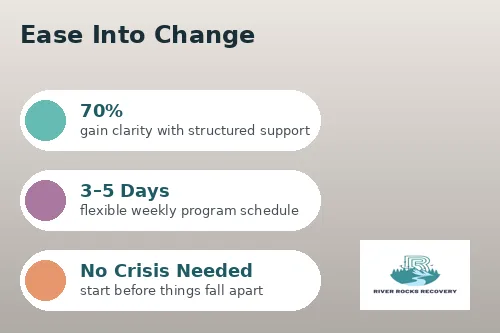
In most cases, this type of care involves several hours a day, multiple days a week. It’s structured enough to create real momentum, but flexible enough to keep you grounded in your daily life.
If you want to explore what that actually looks like, you can learn more about structured daytime care and how it fits into different lifestyles.
Choose a Pace That Feels Human, Not Overwhelming
There’s a quiet fear that once you start, everything has to change all at once.
That fear keeps a lot of people stuck.
But real, sustainable change doesn’t usually happen through extremes. It happens through consistency.
You can begin with:
- A few days a week of structured support
- A routine that still allows space for your responsibilities
- A pace that feels manageable, not punishing
Think of it this way—if your current habits feel like autopilot, this is about gently taking the wheel back.
Not jerking it. Not forcing it. Just learning how to steer again.
Let Structure Carry Some of the Weight
Trying to figure everything out on your own can feel exhausting.
You might go back and forth all day:
- “I’ll cut back tomorrow.”
- “Maybe it’s not that bad.”
- “I should probably do something… eventually.”
That mental loop drains energy.
Structure interrupts that cycle.
Instead of relying on willpower alone, your day starts to include:
- Time set aside for reflection
- Support from people who understand what you’re sorting through
- A consistent rhythm that reduces decision fatigue
You don’t have to wake up every day and reinvent your plan. You just have to show up.
Make Space for the “I’m Not That Bad” Feeling
This is one of the biggest barriers for sober curious individuals.
You’re not at rock bottom. You’re not in crisis. From the outside, things might even look fine.
But internally, there’s friction.
You might notice:
- You’re more tired than you used to be
- Certain habits don’t feel as good anymore
- You keep thinking about changing, but don’t act on it
That in-between space can be confusing.
It can also be the perfect place to start.
You don’t need things to get worse to deserve support. You can choose to feel better before things fall apart.
Stay Connected to Your Life While You Build Something New
One of the reasons structured daytime care works well for people in this stage is because it doesn’t pull you out of your world completely.
You can still:
- Sleep in your own space
- Maintain relationships
- Continue parts of your daily routine
And alongside that, you’re building awareness, stability, and new patterns.
For individuals in surrounding communities like Hamilton, Ohio, access to this kind of flexible support can make the idea of getting help feel much more realistic—because it fits into real life, not outside of it.
There’s also room to tailor support based on what you’re dealing with. For example, someone navigating stimulant use might benefit from exploring additional options like care in Methamphetamine Rehab as part of a broader plan.
No two paths look exactly the same—and they don’t have to.
Let Go of the All-or-Nothing Mindset
A lot of people think recovery is a switch you flip.
You’re either “in” or “out.” Fully committed or not trying at all.
That mindset can be paralyzing.
Because if you’re not ready for everything, you end up doing nothing.
But easing into support is still a valid way forward.
You can:
- Ask questions without committing
- Try a structured schedule without deciding your long-term plan
- Take one step without knowing the next five
Progress doesn’t require perfection. It just requires movement.
What a Typical Week Might Feel Like
If you’re trying to picture what this actually looks like, it helps to think in terms of rhythm rather than rigid rules.
A typical week might include:
- Several days of daytime sessions
- A mix of group and individual support
- Time to reflect, process, and reset
Outside of that, you return home. You live your life. You begin to notice small shifts—how you think, how you feel, how you respond.
It’s not about stepping out of your life. It’s about stepping into it more fully.
Common Concerns (And What to Know)
Before taking a step like this, it’s normal to have concerns.
“Will this take over my life?”
It’s designed not to. The goal is support, not disruption.
“What if I don’t fit in?”
Most people feel that way at first. And most people realize quickly that they’re not as alone as they thought.
“What if I’m not ready?”
You don’t have to be fully ready. You just have to be willing to explore.
“What if I start and change my mind?”
That’s okay. Starting doesn’t lock you in—it gives you information.
FAQs About Easing Into Structured Recovery Support
How many hours a day does structured daytime care usually involve?
While it can vary, most programs include several hours of support per day, multiple days per week. This allows for meaningful progress while still maintaining your daily life outside of treatment.
Can I still work or take care of my responsibilities?
In many cases, yes. Schedules are often designed to be flexible enough to accommodate work, family, or other commitments.
Is this only for people with severe addiction?
Not at all. Many people in these programs are sober curious or simply noticing that their current habits aren’t working for them anymore.
What if I’ve never been in treatment before?
That’s completely okay. Many people start here because it feels less overwhelming than more intensive options.
How do I know if this is the right step?
If you’ve been thinking about change—even quietly—that’s often a good sign it’s worth exploring. You don’t have to be certain to take a first step.
You Don’t Have to Wait for Things to Get Worse
There’s a common story people tell themselves:
“I’ll deal with this later.”
“I’ll wait until I’m sure.”
“I’ll wait until it gets bad enough.”
But later has a way of becoming longer than expected.
And “bad enough” is a moving target.
You’re allowed to step in earlier. You’re allowed to choose support before things fall apart.
Sometimes the strongest decision isn’t reacting to a crisis—it’s responding to a quiet truth:
Something could feel better than this.
Ready to Explore What Support Could Look Like?
You don’t have to commit to everything today. You just have to stay open to what might help.
Call (888) 905-6281 or visit our Partial Hospitalization Program in Middletown, Ohio to learn more about your options and what a flexible, supportive path forward can look like.