


Deciding to ask for help with alcohol is rarely a calm decision.
It often happens after months—or years—of quiet questioning. Maybe you’ve promised yourself you’d cut back. Maybe someone you care about said something that stuck with you. Maybe the pattern just started feeling heavier than it used to.
And then another thought appears:
If I actually reach out for help… what happens next?
Many people imagine therapy as something intense or uncomfortable. They picture interrogation, judgment, or pressure to change overnight.
But the reality is usually much gentler.
At places like River Rocks Recovery, support through options like alcohol rehab treatment often begins with something simple:
A conversation where you don’t have to pretend everything is fine.
The First Conversation Is Usually Much Simpler Than People Expect
Most people arrive at their first session nervous.
Some apologize before they even sit down. Others try to explain their entire life story in the first five minutes.
A lot of people expect to be judged.
But therapy usually starts in a much quieter way.
Someone asks how you’ve been feeling lately.
Someone listens without interrupting.
Someone lets you speak honestly without trying to fix everything immediately.
For many people, that alone is surprising.
Not because the questions are complicated—but because it may be the first time in a long while someone has truly listened without criticism.
You Don’t Need to Arrive With Perfect Answers
A common fear for first-time treatment seekers is that they need to know exactly what they want from therapy.
But most people walk into their first session with questions, not answers.
Questions like:
- Why do I keep going back to drinking even when I know it causes problems?
- Why does stress make everything feel impossible to manage?
- Why do I feel in control some days and completely overwhelmed on others?
Therapy isn’t about having the right answers immediately.
It’s about exploring those questions slowly and honestly.
Understanding patterns is often the first step toward changing them.
Therapy Focuses on Patterns, Not Blame
One of the biggest misconceptions about therapy is that it revolves around judgment or blame.
In reality, most sessions focus on something much more practical: patterns.
When does drinking usually happen?
What emotions tend to appear before it?
What situations make things harder?
Once people begin noticing these patterns, things that once felt confusing start making sense.
And when behavior makes sense, it becomes easier to shift.
Instead of feeling like you’re fighting yourself, you begin understanding yourself.
Small Realizations Often Lead to Big Changes
Recovery rarely happens through one dramatic breakthrough.
More often, it unfolds through small insights.
Maybe you notice that loneliness triggers drinking more than stress. Maybe evenings feel harder than mornings. Maybe certain environments make it harder to stay present.
Those discoveries might seem minor at first.
But over time, they reshape daily life.
Small changes—different routines, healthier coping skills, stronger support systems—begin stacking on top of each other.
And gradually, the entire rhythm of life starts to change.
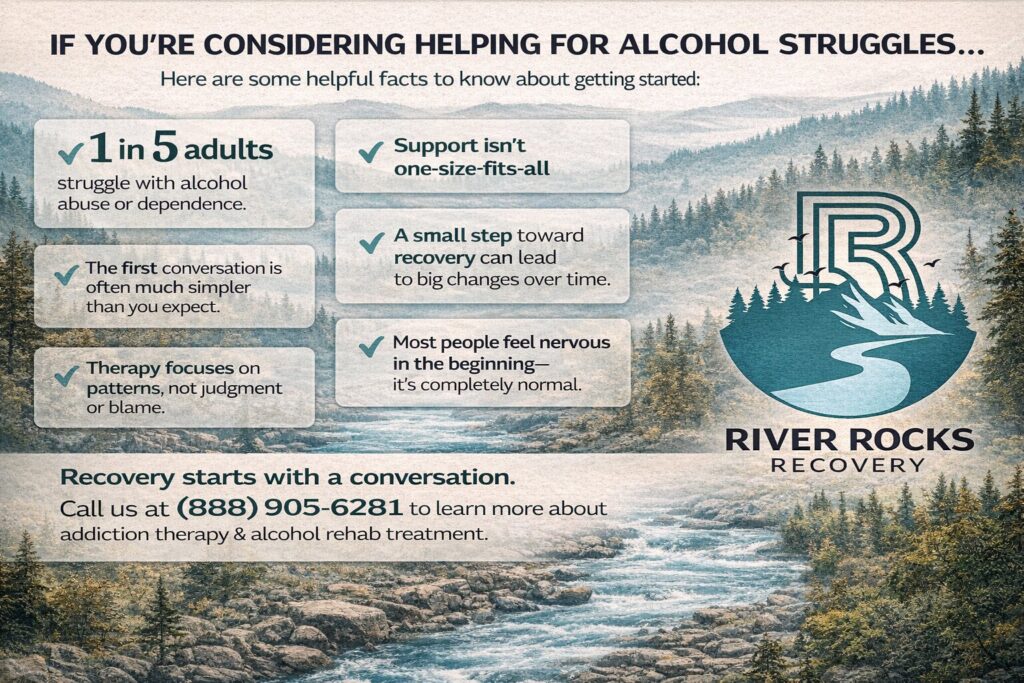
Many People Find Comfort in Shared Experiences
Another fear people often have before entering treatment is feeling alone.
Alcohol struggles can feel isolating. It’s easy to believe that no one else understands your specific situation.
But inside recovery spaces, people often discover something unexpected.
Their story isn’t as unusual as they thought.
Different backgrounds. Different professions. Different life paths.
Yet many people describe similar struggles with stress, relationships, and the pressure to hold everything together.
Hearing those shared experiences can be powerful.
It replaces isolation with connection.
And connection is one of the strongest foundations recovery can have.
Support Isn’t One-Size-Fits-All
Another surprise for many people is how flexible recovery support can be.
Some individuals benefit most from one-on-one conversations with a counselor. Others find strength in group environments where shared experiences build understanding.
Structured schedules can help people rebuild routines and regain balance. Other forms of support focus more on emotional healing and long-term growth.
And for individuals dealing with different substances or overlapping challenges, additional care options—like compassionate programs offering care in Methamphetamine Rehab—can provide specialized guidance when recovery becomes more complex.
The goal isn’t forcing everyone into the same path.
It’s helping each person discover what support looks like for them.
What People Often Notice After a Few Months
Many people who start therapy feel uncertain at first.
But over time, subtle shifts begin appearing.
Sleep improves.
Thinking becomes clearer.
Conversations with loved ones feel less tense.
Stress becomes easier to manage.
These changes may not feel dramatic at first.
But they accumulate.
And slowly, the things that once felt overwhelming begin feeling manageable.
People often realize something surprising:
They’re not fighting their life anymore.
They’re participating in it.
The Part No One Talks About Enough
One of the biggest misconceptions about recovery is that it requires someone to be completely ready.
In reality, most people begin treatment feeling uncertain.
They’re tired of the pattern they’re in, but they don’t know exactly what life will look like on the other side.
That uncertainty is normal.
Recovery doesn’t require perfect confidence.
It begins with curiosity.
Curiosity about what life might feel like with more stability. Curiosity about who you might become without the weight of alcohol shaping your days.
And curiosity is enough to start.
A Thought If You’re Considering This Step
If you’ve been thinking about asking for help, there’s a good chance something inside you already knows change is possible.
You don’t need to have every answer today.
You don’t need to be certain about the future.
You only need to be willing to explore what healing might look like.
And that willingness—small as it may feel—can open the door to a completely different life.
Explore our services and discover safe ways to process your memories. Recovery in West Chester, Hamilton, Monroe, and Dayton begins with support that truly understands.
Frequently Asked Questions
What should I expect during my first therapy session?
Most first sessions focus on conversation and understanding your situation. You’ll have the opportunity to share your experiences, discuss concerns, and begin exploring what kind of support might help.
Do I have to talk about everything right away?
No. Therapy moves at your pace. You can share as much or as little as you feel comfortable with during early sessions.
What if I’m nervous about starting treatment?
Feeling nervous is completely normal. Many people feel anxious before their first appointment. Over time, those feelings often ease as you build trust with your therapist and begin understanding the process.
Can therapy really help with alcohol struggles?
Many people find that therapy helps them understand the emotional and behavioral patterns connected to drinking. This understanding often leads to healthier coping strategies and stronger long-term recovery.
What if I’m not sure I’m ready to stop drinking completely?
You don’t need to have everything figured out before seeking help. Therapy can provide space to explore your relationship with alcohol and decide what changes feel right for you.
If you’re ready to explore what recovery could look like for you, support is available. Call (888) 905-6281 or explore our addiction therapy and alcohol rehab treatment services to learn more about care options available through River Rocks Recovery.