

For a long time, I believed something about creativity that nearly kept me stuck.
I believed the chaos was necessary.
The late nights, the emotional swings, the substances that seemed to open a door in my mind—I told myself that was part of the process. That if I let go of the struggle, I might also lose the spark.
If you’ve ever felt that same fear, you’re not strange or dramatic. Many hesitate because of the fear of going sober and losing the part of you that feels most alive.
You’re human.
Many creative people wrestle with the same quiet question before exploring support like addiction therapy.
Because underneath the practical questions about recovery is something deeper:
If I stop living this way… who will I be?
The Story Many Creatives Inherit
Most of us didn’t invent the “tortured artist” idea.
We inherited it.
Stories about brilliant musicians who drank themselves into legend. Writers fueled by cigarettes and whiskey. Painters whose chaos became part of their myth.
It’s everywhere—movies, biographies, interviews.
The message becomes subtle but powerful:
Pain equals depth.
Chaos equals authenticity.
Substances equal inspiration.
When you absorb that story long enough, letting go of substances can feel like letting go of the thing that made you interesting.
But that story leaves out a quiet truth.
Many artists who lived that way also lost their ability to finish their work.
Why Sobriety Can Feel Like a Creative Risk
Creative people tend to feel things intensely.
Emotions arrive louder. Thoughts move faster. The inner critic can be relentless.
Substances sometimes feel like tools for navigating that landscape.
A drink might quiet anxiety long enough to start writing. Something else might make emotions feel vivid enough to paint or compose music.
So the fear makes sense.
What if sobriety takes away the doorway to those feelings?
What many people discover later, though, is that substances didn’t create creativity.
They only altered how you accessed it.
And eventually, they often start closing more doors than they open.
The Difference Between Inspiration and Stability
For a while, I believed my best ideas came from chaos.
But when I looked honestly at my work, something else became clear.
Ideas might appear in those moments—but completion rarely did.
The poems that stayed unfinished.
The songs that never got recorded.
The projects abandoned halfway through.
Creativity needs inspiration, yes.
But it also needs patience, discipline, and the ability to stay present with an idea long enough to develop it.
Substances often interrupt that process more than they support it.
What Happens When the Fog Lifts
Early recovery can feel strange for creatives.
Without substances creating emotional spikes, everything might feel quieter for a while. Some people even worry their imagination has disappeared.
But what’s really happening is adjustment.
Your mind is learning how to create without artificial intensity.
At first, it can feel like walking through a quiet forest after living next to a loud highway.
It’s unfamiliar.
But slowly, the quieter sounds start becoming clearer.
Ideas that unfold gradually.
Thoughts that stay focused longer.
Emotions that are deeper because they aren’t chemically exaggerated.
Creativity doesn’t disappear.
It changes shape.
Letting Go of the Identity That Hurt You
One of the hardest parts of recovery for creatives isn’t substances themselves.
It’s the identity built around them.
The rebellious artist.
The misunderstood writer.
The musician who thrives in chaos.
Letting go of substances can feel like letting go of that character.
But identity isn’t fixed.
And the version of yourself that relied on chaos may not be the version capable of doing your best work.
Many artists eventually discover something surprising.
Their creativity doesn’t fade when the chaos fades.
It becomes clearer.
Stability Doesn’t Kill Creativity
There’s a myth that routine destroys imagination.
But for many creatives, the opposite turns out to be true.
When sleep improves, energy stabilizes. When the brain isn’t recovering from substances, attention becomes stronger.
And attention is where creativity actually lives.
Recovery creates space for things like:
- Consistent creative habits
- Emotional clarity
- Deeper focus
- The ability to finish work
These things may not look dramatic.
But they’re what allow creative ideas to become real projects.
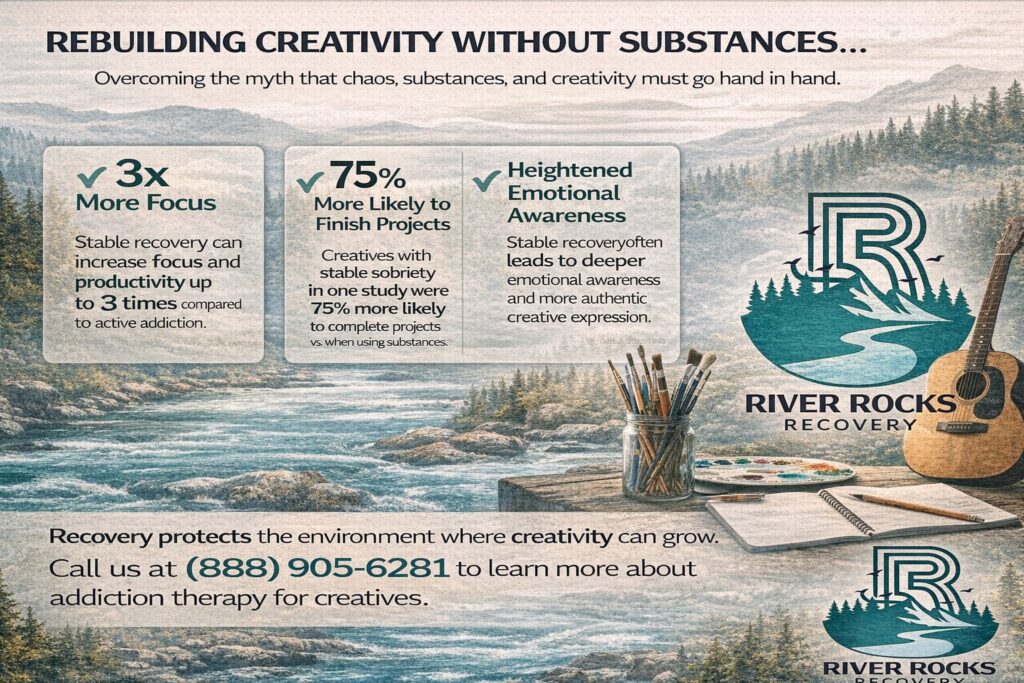
Rebuilding Creativity Without Substances
Many people discover that creativity becomes more sustainable in recovery.
Instead of waiting for emotional chaos to trigger inspiration, they begin building environments that support creative thinking.
Morning routines.
Long walks.
Journaling.
Collaborations with others.
Creativity shifts from something unpredictable to something that can be nurtured.
For some people, exploring recovery also means finding structured support. Programs that focus on emotional stability and personal growth can help people reconnect with themselves during that transition.
And for individuals struggling with specific substances, options like compassionate care in programs offering care in Methamphetamine Rehab can provide additional stability while rebuilding life and identity.
Support doesn’t replace creativity.
It protects the environment where creativity can grow.
The Version of You That Might Be Waiting
One of the most surprising parts of recovery is realizing how much energy substances were quietly consuming.
Energy spent recovering.
Energy spent managing emotions.
Energy spent trying to control chaos.
When that energy becomes available again, something remarkable can happen.
People begin creating more—not less.
Ideas come more frequently. Projects reach completion. Work becomes more honest because it’s no longer filtered through exhaustion or instability.
Creativity doesn’t disappear in recovery.
It matures.
A Thought I Wish Someone Told Me Earlier
Creativity isn’t fueled by suffering.
It’s fueled by attention.
The ability to notice small things. The patience to explore ideas deeply. The courage to express something honestly.
Substances sometimes create the illusion of depth.
But real depth comes from being present with your experiences.
And presence becomes much easier when your mind is clear.
Sobriety doesn’t take your creativity away.
If anything, it gives it room to breathe.
If You’re Afraid of Losing Yourself
That fear deserves respect.
Creative identity runs deep. It’s natural to wonder what will happen to the parts of yourself you value most.
But many artists who enter recovery discover something they didn’t expect.
They didn’t lose their voice.
They found the version of themselves that chaos had been drowning out.
And that version often creates with more honesty, more clarity, and more freedom than ever before.
Recovery in West Chester, Hamilton, Monroe & Dayton, starts with support that understands. Explore our servuces and find safe ways to process your memories.
Frequently Asked Questions
Will sobriety make me less creative?
Many creatives worry about this, but research and lived experience often show the opposite. Substances may temporarily alter emotional states, but long-term use usually interferes with focus, energy, and consistency—key ingredients for sustained creative work.
Why do so many artists associate creativity with substance use?
Cultural stories about the “tortured artist” have been repeated for generations. While some artists struggled with addiction, many others produced incredible work through discipline, routine, and emotional clarity.
How long does it take for creativity to return in recovery?
Creativity may feel different at first because your brain is adjusting to functioning without substances. Over time, many people report stronger focus, deeper emotional awareness, and more sustainable creative habits.
What if substances helped me start creative projects?
It’s possible substances lowered certain emotional barriers. Recovery focuses on developing healthier ways to access creativity—through mindfulness, routine, collaboration, or therapy—without the long-term costs substances create.
Can recovery actually improve creative work?
Yes. Many artists find that stability allows them to complete projects, maintain focus, and explore ideas more deeply. Creative expression often becomes more consistent and authentic in recovery.
If you’re exploring ways to rebuild your life while protecting your creativity, support is available. Call (888) 905-6281 or explore our addiction therapy services to learn more about care options available through River Rocks Recovery.