
It’s Okay to Feel Far Away From the Spark
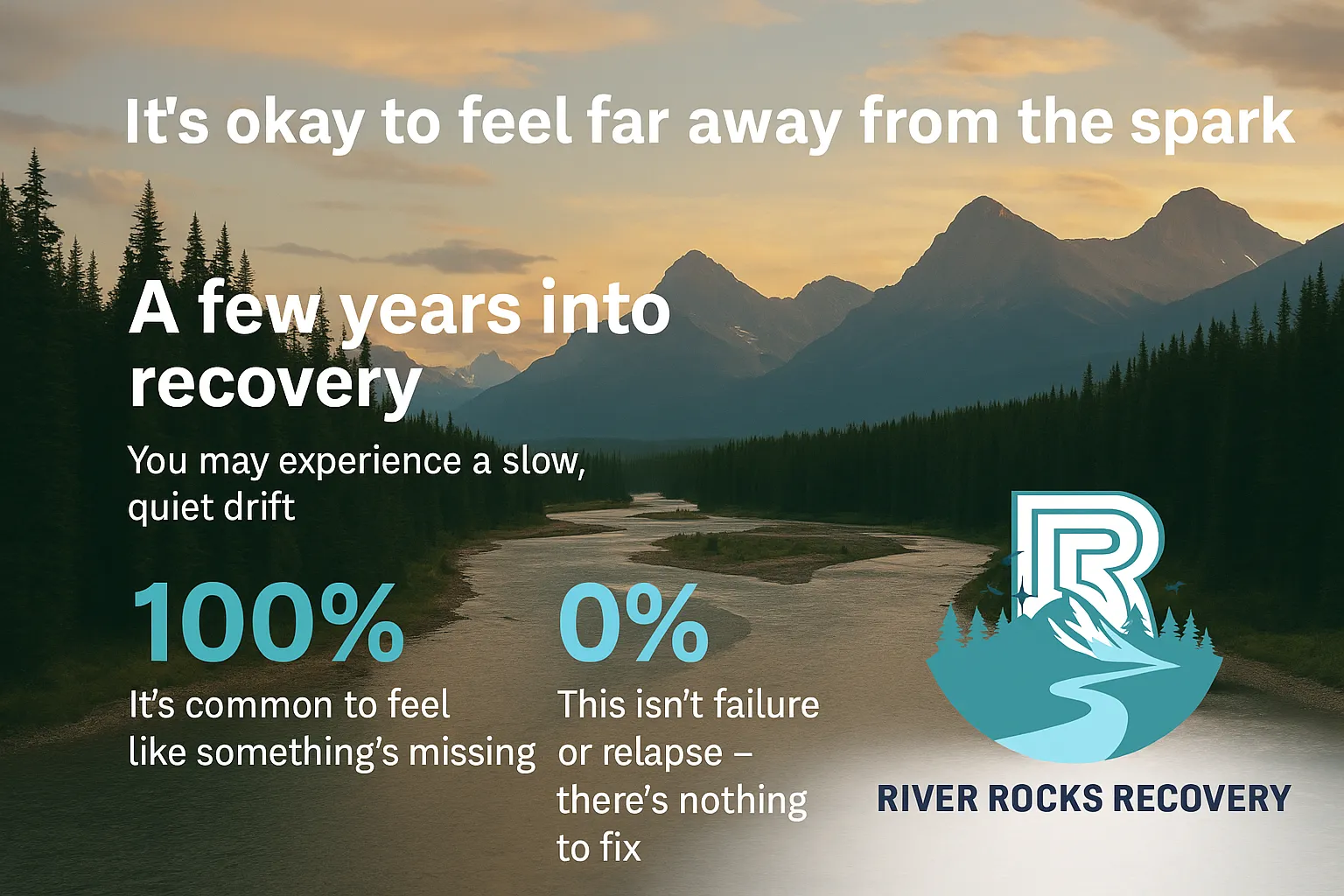
There’s a kind of heaviness that hits a few years into recovery—not crisis, not cravings—just a slow, quiet drift.
You’re doing the things. You’re still sober. From the outside, everything looks fine. But inside? Something’s missing. And that missing feeling is hard to name.
If that’s where you are, I just want to say: I see you. This is not failure. It’s not relapse. It’s not something to fix. It’s a moment to remember. To come home to the parts of yourself that do know how to navigate this. And if you’re like me, remembering what drug rehab treatment gave us might be exactly the place to start.
I Didn’t Lose My Recovery—But I Lost My Connection
A few months ago, I hit a wall. Not in a dramatic way. I wasn’t using. I wasn’t spiraling. But I was numb. Everything felt like static.
Work, relationships, my body—it all felt like something I was managing, not something I was in. I’d catch myself zoning out mid-conversation or staring at the ceiling at 2AM, not panicked, just… blank.
It took me a while to realize: I wasn’t in danger. But I also wasn’t in connection—to myself, my recovery, or anything that used to feel meaningful.
That’s when I started looking backward—not to romanticize the early days, but to remember what used to ground me.
Rehab Didn’t Just Get Me Sober. It Gave Me Something to Stand On.
At River Rocks, treatment was a full-body pause. For the first time in years, I had space to slow down. To say things out loud. To be real.
Back then, I needed that pause like oxygen. But what I forgot was how many of the tools I learned there weren’t just for crisis—they were for life.
Group taught me how to tell the truth without spiraling. My therapist helped me name shame without drowning in it. I practiced making eye contact again. Asking for help. Breathing before I answered.
None of those things “fixed” me. But they became anchors I didn’t know I’d need again—until I did.
Numbness Isn’t Weakness. It’s a Signal.
We don’t talk enough about emotional flatness in long-term recovery. Everyone’s cheering for milestones and anniversaries—and meanwhile, you’re quietly wondering why everything feels muted.
You might even feel guilty. Like you “should” be grateful. Like you “should” feel better by now.
But that numbness? It’s not weakness. It’s your body and mind saying, “We’ve been carrying a lot.”
And when we remember what drug rehab treatment gave us—especially the emotional skills—it becomes easier to respond with care instead of criticism.
You Don’t Have to Start Over. You Just Have to Start Again.
There’s this lie that floats around recovery: that if we disconnect, we have to go all the way back to the beginning.
Not true.
You don’t have to re-do step one. You don’t need a 30-day stay. You don’t need to explain yourself.
Sometimes the most powerful move is the smallest one: opening that old journal. Texting someone from group. Meditating for five minutes instead of zero.
It’s not a full reset. It’s a reconnection. And that’s enough.
The Tools Are Still Yours—Even If You Forgot Where You Put Them
I found an old worksheet from River Rocks last week. It had questions like:
- What feels heavy right now?
- What part of you needs attention?
- When was the last time you felt safe and connected?
I remember rolling my eyes when we did that in group. But rereading it now? It hit hard.
The thing is—just because we haven’t used the tools in a while doesn’t mean they disappeared. They’re still yours. Still valid. Still waiting.
Sometimes, we just need to remember where we last felt strong.
Drug Rehab Treatment Wasn’t Just About Crisis
When I first went to rehab, it was because everything was falling apart. I didn’t think long-term. I just wanted the pain to stop.
But what I didn’t realize then was how much of what we learned wasn’t about stopping the crisis—it was about building a life afterward.
Learning how to cook again. How to sit still. How to talk to someone without defensiveness. How to feel joy without guilt.
That’s what I forgot. That rehab gave me a way to live—not just a way to survive.
If You Feel Disconnected, You’re Not Alone
This feeling you have? Other alumni have it too. It’s not just you. It’s not a sign you’re ungrateful or failing or unwell. It’s a sign you’ve been doing a lot, for a long time, and something in you is asking for a little more care.
Maybe it’s time to talk to someone again. To check in. To take a weekend off and breathe.
And if you’re in Middletown, Ohio and thinking about re-engaging with drug rehab treatment, even just for a refresh or to remember the spark—River Rocks is still here. You’re not starting over. You’re simply returning.
“I didn’t need to go back to rehab. I needed to go back to myself. And River Rocks reminded me how.”
— Long-Term Alumni, 2021
FAQs: For the Long-Term Alumni Who’s Feeling Flat
Is it normal to feel emotionally disconnected after a few years sober?
Yes. Many people in long-term recovery experience emotional flatness. It’s not a failure—it’s a common phase. The key is to gently reconnect.
Do I have to relapse to return to treatment?
No. Drug rehab treatment isn’t only for crisis moments. Many alumni return for support during emotionally heavy times, even if they’re still sober.
What kind of support can I access without re-entering a full program?
At River Rocks, we can help you connect with outpatient support, alumni check-ins, or therapy refreshers. You don’t have to re-admit to get help.
How do I know if this is burnout or something deeper?
If your emotional flatness lasts for weeks, affects your relationships, or feels unshakable, it’s worth talking to a professional. You don’t have to figure it out alone.
Can I reach out just to talk—not to commit?
Absolutely. You can call just to ask questions, talk things through, or explore your options. No pressure, no expectations—just support.
What We Built Then Still Belongs to Us Now
The spark isn’t gone. It’s just buried a little. Under routine. Under stress. Under the weight of being human.
But the path back is still there. It doesn’t ask for perfection. Just willingness.
So if you’re feeling disconnected—don’t shame yourself. Don’t write yourself off. Just pause. Breathe. Remember.
Because what we built back then? It still belongs to us now.
Call (888) 905-6281 to learn more about our Drug Rehab Treatment services in Middletown, Ohio.
You don’t need to start over. You just need somewhere safe to land while you find your way back.