
I had 93 days clean.
More than three months. Long enough for my skin to clear, my sleep to return, and my people to start trusting me again. The worst of detox was behind me. The cravings weren’t gone, but they weren’t screaming either.
I thought I was okay.
I thought I didn’t need to do all the things anymore.
I thought I’d graduated from vulnerability.
And then I relapsed.
It didn’t happen at some dramatic low point. I wasn’t in a dark alley or on a binge. It was quiet. Boring, almost. A small decision I let get too loud. A voice in my head that whispered, “You’re good now. You’ve got this.”
What I didn’t realize is that I hadn’t failed an addiction treatment program. I’d just stopped using the tools that had been keeping me grounded. Slowly. Silently. Until I wasn’t grounded at all.
This blog is for anyone who’s been there—or is there right now. If you’ve relapsed after treatment, especially after 60, 90, 120 days… this is for you.
The Drift Is Real—and It’s Dangerous
Relapse isn’t always some emotional catastrophe. Sometimes it’s just a slow unraveling of your routine.
You start skipping morning check-ins. You stop journaling. You tell yourself the meetings can wait. You lie by omission to your sponsor. You say “I’m fine” because it’s easier than saying “I’m not.”
Then the stress hits. Or the boredom. Or the guilt. And without your tools in hand, the old habits start to sound like comfort.
That’s what happened to me. The relapse itself lasted less than 24 hours. But the disconnection? That started weeks before.
The Tools Didn’t Disappear—I Did
When I was in treatment at River Rocks, I built a toolbox. And I actually used it. Deep breathing, group support, calling when things felt off, using HALT, planning ahead for triggers. I remember walking into the addiction treatment program in Middletown, Ohio thinking I had no idea how to stay clean. I left with actual, functional tools.
But tools only work if you pick them up.
They didn’t vanish when I left treatment. I just started ignoring them—telling myself I didn’t need them anymore. That I was strong enough without them.
That mindset is exactly what led me back to using.
What I Told Myself After the Relapse (And Why It Was a Lie)
The relapse itself didn’t hurt nearly as much as what came after: the shame spiral.
I told myself I had wasted everyone’s time. That I wasn’t cut out for recovery. That I was a liar. That I didn’t deserve to come back.
But here’s what’s true:
- One relapse doesn’t erase your sobriety.
- Falling down doesn’t mean you can’t stand back up.
- You didn’t lose everything—you just lost your grip for a moment.
When I finally got the courage to call River Rocks again, I was expecting rejection. What I got instead was kindness.
“We’re just glad you reached out,” the person on the phone said.
That one sentence cracked something open. Shame thrives in silence. Speaking broke its hold.
Coming Back Isn’t Easy—But It’s Not Starting Over
Walking back into treatment after a relapse feels like walking into your high school cafeteria naked. You assume everyone’s judging you. That they’ll be disappointed. That you don’t belong anymore. These feelings are common in boredom in recovery, but they don’t define your progress or your ability to rebuild stability.
But what I found at River Rocks Recovery was this: relapse didn’t make me less worthy—it made me human.
And surprisingly, I didn’t have to start from scratch. The work I’d done before still counted. My body remembered what it felt like to feel clear. My brain clicked back into gear faster than I expected.
Recovery doesn’t get erased. It gets rebuilt.
And this time, I built it slower—and sturdier.
The Program Didn’t Fail Me—I Just Stopped Practicing
I used to think finishing treatment meant graduating from needing help. But recovery isn’t a diploma. It’s a daily practice.
What I learned the second time around hit deeper:
- Boundaries aren’t just for toxic people—they’re for me, too.
- Emotional regulation takes repetition, not just knowledge.
- A slip doesn’t mean I’ve lost it all—it means I need to re-engage.
And this time, I let people in sooner. I admitted when I was overwhelmed. I asked for help without waiting for disaster. And when I needed extra structure, I knew where to go.
If you’re near West Chester or Monroe, Ohio and need to return to an addiction treatment program that actually gets it—go back. Don’t let pride keep you sick.
Recovery Is Still Yours
You don’t lose your seat at the table just because you left the room for a while. Recovery is a come-as-you-are kind of thing. Messy welcome included.
No one’s keeping score.
No one’s revoking your sober card.
No one worth listening to is calling you a failure.
You made it back here—reading this blog, wondering if it’s time to reach out again. That tells me you haven’t given up.
And neither have we.
FAQs for Relapsed Alumni Wondering What’s Next
Did I waste my time in treatment if I relapsed?
No. Everything you learned, practiced, and experienced is still with you. Think of relapse as a signal, not a sentence—it tells you where more support is needed.
Should I go back to the same treatment center?
If your experience was safe, supportive, and aligned with your values—yes. Returning to River Rocks can offer familiarity and reduce shame. It’s a restart, not a redo.
What if I’m scared people will judge me?
That’s normal. But most of the staff and alumni get it—many have been there. You’ll be met with understanding, not judgment.
Will I have to do the full program again?
Maybe not. After a new assessment, you may be placed into a shorter stabilization phase, IOP, or even alumni-specific support. You don’t have to repeat everything. Just what’s helpful now.
What if I don’t feel “ready” again?
Feeling unready is common after relapse. But you don’t have to be perfectly motivated—you just have to be honest. The program will help you rebuild willingness.
Can I stay connected even if I don’t come back full-time?
Yes. Ask about alumni check-ins, virtual meetings, or part-time support. Recovery isn’t all or nothing.
Will my relapse be held against me?
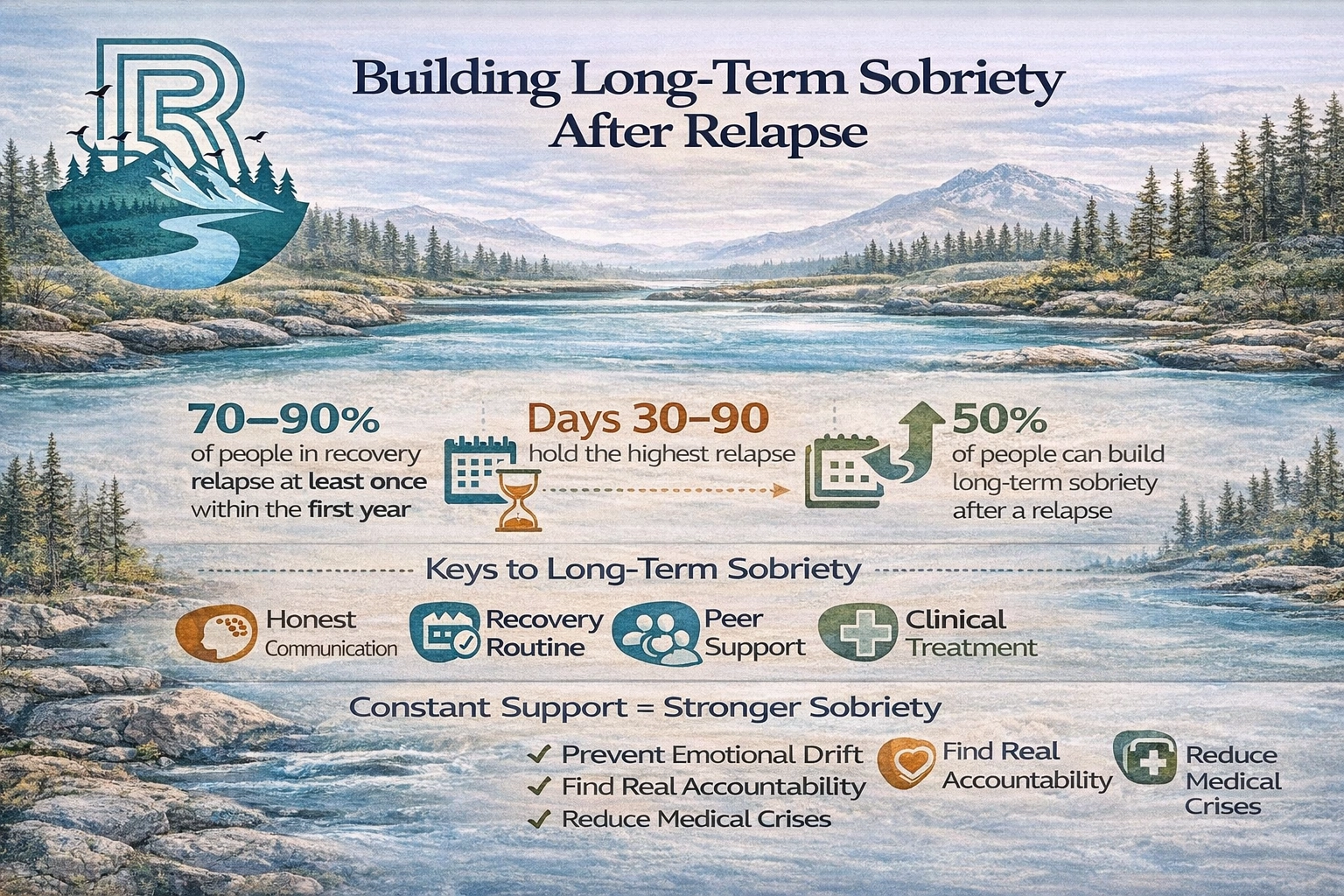
Absolutely not. Relapse is common, especially within the first year. It’s not shameful—it’s information. At River Rocks, we treat it with compassion, not punishment.
Final Thought: This Isn’t the End
Relapse doesn’t mean it’s over. It means something needs attention. Maybe a deeper wound. Maybe a missing skill. Maybe just a hand to hold while you try again.
Call (888) 905-6281 to learn more about our addiction treatment program services in Middletown, Ohio.
If you’re still breathing, there’s still time. And if you’ve been here before? That’s not a weakness. It’s a map.
We’ll meet you where you left off—no shame required.