
You’re young. You’re sober. And honestly? You feel kind of weird about it.
It’s not that you regret getting sober—it’s that nobody tells you how isolating early recovery can feel when you’re the only one at the table without a drink in your hand. You scroll through your feed and it’s all parties, brunches, tailgates, and “just one drink” selfies. Meanwhile, you’re sitting with a coffee, wondering if your social life just hit an early retirement.
If that’s you? You are not alone. And no, your life is not over.
A Partial Hospitalization Program (PHP) isn’t just about staying clean. It’s about rebuilding a life that fits who you are now—including how you connect with other people.
Let’s break down how PHP can help you actually enjoy being social again—without pretending, numbing, or explaining yourself every five minutes.
1. You meet people who get it—right away
One of the hardest parts of early sobriety is feeling like you’re speaking a different language than everyone around you. In PHP, you don’t have to code-switch or explain why you don’t “just have one.” Everyone gets it—because they’ve been where you are. That shared understanding makes connection easier, faster, and real.
2. Group therapy is social practice with meaning
Socializing without substances can feel like learning how to walk again. Group therapy in PHP gives you a safe place to build those muscles. You learn how to listen, open up, and respond honestly—without worrying how you sound or if you’re being “too much.” These aren’t party tricks. They’re the foundations of relationships that matter.
3. You explore sober fun—and what you actually like
PHP isn’t just talk therapy. Many programs include activities like art therapy, music, mindfulness, movement, and expressive groups. These spaces give you a chance to try new things, reconnect with old interests, and remember what joy feels like—without being under the influence. Fun doesn’t end when substances do. It just gets a lot more memorable.
4. You’re allowed to be awkward
Let’s be honest—early sobriety is weird. You might feel like a middle schooler at your first dance all over again. In PHP, you don’t have to pretend you have it together. You’re allowed to be awkward, unsure, or quiet. And no one’s grading you for it.
5. Structure = safety = space to grow
One underrated part of PHP is the schedule. When your days have rhythm, your emotions start to regulate. That structure helps you feel more grounded and less anxious in social situations. You stop white-knuckling your way through hangouts and start actually being there.
6. You build friendships that aren’t based on “vibes”
Let’s be real: some of those party friends weren’t really your friends. PHP gives you the chance to build relationships based on honesty, not shared self-destruction. These are people who’ve seen you cry and still want to hang out. That’s deeper than “who’s got the next round.”
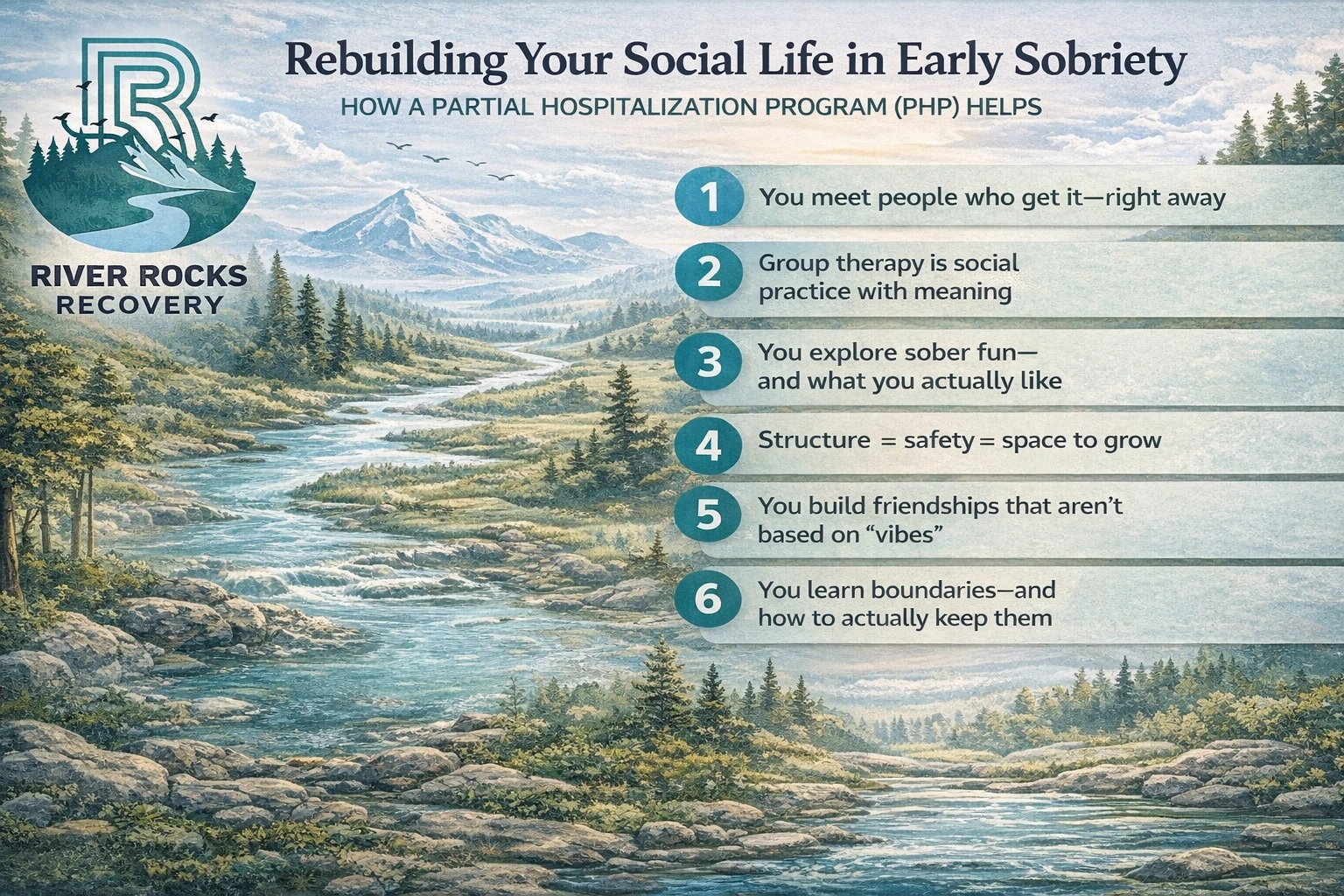
7. You learn boundaries—and how to actually keep them
Maybe in the past, you said “yes” to everything—even when it wrecked you. PHP helps you figure out where your limits are and how to hold them without guilt. That means fewer toxic friendships, fewer draining situations, and a whole lot more peace in your social life.
8. You show up as you are—not who you think you’re supposed to be
There’s no need to be “the fun one” or “the chill one” in PHP. You can be tired, overwhelmed, excited, or numb—and still be accepted. That kind of radical permission teaches you how to be real in your other relationships, too.
9. You learn how to actually handle social pressure
Let’s say you get invited to a wedding, and there’s an open bar. What do you say? How do you stay sober? PHP gives you real-world tools for stuff like that—how to say no, how to bring support, how to leave if you need to. You don’t just avoid social situations—you learn how to walk into them with confidence.
10. You realize you’re not the only one doing this
The “everyone drinks” myth? It starts to fade in PHP. You meet people of all ages and backgrounds who are sober, trying to stay sober, or exploring sobriety. That makes your world bigger. Suddenly, you’re not the weird one—you’re just someone who’s growing.
11. You start liking your own company—and that makes everything easier
Here’s a twist: when you start to genuinely like who you are in sobriety, you stop needing everyone else to validate you. PHP helps you do that inner work. The stronger your relationship with yourself, the less lonely your social life feels—even when it’s quiet.
What If You’re in Middletown or Nearby?
If you’re near Middletown, Ohio—or close to Monroe, West Chester, or Dayton, a PHP like River Rocks Recovery can be a game-changer. You don’t need to move across the country to find support. There’s help (and community) right where you are.
FAQs About Partial Hospitalization Programs and Social Life
What exactly is a Partial Hospitalization Program (PHP)?
A PHP is a structured treatment program that offers intensive support during the day but allows you to return home in the evenings. It typically includes individual therapy, group therapy, psychiatric care, and wellness activities. It’s one step below inpatient care, but far more supportive than traditional outpatient therapy.
Will I be in PHP with people my age?
Most likely, yes. Many programs group clients by age or life stage to encourage connection. At River Rocks Recovery, PHP clients often find they’re surrounded by others in their 20s and 30s who are also figuring out what sober life looks like.
I’m not “addicted”—can PHP still help?
Absolutely. PHP isn’t only for severe cases. It’s for anyone whose life has been disrupted by substance use and who needs more support than weekly therapy. If you’re struggling with how substances affect your relationships, mental health, or sense of self—PHP is a valid option.
How long does PHP last?
Most PHP programs last anywhere from 2 to 6 weeks, depending on your needs. You’ll attend several hours a day, multiple days a week. At River Rocks Recovery, the goal is to meet you where you are—and help you move forward at a pace that feels right.
Can PHP really help with loneliness?
Yes. Loneliness is one of the most common struggles in early sobriety. PHP creates daily opportunities for connection, shared experience, and honest conversation. It’s not just treatment—it’s community.
What happens after PHP?
After PHP, many people step down into an Intensive Outpatient Program (IOP), return to work or school, or join alumni or peer support groups. The transition is gradual and supported—so you’re not just dropped into the deep end.
Is this going to be like rehab?
Not exactly. PHP is more flexible and less intensive than inpatient rehab. There’s no overnight stay, and the vibe is often more communal and less clinical. It’s still serious treatment—but without the walls.
Final Thoughts
Being young and sober can feel like walking into a party where the music stopped—and no one told you the new rules. But it doesn’t stay like that. With the right support, you don’t just learn how to get through social life sober—you learn how to build it on your own terms.
If you’re ready to stop feeling like the only sober person in the world, a Partial Hospitalization Program in Middletown, Ohio could be the reset you need. Whether you’re from Middletown, Monroe, or West Chester, River Rocks Recovery is here to help.
Want to talk to someone who gets it?
Call (888) 905-6281 to learn more about our Partial Hospitalization Program services in Middletown, Ohio. We’ll help you find connection, community, and a sober life that doesn’t feel lonely.