


I didn’t want help.
That’s the clean version.
The truth is, I avoided it.
Not because I thought I was above it—but because saying yes to help meant admitting something I had worked really hard not to see.
Still, I kept finding myself on pages like support that fits into real life, reading just enough to feel uncomfortable… then closing out and telling myself, I’m fine.
I Built My Life Around Being the One Who Handles Things
If you’re high-functioning, you probably recognize this.
You’re the reliable one.
The one people go to.
The one who doesn’t fall apart when things get hard.
That identity becomes armor.
So when something starts slipping internally, your instinct isn’t to pause.
It’s to tighten everything.
Work harder.
Stay busier.
Keep the outside looking solid.
And for a while, that works.
Until the effort it takes to maintain that image becomes heavier than the image itself.
The Problem Wasn’t Obvious—It Was Constant
Nothing dramatic happened.
No major fallout. No crisis moment.
That’s what made it so easy to ignore.
But underneath that surface, things were shifting:
- I needed alcohol to transition out of my day
- My stress tolerance dropped
- Small things started to feel overwhelming
- I felt disconnected, even in moments that should’ve felt good
It wasn’t chaos.
It was pressure.
Steady. Quiet. Always there.
I Was Managing My Life—and Managing My Drinking
This is the part I didn’t want to admit.
Drinking wasn’t just something I did anymore.
It was something I managed.
I had rules. Limits. Plans.
“I’ll just have a couple.”
“I won’t drink tomorrow.”
“I’ll reset next week.”
It sounds controlled. Responsible, even.
But if something requires that much mental energy to control… it’s already taking more than it’s giving.
And I was tired.
I Thought Help Meant Losing Everything I Built
Every time I thought about getting support, my brain went straight to extremes.
I imagined:
- Stepping away from work
- Explaining things to people who didn’t need to know
- Losing the structure I depended on
It felt like trading one problem for a bigger one.
So I kept doing what I knew—even when it wasn’t working.
The Moment That Shifted Everything Was Quiet
No one confronted me.
No major mistake forced my hand.
It was just me, alone, realizing something simple:
I don’t feel like myself anymore.
And for once, I didn’t brush it off.
I sat with it.
That was the shift.
Because once you let that truth land, it’s hard to go back to pretending it’s not there.
I Needed Something I Had Been Avoiding on Purpose
Here’s what I didn’t understand before:
There’s a space between doing nothing and completely stepping away from your life.
I didn’t need to disappear.
I didn’t need everything to stop.
I needed support that could meet me where I was.
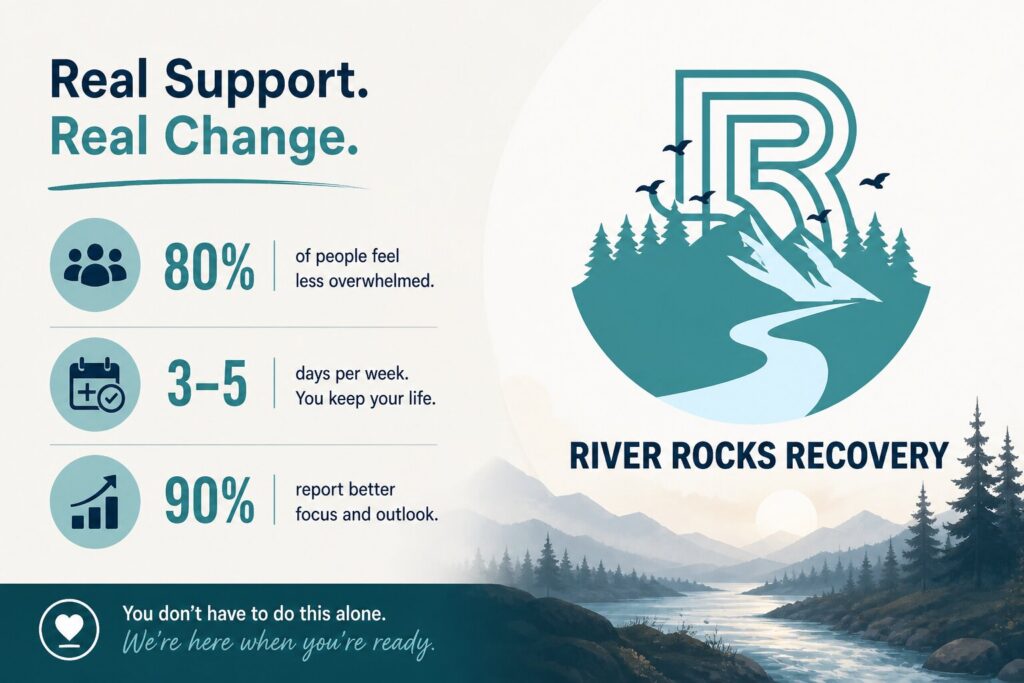
That’s when I started actually considering multi-day weekly treatment—not as a last resort, but as a way to get ahead of something that was slowly getting worse.
Walking In, I Still Thought I Might Be Overreacting
I almost didn’t go.
Even after deciding, I kept second-guessing:
“Maybe I don’t need this.”
“Maybe I’m making it a bigger deal than it is.”
But sitting there, listening to other people talk, something became clear.
Different lives. Different stories.
Same underlying feeling:
Holding everything together on the outside while quietly struggling on the inside.
That’s when it clicked.
I wasn’t out of place. I was just finally being honest.
The Structure Didn’t Take Over My Life—It Gave It Back
I expected structure to feel restrictive.
Instead, it felt like relief.
For the first time in a long time:
- I didn’t have to figure everything out alone
- I had a consistent place to be real
- I wasn’t constantly negotiating with myself
It gave me something I didn’t realize I’d lost: mental space.
And once that space opened up, everything else started to shift.
The Changes Were Subtle—But They Stuck
This wasn’t a dramatic transformation.
It was smaller than that.
But it was real.
I started noticing:
- I was more present in conversations
- I reacted less and responded more
- I didn’t need to escape my own thoughts as often
It wasn’t about becoming a different person.
It was about feeling like myself again—without needing something external to get there.
What I Thought Was the Problem Was Only Part of It
I went in thinking alcohol was the issue.
And it was—but it wasn’t the whole story.
There was stress I hadn’t dealt with.
Pressure I’d normalized.
Patterns I didn’t even realize I was repeating.
That’s why broader support matters.
Some people explore additional paths like care in treatment in Methamphetamine Rehab or similar options—not because it defines them, but because it helps uncover what’s really going on underneath.
Because this isn’t just about stopping something.
It’s about understanding why it started feeling necessary in the first place.
Many people also begin exploring insurance coverage for alcohol rehab at this stage, as understanding available financial support can make it easier to take the first step toward treatment.
I Didn’t Want It—But I Needed It
That’s the part I can’t dress up.
I resisted this. Hard.
I told myself I didn’t belong there.
I tried to minimize what I was dealing with.
I almost walked away before giving it a chance.
But looking back?
It was exactly what I needed at that moment—not because I had fallen apart, but because I was getting close.
And I finally chose to do something before I had no choice left.
You Don’t Have to Earn Help by Getting Worse
This is the belief that keeps a lot of people stuck:
“It’s not bad enough yet.”
But here’s the reality:
If it’s affecting your peace…
If it’s taking up mental energy…
If it’s making you feel less like yourself…
It’s already enough.
For those searching locally, addiction recovery in Middletown Ohio can provide access to nearby treatment options and support services without needing to wait for a breaking point.
You don’t need a breaking point to justify doing something different.
FAQ: The Questions I Didn’t Know How to Ask
Do I really need help if everything still looks okay?
“Looking okay” and feeling okay are not the same thing. If something is quietly affecting your daily life, that matters more than appearances.
What if I don’t relate to extreme cases of addiction?
Most high-functioning people don’t. That’s exactly why this kind of support exists—for people who are still managing life but feel something slipping underneath.
Will I have to stop working or change my routine completely?
Not necessarily. Some programs are designed to fit into your schedule so you can keep your responsibilities while getting consistent support.
What if I’m just overthinking it?
That question usually comes from awareness, not overreaction. Most people ignore problems longer than they question them.
What if I try it and feel like I don’t belong?
That’s a common fear. Many people walk in feeling that way—and realize quickly they’re not as different as they thought.
Does getting help mean something is seriously wrong with me?
No. It means you’re paying attention and choosing to address something before it escalates.
You Don’t Have to Keep Carrying It Alone
If something in you feels tired, off, or stretched thin—you don’t have to keep managing it silently.
You don’t have to wait until it gets worse.
Call (888) 905-6281 or explore your options through our iop services to learn what support could look like for you.