

I remember staring at my phone for a long time before I made the call.
Ninety days sober. Three whole months of doing things differently. Meetings, routines, showing up honestly. Then one drink. Then another.
Then that sinking realization the next morning.
Part of me wanted to pretend it never happened. Another part of me knew something deeper: hiding it would make things worse, especially when you start recognizing subtle alcohol relapse warning signs that are easy to ignore.
And the hardest part wasn’t the relapse itself.
It was the conversation afterward.
If you’ve relapsed after a stretch of sobriety, you might be sitting in that same quiet moment right now—wondering how to explain it, or if you even should. Some people reconnect with support through programs like alcohol addiction treatment, but the first step usually starts with something much simpler.
Telling the truth.
The Silence After a Slip Is Loud
Relapse rarely arrives with dramatic warning signs.
More often, it begins quietly.
Maybe stress builds slowly over weeks. Maybe loneliness creeps in. Maybe you start skipping the routines that helped you stay grounded.
Then the moment happens.
One drink turns into two. The night blurs. And the next morning you wake up with that familiar heaviness in your chest.
What follows is often silence.
You tell yourself things like:
Maybe it was just a slip.
Maybe I can fix this before anyone notices.
Maybe it doesn’t count.
But the longer the silence stretches, the louder it gets in your mind.
Silence feeds shame. And shame has a way of convincing you that you’re the only person who has ever struggled like this.
You’re not.
Shame Is a Terrible Counselor
Shame is powerful—but it’s also incredibly misleading.
It tells you the last three months meant nothing.
It whispers that people who supported you will be disappointed. It convinces you that you’ve somehow returned to the beginning.
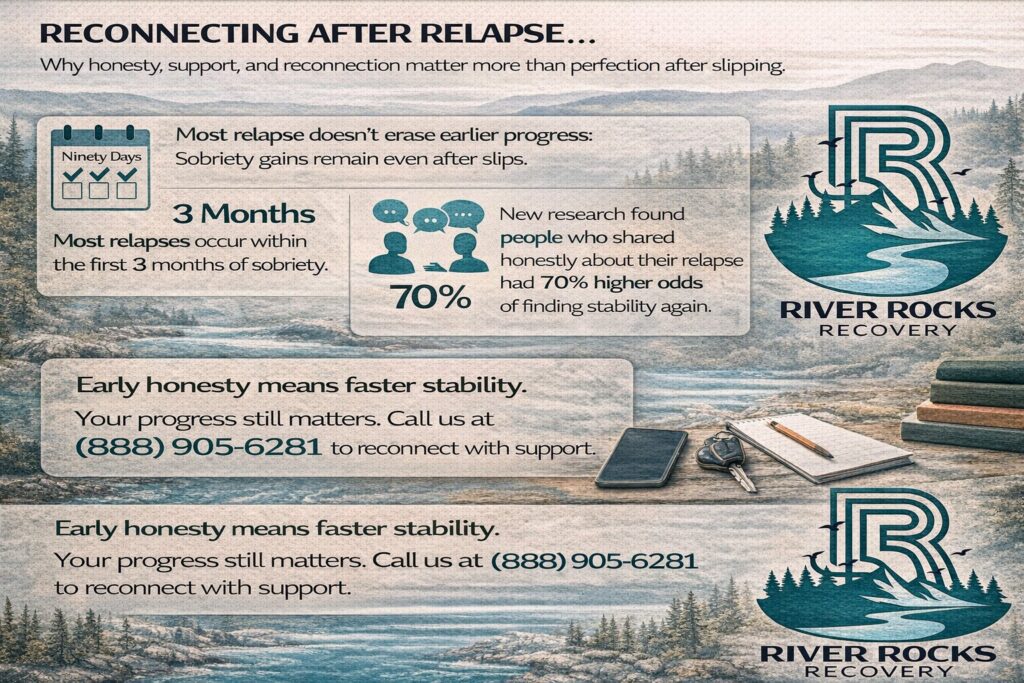
But relapse doesn’t erase the progress you made.
Those ninety days still happened. Your brain still experienced those sober patterns. You still built awareness and tools that weren’t there before.
Think of recovery less like climbing a staircase and more like learning to walk a long trail.
Sometimes you step off the path.
But that doesn’t mean you forgot how to hike.
The Conversation You Don’t Want to Have
Making the call—or sending the text—can feel unbearable.
Your mind might race with questions:
What if they’re angry?
What if they think I wasted their time?
What if they stop believing in me?
But something interesting happens in most of those conversations.
The person on the other end often doesn’t respond the way shame predicted.
They don’t lecture.
They don’t shame you.
They don’t act shocked.
More often, they say something simple and steady:
“Okay. Let’s talk about what happened.”
That moment can feel like someone opening a window in a room that’s been suffocating you.
Because relapse isn’t just failure.
It’s information.
What Relapse Often Reveals
Looking back at my own relapse, it didn’t appear out of nowhere.
There were warning signs.
Small ones. Quiet ones.
I stopped checking in with people regularly. Stress at work started piling up. My routines slipped. And slowly, the thought that I could “handle just one drink” started feeling believable.
Recovery doesn’t usually collapse in dramatic explosions.
It drifts.
And those subtle drifts—skipped meetings, isolation, rising stress—are often the signals that extra support might be needed.
Recognizing those patterns doesn’t mean beating yourself up. It means learning how to catch them earlier next time.
The Myth That You’re “Back at Day One”
One of the most painful parts of relapse is the feeling that everything has been reset.
People often say things like “I’m back to day one,” as if months of effort disappeared overnight.
But recovery doesn’t actually work that way.
Your brain has already experienced sobriety. You’ve practiced new coping skills. You’ve learned how triggers show up in your life.
Those lessons stay with you.
Many people who maintain long-term recovery have one thing in common: they didn’t do it perfectly.
They stumbled, learned, adjusted, and kept going.
Why Support Matters Even More After a Relapse
After a relapse, your brain may try to convince you to withdraw.
Isolation feels safer than admitting what happened.
But isolation is also where addiction grows stronger.
Support interrupts that cycle.
For some people, that support comes from peers or recovery groups. For others, it means returning to a structured environment that helps rebuild stability.
Some people find that stepping back into professional support—like programs that provide accountability, therapy, and routine—helps them regain momentum. If substances or stressors overlap, people sometimes explore options like help in Methamphetamine Rehab or other specialized programs that address complex substance use patterns.
The point isn’t punishment.
It’s reinforcement.
The Hidden Strength in Starting Again
Relapse can feel like proof that you failed.
But for many people, it becomes the moment recovery gets more honest.
The second attempt often comes with deeper awareness:
- You understand your triggers better
- You recognize early warning signs sooner
- You’re more willing to ask for help
That kind of insight isn’t something people start recovery with.
It’s something they earn through experience.
And that experience can become one of your greatest strengths moving forward.
The Question Worth Asking Yourself
Instead of asking “Why did I mess this up?”, it can be more helpful to ask a different question:
“What was I missing that night?”
Was it connection?
Rest?
Support?
Stress relief?
Relapse often points toward unmet needs rather than personal failure.
And once those needs are identified, they can actually become part of the recovery plan moving forward.
A Quiet Reminder If You Slipped
If you’re sitting with the weight of relapse right now, here’s something worth holding onto:
You didn’t erase your progress.
You didn’t lose your ability to recover.
You’re simply standing at one of the more difficult crossroads in the process.
And many people who are living stable, joyful sober lives today once stood exactly where you are.
The conversation you’re afraid to have might actually be the moment things begin moving forward again.
Recovery in West Chester, Hamilton, Monroe & Dayton, starts with support that understands. Explore our servuces and find safe ways to process your memories.
Frequently Asked Questions
Is relapse common after being sober for a few months?
Yes, relapse can happen at many stages of recovery, including after several months of sobriety. Early recovery involves learning new coping skills, and setbacks sometimes occur while those skills are still developing. What matters most is recognizing the slip and reconnecting with support.
Does relapse mean treatment didn’t work?
No. Relapse doesn’t erase the progress someone made in recovery. Many people learn valuable lessons from relapse that strengthen their long-term recovery plan. It often reveals triggers, stress points, or missing supports that can be addressed moving forward.
Should I tell my therapist or sponsor if I relapsed?
Yes, being honest with supportive people is one of the most helpful steps after a relapse. Therapists, sponsors, and trusted peers can help you understand what happened and create a plan to prevent future slips.
How do I prevent another relapse?
Preventing relapse often involves rebuilding daily routines, reconnecting with supportive people, managing stress, and identifying triggers. For some individuals, additional structured support can also help strengthen recovery and accountability.
Is it worth trying again after a relapse?
Absolutely. Many people who achieve long-term sobriety have experienced relapse at some point in their recovery journey. Each attempt often brings deeper understanding and stronger coping tools.
If you’re ready to reconnect with support, call (888) 905-6281 or explore our alcohol addiction treatment services to learn more about treatment options available through River Rocks Recovery.